 Debby Wijaya
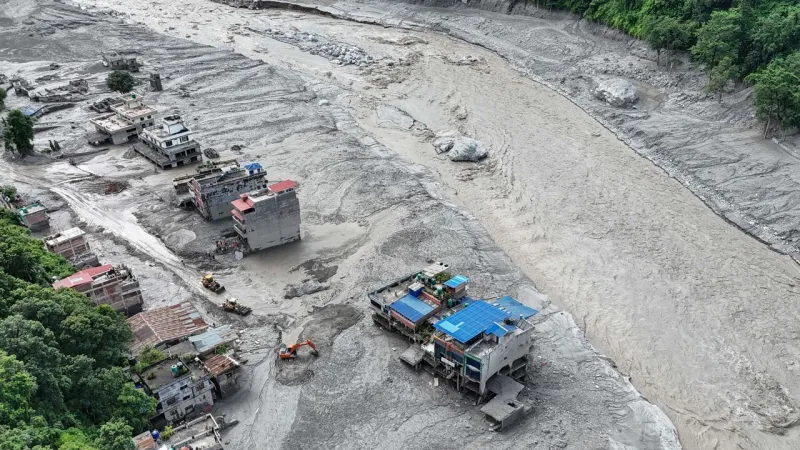
KATHMANDU, Nepal – Catastrophic floods, triggered by a suspected glacial lake outburst and relentless monsoon rains, have wrought widespread devastation across Nepal, leaving an immense trail of destruction, displacing thousands, and prompting an urgent search for hundreds of missing persons, including numerous foreign tourists. The full scale of the disaster, impacting infrastructure, livelihoods, and the environment, is still emerging as rescue and recovery operations intensify in the Himalayan nation.
The latest official figures from the Nepali government confirm at least 157 fatalities and 466 foreign nationals reported missing following the unprecedented torrents. This grim tally underscores the severe humanitarian crisis unfolding, particularly in remote mountainous regions where communication and transportation networks remain severely compromised.
Among the missing are several Italian citizens, drawing international attention and concern. Reports indicate that an Italian jeweler vanished in the Nepal disaster, with his family desperately seeking answers. The Italian Foreign Ministry has confirmed that while two Italian nationals were safely located, efforts continue to trace others caught in the deluge, as detailed in a recent update on Nepal Floods: Three Italians Missing, Two Rescued Amid Rising Toll.
Authorities attribute the scale of the calamity largely to a suspected glacial lake outburst, a phenomenon where rapidly melting ice causes a lake to swell and breach its natural dam. This theory is gaining traction, with a separate investigation revealing an earth tremor preceded a catastrophic valley flood in another recent event, highlighting the region's geological vulnerabilities. The article Nepal Devastated: Glacial Lake Outburst Suspected in Catastrophic Flood offers further insight into this critical contributing factor.
Beyond the immediate fatalities, the physical damage is extensive. Villages have been obliterated, vital bridges swept away, and significant portions of agricultural land submerged under mud and debris. The livelihoods of countless farmers and their communities have been completely destroyed, exacerbating food security concerns in an already vulnerable region.
Rescue teams, comprising military personnel, police, and local volunteers, face immense challenges. Heavy rainfall continues intermittently, triggering fresh landslides and hindering aerial surveillance and ground access to many affected areas. The sheer volume of mud and rock carried by the floodwaters has made searching for survivors or bodies a painstaking and often perilous task.
The plight of tourists and trekkers, many of whom were enjoying the Himalayan trails, remains a central focus. Reports of 517 foreigners missing across the affected zones have prompted an international outcry and coordinated efforts to locate them. This figure, though subject to ongoing verification, indicates the widespread impact on international visitors to Nepal, a country renowned for its trekking and mountaineering.
The disaster has also reignited discussions about climate change and its amplified effects on the Himalayan ecosystem. Scientists warn that rising global temperatures contribute to glacial melt, increasing the risk of such catastrophic events. The urgent need for robust early warning systems and resilient infrastructure is more apparent than ever.
International aid organizations and several governments have pledged support, offering humanitarian assistance, technical expertise, and financial aid. The United Nations has initiated an appeal for emergency funds to help Nepal respond to the crisis, emphasizing the need for long-term reconstruction and rehabilitation efforts.
As the initial shock gives way to the arduous process of recovery, the people of Nepal demonstrate remarkable resilience. However, the path ahead is long and fraught with challenges, requiring sustained international attention and resources to rebuild lives and communities shattered by nature's fury.
The government of Nepal has established emergency relief camps, providing shelter, food, and medical attention to displaced families. However, the sheer number of those affected, coupled with the destruction of roads and communication lines, makes delivering aid a logistical nightmare. The country grapples with not only the immediate crisis but also the daunting prospect of long-term rehabilitation and economic recovery.
The true human cost, including the psychological trauma inflicted on survivors and those who have lost loved ones, is immeasurable. Communities once vibrant are now somber landscapes of debris and loss. The resilience of the Nepali people will be tested significantly in the months and years to come.