 Stefani Rindus
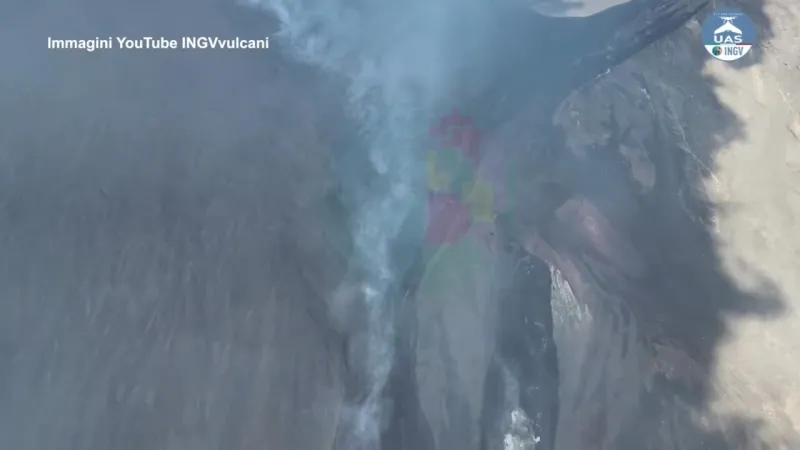
Mount Etna, Sicily – Europe's most active volcano revealed a new effusive vent yesterday at an altitude of approximately 2360 meters, an event dramatically captured by drone footage that showcased an immediate expulsion of gas and ash. The sudden geological development underscores the continuous dynamic nature of the colossal stratovolcano, drawing keen attention from volcanologists and local authorities.
The emergence of this new vent marks another chapter in Etna's relentless activity, a characteristic feature of the majestic peak dominating the eastern Sicilian landscape. While such effusive eruptions typically involve relatively slow-moving lava flows rather than explosive blasts, the phenomenon serves as a vivid reminder of the immense forces simmering beneath the Earth's surface.
An effusive vent, distinct from a crater, is an opening through which molten rock, known as lava, flows onto the surface. In this instance, the initial observation by the drone highlighted not only the physical opening but also an abrupt release of a dense cloud of gas and fine ash, which rapidly dispersed across the immediate vicinity of the summit area.
The use of advanced drone technology proved invaluable in documenting this latest activity. Operating safely at altitudes and in conditions hazardous to humans, unmanned aerial vehicles provide critical real-time data, allowing scientists to observe the precise morphology of new vents and track the initial stages of eruptive events with unprecedented detail.
Local communities residing on the slopes of Etna, while accustomed to its frequent rumblings, remain vigilant. The Istituto Nazionale di Geofisica e Vulcanologia (INGV) maintains a rigorous monitoring network, employing seismographs, GPS, and gas sensors to detect subtle changes that precede or accompany eruptive phases. This constant surveillance is crucial for public safety and timely warnings.
Mount Etna boasts one of the longest documented histories of volcanism, with records stretching back thousands of years. Its persistent activity often involves flank eruptions, where vents open on the volcano's sides rather than exclusively from the summit craters. This recent development aligns with its historical patterns of dynamic and evolving eruptive behavior.
The geological processes driving Etna's activity are complex, influenced by the collision of the African and Eurasian tectonic plates. This tectonic setting not only fuels Etna but also shapes much of the Mediterranean basin, contributing to seismic activity and other natural phenomena across the region.
Italy, a nation celebrated for its rich cultural heritage, also frequently contends with significant natural events. From seismic tremors in its central regions to extreme weather patterns affecting its waterways, the country often grapples with geological and climatic shifts. For example, recent years have seen major concerns over water scarcity, with vital arteries like the Po River experiencing severe reductions in flow, a testament to broader environmental challenges. Italy's Po River Dries: Drought's Grip Tightens on Waterways
Despite the inherent risks, Mount Etna remains a major tourist attraction, drawing adventurers and geology enthusiasts eager to witness its raw power from a safe distance. Operators often adapt their itineraries based on eruptive activity, balancing public interest with safety protocols to provide unique, yet secure, experiences.
INGV scientists continue to analyze data from the new effusive vent, assessing the potential for further lava flows or changes in eruptive intensity. While the immediate threat to populated areas remains low for this type of eruption, sustained monitoring is paramount to understanding Etna's ongoing evolution and safeguarding surrounding communities.
This latest spectacle from Mount Etna serves as a powerful reminder of nature's formidable and ever-changing grandeur. The drone's perspective offers humanity a rare, intimate glimpse into the birthplace of new landscapes, reinforcing the scientific imperative to observe and comprehend these profound geological processes.