 Robert Andrison
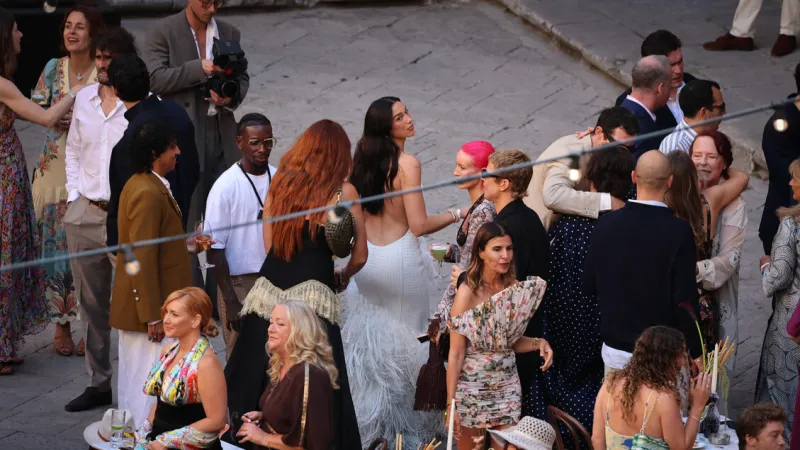
Bagheria, Sicily – International pop superstar Dua Lipa's recent wedding celebration in Sicily has ignited a significant controversy, drawing sharp criticism from British media outlets that have explicitly linked the event's location to the island's historical association with organized crime. The opulent festivities, which reportedly included global music legends Elton John and Madonna among its esteemed guests, unfolded in Bagheria, near Palermo, prompting swift and strong reactions across the Italian political landscape.
Renowned British publications extensively covered the event, yet their reportage frequently underscored the geographical proximity of the wedding venue to areas historically tied to the mafia. These narratives, focusing on the shadow of organized crime, quickly overshadowed the glamour and celebrity presence, sparking a broader debate about Sicily's international image.
Rosario Schifani, the President of the Sicilian Region, swiftly condemned the media portrayal. He asserted that such reports inflicted "significant image damage" upon Sicily, particularly as the island strives to promote its rich culture, history, and natural beauty to a global audience. Schifani emphasized the disproportionate and often outdated focus on crime, which he argued detracts from the region's contemporary reality.
The controversy highlights a persistent challenge for Sicily: overcoming entrenched stereotypes. While acknowledging historical realities, local authorities and residents actively work to showcase a modern, vibrant Sicily that has largely moved beyond its past. High-profile events like Lipa's wedding, intended to bring positive attention, inadvertently become flashpoints for this ongoing struggle.
For the international media, particularly in the United Kingdom, the allure of linking a celebrity event to Sicily's darker historical narratives proved irresistible. This approach, however, has been widely perceived in Italy as simplistic and unfair, failing to capture the complexities and progress of a region grappling with its identity on the global stage.
The specific choice of Bagheria as the celebration site appears to be central to the media narrative. While an area of considerable historical and architectural beauty, Bagheria, like many towns in Sicily, carries historical connotations that certain media segments are quick to exploit. This journalistic framing, critics argue, prioritizes sensationalism over nuanced reporting.
Amidst the media storm, there has been no official statement from Dua Lipa or her representatives regarding the controversy. The silence from the pop icon's camp leaves the reports largely unchallenged in the international sphere, allowing the narrative to persist without an alternative perspective from the celebrated couple.
The presence of music titans like Elton John and Madonna at the wedding, intended to elevate the event's stature, paradoxically provided more fodder for the contentious reporting. The juxtaposition of international glamour with a perceived association with criminality created a compelling, albeit controversial, storyline for news cycles.
This incident underscores the delicate balance public figures navigate when choosing destinations for private events, especially in locations with complex public perceptions. The instantaneous global reach of media means that every detail, however minor, can be scrutinized and reframed through various cultural and historical lenses.
Local Sicilian residents and tourism bodies have expressed frustration over the incident. Many view the sensationalized reporting as a setback for years of dedicated effort to rebrand Sicily as a premier European tourist destination, celebrated for its gastronomy, art, and hospitality, rather than its historical ties to organized crime.
The regional government has consistently championed initiatives aimed at cultural revival and economic development to counter these negative perceptions. They assert that portraying Sicily solely through the lens of its past criminal elements undermines genuine progress and the island's vibrant, contemporary identity.
This media "storm" serves as a potent reminder of the power of narrative and how quickly an celebratory occasion can morph into a broader discussion about regional identity and historical baggage. The impact on Sicily's tourism industry, though not immediately quantifiable, remains a concern for regional stakeholders.
The incident is likely to reignite discussions within the Italian media and political circles about how to more effectively manage Sicily's international image. It calls for strategic communication to promote a balanced view that acknowledges history while highlighting present-day achievements and aspirations.
While Dua Lipa's personal celebration has concluded, the ripples of this media controversy continue to affect the perception of Sicily. The debate highlights the ongoing challenge of confronting deeply ingrained stereotypes in an increasingly interconnected and opinion-driven global media environment.