 Dorry Archiles
Kyiv and Chisinau are poised at a critical juncture, as Ukraine and Moldova express renewed optimism for the official commencement of European Union accession negotiations after a protracted two-year delay. This development marks a significant step in their long-held aspirations for deeper integration with the European bloc, occurring amidst heightened geopolitical tensions.
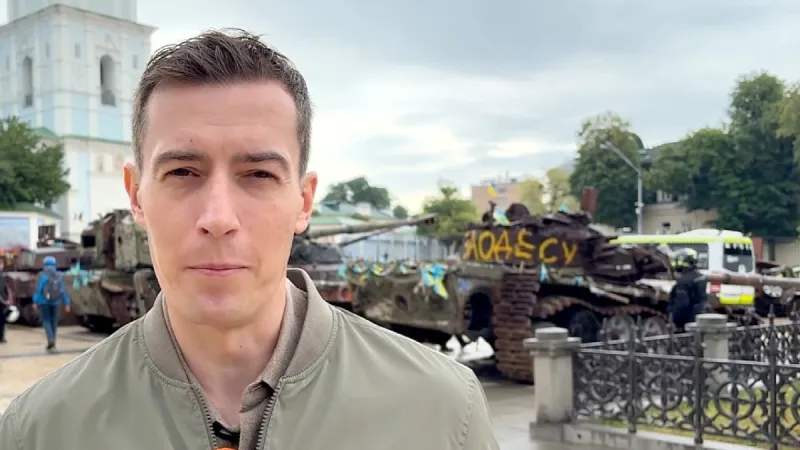
The prospect of starting these crucial talks, widely anticipated throughout the region, is viewed by many as a timely opportunity. "Now a window of opportunity opens for negotiations," reported WELT-Reporter Max Hermes from Kyiv, highlighting the perceived momentum building in European capitals.
However, this perceived opening also brings an undercurrent of caution, particularly regarding Russia's potential reactions. Geopolitical analysts and observers in the region express apprehension, with some suggesting the possibility of Moscow attempting to exploit the process or create obstacles. A palpable sense exists that this moment could be a strategic gambit by external forces.
The path to EU membership for both nations has been fraught with challenges, from internal reforms to external pressures. For Ukraine, the ongoing conflict with Russia underscores the strategic imperative of aligning with Western institutions, seeing EU membership as a bulwark against further aggression and a guarantee of democratic stability.
Moldova, a smaller nation strategically located between Ukraine and Romania, also views EU integration as essential for its security and economic prosperity. Chisinau has consistently pursued a pro-European foreign policy, navigating complex relationships with both its Western partners and its historical ties to Russia, particularly concerning the breakaway region of Transnistria.
The European Union has consistently affirmed its commitment to the enlargement process, particularly for its Eastern partners. Political will within the bloc to integrate Ukraine and Moldova has grown significantly since Russia's full-scale invasion of Ukraine, transforming what was once a long-term goal into a more immediate strategic priority.
This newfound urgency, however, does not eliminate the rigorous requirements for accession. Both Ukraine and Moldova must demonstrate substantial progress on reforms related to judicial independence, anti-corruption measures, economic stability, and adherence to EU democratic standards. These benchmarks remain non-negotiable for Brussels.
The two-year period of uncertainty, a political stalemate, refers to the time where formal negotiations were stalled despite both countries receiving candidate status. This interval allowed for preparatory work but lacked the concrete momentum of official talks.
The initiation of negotiations typically involves a screening process, where the legislation of the candidate country is assessed against the extensive body of EU law, known as the acquis communautaire. This meticulous process can span several years, requiring profound societal and governmental transformations.
Russia's reaction to potential EU expansion into its near abroad remains a central concern. Moscow has historically viewed such moves as an encroachment on its sphere of influence, often responding with political pressure, economic coercion, or military posturing. The current geopolitical landscape intensifies these concerns.
Analysts suggest Russia might seek to sow discord within the EU regarding the enlargement process or intensify hybrid warfare tactics against Ukraine and Moldova to destabilize their reform efforts. The ongoing conflict in Ukraine itself, as exemplified by incidents such as Kyiv Drones Rock St. Petersburg Amid Russian Forum, illustrates the constant pressure.
Furthermore, internal debates within the European Union regarding the integration of such large and economically diverse nations are also part of the challenge. Questions persist about the financial implications, institutional reforms required within the EU itself, and the potential impact on existing member states.
The issue of Ukrainian citizens seeking refuge and protection within EU member states has also been a complex topic, with some nations like Austria calling for a reevaluation of policies concerning military-aged men, as detailed in reports such as Austria Urges EU to End Protection for Ukrainian Fighting-Age Men. These discussions underscore the multifaceted nature of Ukraine's integration journey.
As the political leadership in Brussels considers the formal opening of these talks, the decision will reflect a careful balancing act between supporting aspiring members and safeguarding the strategic interests of the entire European bloc. The coming months will prove pivotal for the future trajectories of Ukraine, Moldova, and the broader European security architecture.