 Debby Wijaya
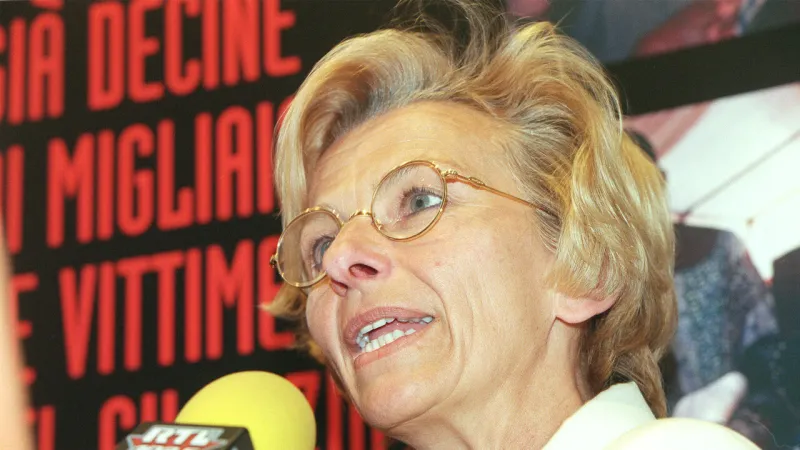
Srebrenica, Bosnia-Herzegovina – Years after the horrific events, the stark declaration made by veteran Italian politician Emma Bonino following her visit to Srebrenica continues to resonate. As European Commissioner for Humanitarian Affairs during the mid-1990s, Bonino described the atrocities she witnessed with an unequivocal statement: "Here there is a genocide." This powerful recollection, recently reiterated by her former spokesperson, underscores the profound impact of her on-the-ground assessment, which preceded the broader international recognition of the massacre.
Bonino, a figure renowned for her unwavering commitment to human rights and justice, served as the European Commissioner for Humanitarian Aid, European Community Humanitarian Office (ECHO), from 1995 to 1999. It was during this critical period that she traveled to the war-ravaged Balkans, including Srebrenica, shortly after the July 1995 massacre.
The Srebrenica massacre saw the systematic murder of more than 8,000 Bosniak Muslim men and boys by the Bosnian Serb Army of Republika Srpska. It stands as the single largest atrocity on European soil since World War II and has since been legally determined as an act of genocide by international courts.
Her visit provided a crucial, unfiltered perspective from a high-ranking European official at a time when information was often fragmented and official responses were slow to acknowledge the full scale of the unfolding tragedy. Her unvarnished assessment challenged the prevailing diplomatic caution.
At that juncture, the international community struggled with labeling the events. Despite mounting evidence, political considerations and a desire to avoid the implications of the 1948 Genocide Convention often led to euphemistic descriptions. Bonino's direct language cut through this ambiguity, forcing a confrontation with the grim reality.
Indeed, it was not until years later, through the painstaking work of the International Criminal Tribunal for the former Yugoslavia (ICTY) and the International Court of Justice (ICJ), that the term "genocide" was legally applied to the Srebrenica events, confirming Bonino's early and courageous observation. Her insight foreshadowed the definitive legal rulings.
Bonino's willingness to speak truth to power was a hallmark of her extensive career. Her decades of activism shaped both Italian and European policy, tackling issues from abortion rights to humanitarian crises. Her resolute stands, even when unpopular, cemented her legacy as a formidable voice for the marginalized and oppressed, as explored in Emma Bonino: Decades of Unyielding Activism Shaped Italy and Europe.
The recent recollection by her former spokesperson serves as a poignant reminder of Bonino's foresight and moral clarity, particularly significant in 2026, a period that still grapples with conflicts and humanitarian emergencies worldwide. Her words serve as a timeless call for vigilance.
Even after her passing, Bonino's influence endures, with tributes from across the political spectrum recognizing her indelible impact on public discourse and human rights advocacy. Italy, for instance, mourned her as a trailblazing radical rights champion, highlighting her profound contributions, as detailed in Italy Mourns Emma Bonino, Trailblazing Radical Rights Champion, Dead at 78.
The legacy of Srebrenica itself remains a crucial touchstone for international justice and human rights, continually challenging societies to confront the consequences of unchecked hatred and violence. Efforts for remembrance and reconciliation persist amidst ongoing struggles against historical revisionism.
Bonino's courageous declaration from Srebrenica stands as a powerful testament to the necessity of immediate, honest assessment in the face of atrocity, reminding leaders and citizens alike of the profound responsibility to recognize and prevent genocide.