 Robert Andrison
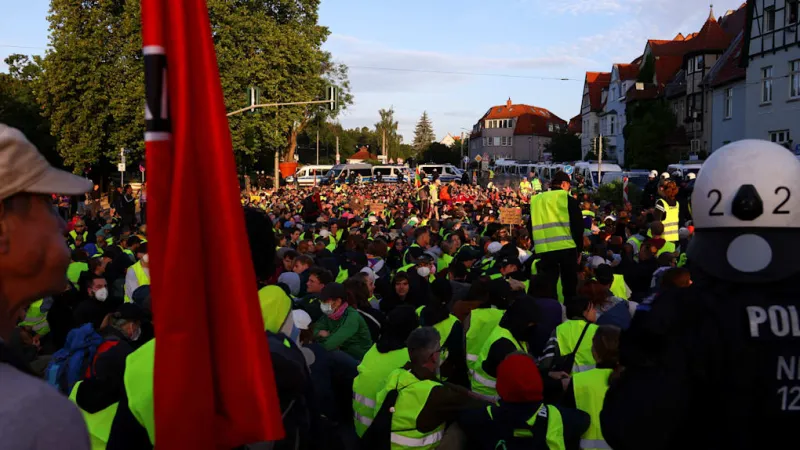
Erfurt, Germany – Tens of thousands of counter-protesters are descending upon the city of Erfurt this weekend, poised to demonstrate against the federal party conference of the Alternative for Germany (AfD) party. Authorities are implementing extensive security measures, including police escorts for AfD buses, while also preparing for potential confrontations with violent left-wing extremists amidst the widespread demonstrations.
Organizers anticipate upward of 20,000 individuals joining the counter-protests across various city center locations. These large-scale gatherings aim to voice strong opposition to the AfD's political agenda and its increasing presence in German national politics. The sheer volume of planned demonstrations presents a significant logistical and security challenge for local law enforcement.
Police forces from across the state and neighboring regions have mobilized, establishing a visible presence throughout Erfurt. Their primary objective involves ensuring the safety of all participants, safeguarding public order, and facilitating the movement of AfD delegates to their conference venue. This delicate balance requires meticulous planning and a robust operational strategy.
The AfD, a far-right political party, convenes its federal conference in Erfurt to determine key policy positions and elect party leadership. The party has garnered controversy for its anti-immigration stance, skepticism toward European integration, and rhetoric often criticized as divisive by mainstream political factions. These positions are central to the public outcry fueling the weekend protests.
Past AfD gatherings in cities like Cologne and Hanover have similarly drawn substantial counter-demonstrations, often resulting in heightened tensions and isolated incidents of unrest. The Erfurt event is expected to follow this pattern, with authorities particularly vigilant regarding groups identified as potentially violent.
Police officials confirm they are monitoring intelligence reports related to individuals and groups known for engaging in confrontational tactics. Specific measures are in place to separate opposing factions, minimizing opportunities for direct clashes that could escalate into broader public disturbances.
The escorting of AfD buses, a critical component of the security plan, serves to protect delegates from direct interference by protesters and to maintain traffic flow. This preventative action underscores the authorities' commitment to uphold the right to assembly for all political entities, even those facing significant public opposition.
Local businesses and residents face potential disruptions throughout the weekend. Road closures, detours, and increased pedestrian traffic are anticipated, prompting city officials to advise commuters and shoppers to plan accordingly. The city infrastructure is being prepared to absorb the influx of both party members and demonstrators.
Several civil society organizations, human rights groups, and mainstream political parties have endorsed or are actively participating in the counter-protests. They emphasize the importance of democratic expression against what they perceive as a threat to liberal values within Germany.
This weekend's events in Erfurt are not merely local demonstrations but reflect a broader national debate concerning the direction of German society and its political future. The robust response from civil society signals continued vigilance against extremist ideologies.
The cost associated with such a large-scale police operation is substantial, drawing resources from various state budgets. This financial burden highlights the societal implications of profound political divisions and the necessity of state intervention to preserve peace.
Despite the preparations for potential unrest, authorities continuously appeal for all demonstrations to remain peaceful and respect legal boundaries. The focus remains on de-escalation and preventing any actions that could jeopardize public safety or property.
The weekend in Erfurt promises to be a stark display of Germany's vibrant, if sometimes tumultuous, democratic landscape. The events will unfold under intense media scrutiny, with every development closely tracked as the nation observes how authorities manage the significant challenge.