 Chandra Wijayanto
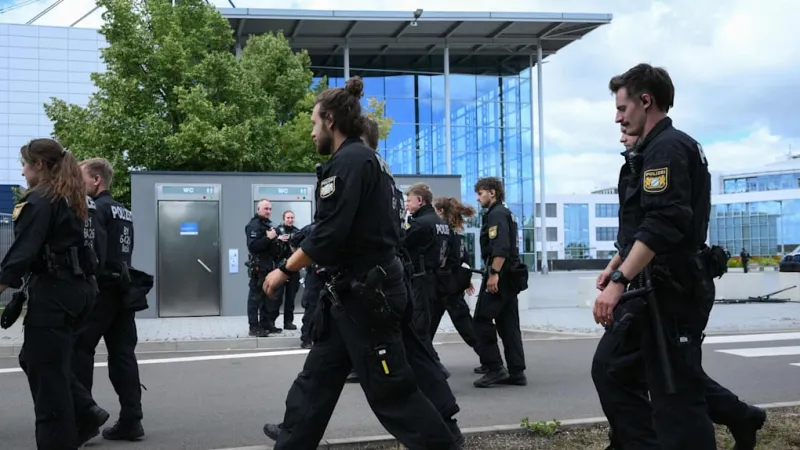
Erfurt, Germany - Authorities in Erfurt have registered 69 criminal offenses in the lead-up to the Alternative for Germany (AfD) federal party congress, scheduled to commence this weekend. The police anticipate tens of thousands of counter-demonstrators and are preparing for potential confrontations involving violent left-wing extremists. This heightened vigilance underscores the contentious political climate surrounding the nationalist party meeting.
The reported offenses range from property damage and graffiti to minor assaults, indicating a simmering tension in the city before the official start of the two-day event. Local law enforcement officials confirmed the figures, emphasizing their commitment to maintaining public order and safety throughout the duration of the congress and associated protests.
The AfD, a populist right-wing party, draws significant opposition from a broad coalition of civil society groups and other political factions. These groups view the AfD's policies and rhetoric as divisive and a threat to democratic values, consistently organizing large-scale demonstrations whenever the party convenes.
Preparations for the security operation are extensive, involving a substantial deployment of officers from across the region. Police spokespersons indicated that intelligence assessments point to a high probability of provocative actions and potential clashes, particularly from elements identified as left-wing extremist.
Concerns about public safety have been a recurring theme in discussions surrounding AfD gatherings. Previous party conferences have often been accompanied by large protests, some of which have escalated into confrontations between demonstrators and security forces, or between opposing groups.
The upcoming congress in Erfurt is particularly significant as the party aims to solidify its electoral strategy and address internal policy debates. The media attention on the event is intense, not only for its political implications but also for the logistical challenges posed by the anticipated large crowds.
Political commentators have weighed in on the charged atmosphere. Publicist Henryk Broder, for instance, previously warned that Antifa elements could orchestrate civil unrest ahead of the AfD congress, highlighting the potential for organized disruption. Such warnings contribute to the police's comprehensive security planning. Broder Warns: Antifa Orchestrates Civil Unrest Ahead of AfD Congress.
Wolfgang Kubicki, Vice-Chairman of the Free Democratic Party (FDP), also publicly denounced planned blockades of the AfD congress, labeling such protesters as criminals. His strong condemnation reflects a wider debate within German politics regarding the acceptable limits of protest and civil disobedience. Kubicki Denounces AfD Congress Blockades, Labels Protesters Criminals.
The party itself is facing scrutiny regarding its internal dynamics and future direction, especially as one of its prominent figures, Bjorn Hocke, is expected to play a significant role. The outcomes of the congress could reshape the political landscape, particularly in the eastern German states where the AfD enjoys considerable support.
Additionally, discussions around potential AfD candidates gaining premier posts in regional governments have been circulating. For example, AfD candidate Hans-Joachim Holm has been vocal about his aspirations and has openly challenged public media institutions, adding another layer of controversy to the party's public image. AfD Candidate Holm Aims for Second Premier Post, Challenges Public Media.
Security forces are implementing strict perimeter controls and traffic management schemes around the congress venue to mitigate risks. They aim to separate opposing groups and prevent direct confrontations, a strategy refined from experience with previous large-scale demonstrations.
The city of Erfurt is bracing for a weekend of heightened activity, with businesses and residents advised to anticipate disruptions. Despite the security concerns, local authorities stress their preparedness to facilitate both the congress and the peaceful exercise of protest rights.
The police have also established a dedicated communication channel for citizens to report incidents and receive real-time updates on the situation, demonstrating a proactive approach to public engagement and transparency during a potentially volatile period.
The congress itself will address various policy issues, from immigration and economic policy to Germany's role in international affairs. These discussions often fuel the fervor of both supporters and opponents, underscoring the deep ideological divides within the nation.
As the weekend approaches, all eyes remain on Erfurt, where the convergence of political assembly and public protest will test the resolve of law enforcement and the stability of the public sphere.