Gabriella
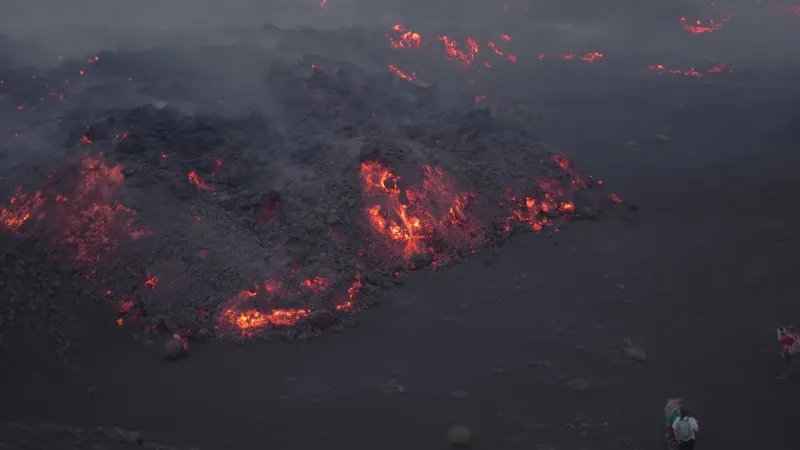
MOUNT ETNA, SICILY – Europe's most active volcano, Mount Etna, continues its dramatic eruption, with a significant lava front now descending to an altitude of 1,300 meters (approximately 4,265 feet). The fiery flow, originating from its southeastern crater, has already incinerated extensive portions of vegetation across its slopes, while simultaneously drawing a multitude of curious onlookers and vulcanology enthusiasts to witness the geological spectacle.
Authorities are monitoring the situation closely as the incandescent stream encroaches upon forested areas. While the lava poses no immediate threat to inhabited zones, the destruction of natural habitats remains a primary concern for environmental agencies operating in the region.
Etna, a UNESCO World Heritage site, is renowned for its frequent and often spectacular eruptions, which typically involve effusive lava flows, ash emissions, and Strombolian activity. This latest phase of activity commenced recently, marking another chapter in the volcano's millennia-long history of geological dynamism.
Despite the inherent dangers of an active eruption, the phenomenon acts as a powerful magnet for both local residents and international tourists. Designated viewing points, established by local civil protection agencies, allow for safe observation of the descending lava, though access to higher altitudes near the active flow remains strictly prohibited.
The incinerated vegetation, though a natural part of Etna's ecosystem renewal cycle, raises concerns about localized air quality due to smoke and potential long-term alterations to the biodiversity of the volcanic slopes. The rich volcanic soil, however, consistently rejuvenates, fostering unique flora post-eruption.
Volcanologists from the National Institute of Geophysics and Volcanology (INGV) in Catania are maintaining a continuous watch, utilizing sophisticated seismic and thermal monitoring equipment. Their data collection is crucial for understanding the volcano's behavior and providing early warnings, reflecting years of dedicated study into this natural wonder.
Past eruptions have ranged from relatively benign effusions to more explosive events that have impacted communities further afield. For instance, the historic eruption of 1669 devastated parts of Catania, demonstrating the immense power that lies beneath the seemingly calm exterior of Sicily's highest peak.
The persistent activity of Etna, while a natural hazard, also plays a significant role in Sicily's identity and economy. It attracts thousands of visitors annually, contributing to tourism revenues, with many guided tours specifically tailored to explore the volcanic landscapes and recent lava flows.
The ongoing spectacle also subtly highlights broader global environmental narratives, where natural events, from unprecedented butterfly migrations to severe weather patterns, increasingly capture public attention. This active geology reminds us of Earth's dynamic processes.
Dr. Marco Rossi, a vulcanologist with decades of experience studying Etna, commented on the current phase: "This effusive activity is characteristic of Etna. While visually dramatic, the slow descent of the lava allows for effective monitoring and minimal risk to populated areas, provided protocols are followed. The main concern now is the spread of brush fires from the heat."
The lava flow is characterized by its relatively slow pace, which typically allows for the solidification of its outer crust, forming a channel that guides the molten rock. This particular flow originates from one of the effusive vents that opened in recent weeks, a common occurrence during periods of heightened activity.
Ash emissions, which sometimes accompany Etna's eruptions, can occasionally disrupt air traffic at nearby Catania Fontanarossa Airport. However, during this current phase, ash plumes have been minor, and operations at the airport have remained largely unaffected, a relief for both travelers and local businesses.
Residents living on Etna's flanks have developed a deep-seated resilience and respect for the volcano. Generations have adapted to its unpredictable nature, integrating its presence into their daily lives and cultural identity, a testament to humanity's ability to coexist with powerful natural forces.
Scientists predict that Etna will continue its intermittent activity for the foreseeable future. Each eruption provides invaluable data, helping researchers refine predictive models and enhance safety measures for the communities nestled around its majestic slopes.
For those drawn to the raw power of nature, Etna remains an irresistible spectacle. The stark contrast of the glowing lava against the night sky, and the plumes of smoke rising into the atmosphere, offer a humbling reminder of Earth's immense, untamed energy.