 Stefani Rindus
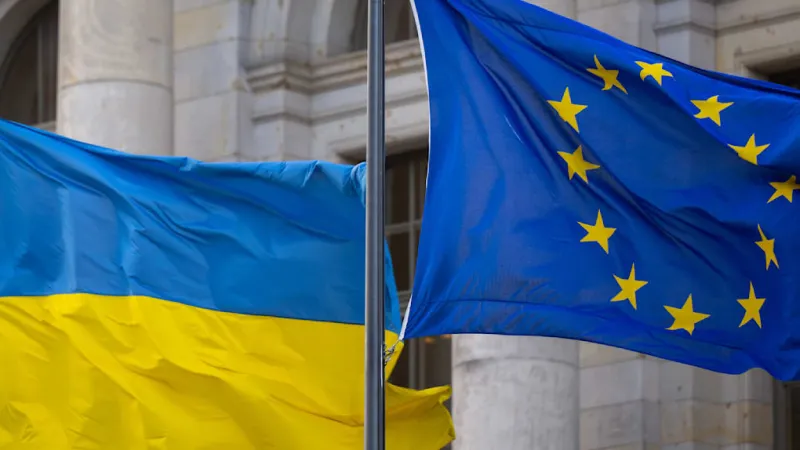
BRUSSELS – European Union member states have officially cleared the path for the commencement of accession negotiations with Ukraine and Moldova, marking a pivotal moment for both aspiring nations. The historic talks are slated to begin this coming Monday, a development hailed by the presidents of both Eastern European countries as a recognition of their profound commitment and reform efforts towards full EU membership.
The unanimous decision by EU ambassadors on Friday formally adopted the negotiating frameworks, solidifying the bloc's political will to expand eastward despite ongoing challenges. This step follows intense diplomatic efforts and careful evaluation of the preparatory reforms undertaken by both Kyiv and Chisinau.
Ukrainian President Volodymyr Zelenskyy welcomed the news as a significant victory for his nation, which continues to defend itself against Russian aggression. He stated, "This is a historic step that recognizes the hard work and resilience of the Ukrainian people. Our path to Europe is irreversible."
Moldovan President Maia Sandu echoed this sentiment, emphasizing the transformative potential for her country. "Moldova's European future is now closer than ever. These negotiations will bring stability, prosperity, and stronger democratic institutions to our citizens," she remarked.
The decision arrives over two years after both countries formally applied for EU membership following Russia's full-scale invasion of Ukraine in February 2022. They were granted candidate status in June 2022, a rapid response that underscored the geopolitical imperative of closer integration.
Accession negotiations are a lengthy and complex process, often spanning many years. Prospective members must align their national laws and standards with the extensive body of EU legislation, known as the acquis communautaire, across 35 policy chapters. This includes reforms in areas such as rule of law, judicial independence, economic governance, and environmental protection.
For Ukraine, the process presents unique challenges given the ongoing conflict. Reconstructing infrastructure, addressing wartime economic dislocations, and implementing reforms in a state of war will test both its government and the EU's commitment. However, proponents argue that the talks themselves will serve as a powerful anchor for post-war recovery and democratic consolidation.
Moldova, while not actively engaged in armed conflict, faces its own set of hurdles, including corruption issues and the unresolved status of its breakaway Transnistria region, which is backed by Russia. The negotiation process will require Chisinau to demonstrate robust progress in governance and territorial integrity.
Geopolitically, the launch of these EU accession talks sends an unequivocal message to Moscow about the enduring strength and expanding influence of the European project. It reinforces the bloc's commitment to supporting democratic aspirations in its neighborhood and countering Russian efforts to destabilize the region.
EU Commission President Ursula von der Leyen and European Council President Charles Michel have consistently advocated for the enlargement, viewing it as crucial for Europe's long-term security and prosperity. Their leadership proved instrumental in navigating the complex political landscape within the 27-member bloc to reach this consensus.
Public support within both Ukraine and Moldova for EU membership remains overwhelmingly high, driven by the promise of greater economic opportunities, democratic freedoms, and enhanced security. However, concerns persist in some older EU member states regarding the implications of further enlargement on the bloc's institutions and budget.
The journey ahead involves rigorous screening processes, benchmarks, and regular assessments by the European Commission. Each step of the negotiation, from opening individual chapters to their provisional closure, requires unanimous approval from all existing EU member states, highlighting the intricate political dynamics at play.
This latest move underscores the EU's strategic pivot towards a more robust enlargement policy, recognizing the imperative to offer a clear European perspective to countries in its immediate vicinity, particularly those facing geopolitical pressures. The coming years will define the scope and pace of this ambitious undertaking.