 Robert Andrison
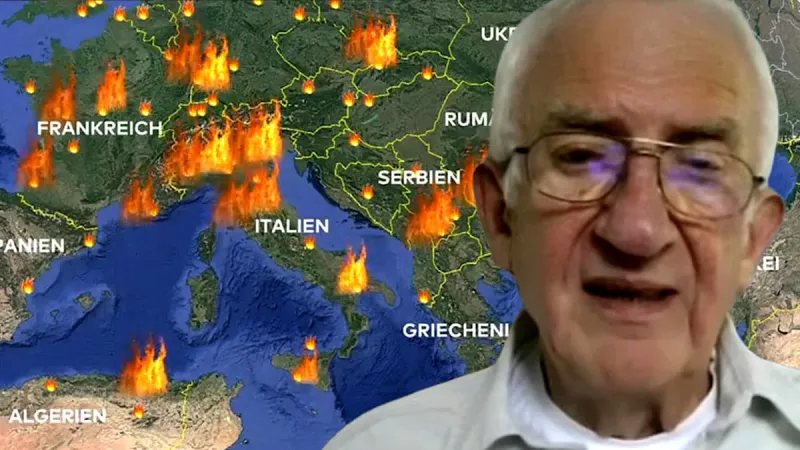
ATHENS, PARIS, MADRID — Europe is currently grappling with a surge of severe wildfires, exacerbated by relentless heatwaves, prolonged drought conditions, and powerful winds. Emergency services across Greece, France, and Spain are facing unprecedented operational challenges, as the sheer intensity of the blazes tests the very limits of their capabilities.
The widespread conflagrations have devastated vast tracts of land, forcing evacuations and straining resources as firefighters battle the relentless spread of flames across multiple fronts simultaneously. The volatile combination of climatic factors creates an environment where traditional firefighting methods prove increasingly insufficient.
Johann Goldammer, a renowned wildfire expert, issued a stark warning regarding the current crisis. He emphasized that the extraordinary fire intensity is pushing emergency responders beyond their customary operational boundaries, highlighting the growing difficulty in containing and extinguishing these supercharged infernos.
The Mediterranean region, particularly susceptible to such events, has been enduring a prolonged period of abnormally high temperatures. This heat, coupled with an extensive lack of rainfall, has transformed forests and scrublands into tinder-dry fuel, ready to ignite at the slightest spark.
Strong, unpredictable winds further complicate suppression efforts. They act as a catalyst, fanning the flames, rapidly changing fire direction, and propelling embers over long distances, creating new ignition points far from the main fire lines. This dynamic behavior makes strategic containment exceptionally difficult.
In Greece, where the situation has been particularly dire, communities have been evacuated as fires encroached upon residential areas and vital infrastructure. The smoke plumes are visible for miles, coating entire regions in a hazy, acrid air that poses significant public health risks.
France and Spain are experiencing similar struggles, with emergency crews working around the clock under arduous conditions. International assistance has been deployed in some areas, underscoring the regional scale of the crisis and the collaborative effort required to mitigate its impact.
The increasing frequency and severity of these wildfire events are prompting scientists to study their broader atmospheric effects, including the formation of pyrocumulus clouds. For further insights into this phenomenon, readers can explore new research detailed in the article Wildfires: New Mission to Study Pyrocumulus Clouds Changing Weather.
The environmental consequences extend far beyond immediate destruction. The loss of forests contributes to increased carbon emissions, habitat destruction for wildlife, and long-term soil erosion, which can lead to further ecological instability and potential desertification in affected areas.
Experts like Goldammer suggest that current strategies and equipment, while effective in past scenarios, are being outpaced by the evolving nature of modern wildfires. There is an urgent call for re-evaluation of national and international response protocols, alongside significant investment in advanced suppression technologies and prevention measures.
The ongoing battle underscores a critical juncture in how European nations confront the escalating challenges posed by climate-driven extreme weather. As temperatures continue to rise globally, the intensity of such natural disasters is predicted to amplify, demanding proactive and adaptive solutions.
The cumulative strain on personnel, machinery, and financial resources is immense. Firefighters, often volunteers, face not only physical exhaustion but also psychological stress from prolonged exposure to dangerous and emotionally taxing conditions.
Governments across the continent are now under pressure to implement more robust climate resilience strategies, focusing on both immediate crisis response and long-term ecological management to prevent future catastrophes of this magnitude. The lessons learned from this challenging period will undoubtedly shape future policy.
The current crisis serves as a stark reminder of the interconnectedness of global climate patterns and local environmental vulnerabilities, urging a more integrated and anticipatory approach to disaster preparedness and mitigation in an increasingly volatile world.