 Chandra Wijayanto
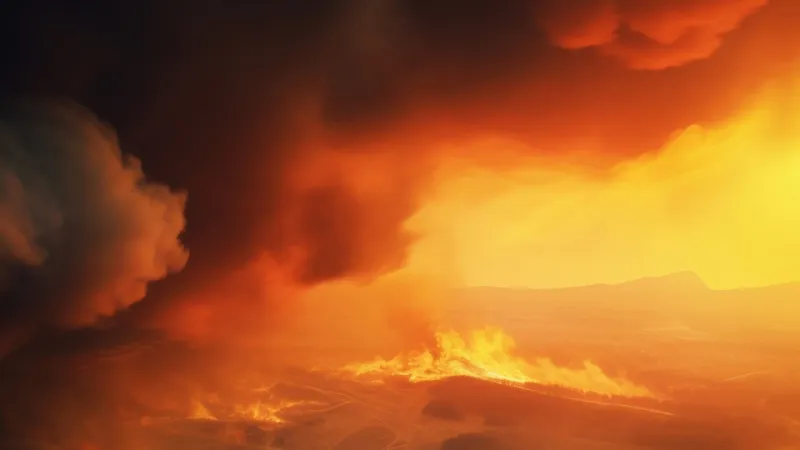
A new scientific endeavor is poised to delve into the enigmatic phenomenon of pyrocumulonimbus clouds, commonly known as fire clouds, which experts contend allow wildfires to dictate their own localized weather. This mission, launching amidst escalating global wildfire crises, seeks to unravel the complex atmospheric interactions that enable these towering plumes to intensify blazes and shape regional meteorology.
For decades, scientists have observed that large, intense wildfires are not merely passive victims of atmospheric conditions but can actively generate their own volatile microclimates. These self-sustaining systems are largely attributed to the formation of pyrocumulus and their more extreme cousins, pyrocumulonimbus clouds.
An unnamed expert, whose insights underscore the urgency of this research, stated, "These fire clouds allow the fire to decide its own weather," highlighting the unprecedented level of control wildfires can exert once these atmospheric structures form. This capability transforms a localized event into a broader meteorological challenge.
The mission will employ a combination of advanced satellite remote sensing, high-altitude drone observations, and ground-based meteorological stations. Researchers aim to gather unprecedented data on the thermodynamic and microphysical properties of these massive smoke plumes, their vertical development, and their interaction with ambient atmospheric layers.
The primary goal is to develop more accurate predictive models for wildfire behavior, especially concerning spread rates and intensity. Improved understanding of fire clouds is critical for firefighting strategies, public safety, and managing natural resources in an era of increasing extreme weather events.
The urgency for this research is amplified by the exacerbation of wildfire events worldwide, fueled by climate change. Regions from California to Australia, and even the Mediterranean, have witnessed record-breaking fire seasons, often characterized by the presence of these powerful fire clouds.
Recent events, such as the massive inferno in Crete that led to the evacuation of 8,000 residents, underscored the destructive power of wind-fueled blazes. The dynamics of such fires are frequently influenced by the very weather systems they create. Understanding these feedback loops is paramount for mitigation.
Pyrocumulonimbus clouds can inject smoke and aerosols high into the stratosphere, impacting global climate patterns and atmospheric chemistry far from their origin points. This lofting mechanism has long puzzled scientists, making dedicated missions essential for quantifying these long-range effects.
Specialized instruments on board the mission's platforms will measure temperature profiles, moisture content, wind shear, and the composition of aerosols within and surrounding the fire clouds. These measurements will help define the specific conditions under which these formidable clouds develop.
The findings from this mission are expected to inform international efforts to combat wildfires and adapt to a changing climate. By demystifying how fire clouds grant fires meteorological autonomy, scientists hope to equip emergency services with better tools and forecasts.
Ultimately, this research aims to contribute to a global framework for anticipating and responding to extreme fire events, minimizing their ecological devastation and human cost. The insights gained could revolutionize our approach to wildfire management and prevention.