 Dodi Irawan
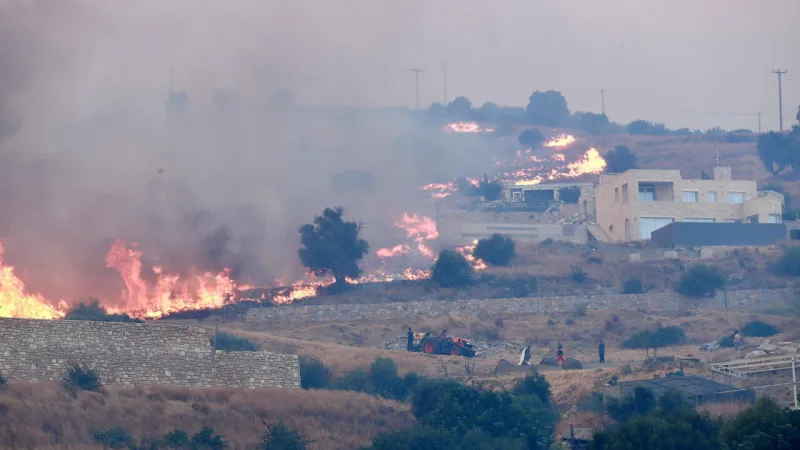
CRETE, Greece – Wildfires on the Greek island of Crete have forced the evacuation of approximately 8,000 residents and tourists, as powerful wind gusts severely impede aerial firefighting efforts. The blazes, intensified by unseasonably strong winds, have rapidly spread across several areas, prompting a swift, large-scale emergency response from local authorities.
The widespread evacuations underscore the escalating crisis impacting the popular tourist destination. Emergency services are coordinating the movement of thousands from affected villages and resort areas to safer zones, as the flames threaten homes and infrastructure.
Fire department officials confirmed that persistent high winds are preventing the deployment of critical aerial assets, including water-dropping planes and helicopters. This reliance on ground crews alone makes containment significantly more challenging and prolongs the battle against the advancing inferno.
The affected regions include parts of the Lasithi prefecture, where residents reported seeing massive plumes of smoke rising into the sky and ash falling over considerable distances. The rapid progression of the fire fronts necessitated immediate action to safeguard human lives.
Local authorities have issued urgent appeals for residents to comply with evacuation orders and remain vigilant. Police and civil protection units are actively going door-to-door in some areas to ensure all individuals are accounted for and safely transported away from danger.
The current situation in Crete echoes similar challenges faced across southern Europe in recent years, where climate change contributes to more frequent and intense wildfire seasons. The Mediterranean basin, in particular, has become a hotspot for such natural disasters. For instance, concerns about large-scale evacuations have been observed previously, as documented in articles such as Spain's Wildfires Spark Evacuation Crisis, Organized Looting Surges.
Residents describe scenes of panic and uncertainty as they left their homes with minimal belongings, uncertain when they might be able to return. Many are seeking shelter in designated community centers, hotels, and with relatives in unaffected parts of the island.
The Greek government has mobilized additional resources to support the firefighting operations, dispatching specialized teams and equipment from mainland Greece. Despite these reinforcements, the atmospheric conditions remain the primary obstacle to bringing the fires under control.
Meteorological forecasts offer little immediate relief, predicting continued strong winds for the next 24 to 48 hours. This grim outlook suggests that the struggle to contain the Crete wildfires will persist, placing further strain on emergency personnel and displaced populations.
The long-term impact on Crete’s ecosystem and tourism industry is a growing concern. Vast tracts of forest and agricultural land have already succumbed to the flames, and the disruption caused by mass evacuations could have significant economic repercussions for the island.