 Edward DP Situmorang
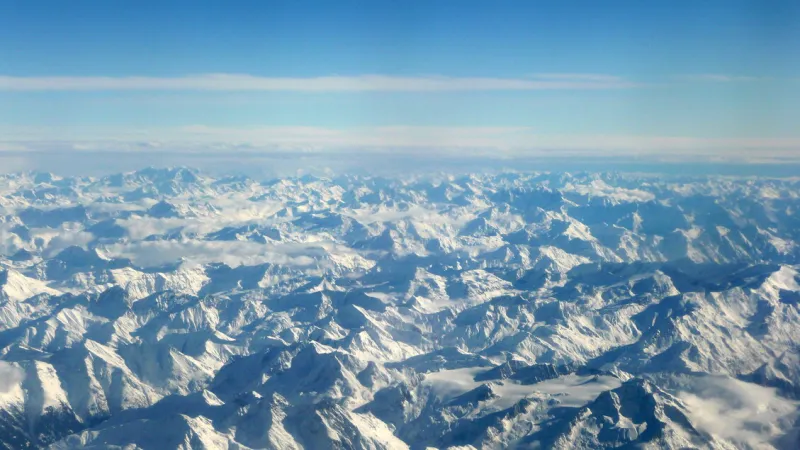
THE ALPS are experiencing an unprecedented environmental crisis as the zero thermal level on its iconic glaciers has dramatically ascended above 4,500 meters, according to recent observations. This alarming shift, driven by extreme heat and diminishing snowfall, portends severe water scarcity for downstream regions, warned Carlo Barbante, a leading scientist from the Italian National Research Council's Institute of Polar Sciences (Cnr-Isp) and Ca' Foscari University.
The zero thermal level, the altitude at which air temperature drops to freezing, typically hovers much lower in the Alps, particularly during summer months. Its persistent elevation above 4,500 meters signifies that even at the high reaches of the mountain range, ice and snow are subjected to thawing temperatures for extended periods, accelerating glacier retreat.
Barbante underscored the immediate consequences of this climatic anomaly. "There is little snow, and water is beginning to run out," he stated, highlighting the critical reduction in the essential hydrological input derived from the annual snowpack. This scarcity directly impacts the rivers and lakes fed by these magnificent Alpine glaciers, which serve as crucial reservoirs for much of Europe.
The long-term implications extend far beyond diminished water levels. Alpine ecosystems, finely tuned to specific thermal conditions, face immense pressure. Unique flora and fauna are threatened, and the stability of mountain slopes, reliant on permafrost, diminishes, increasing the risk of landslides and rockfalls in popular tourist areas.
Historically, while temperature fluctuations have always influenced Alpine conditions, the current trajectory demonstrates a pronounced and rapid acceleration. Data from meteorological stations across the region confirm that 2026 continues a pattern of escalating warmth, with several records for high-altitude temperatures being approached or broken.
This phenomenon is intricately linked to broader global warming trends. As atmospheric temperatures rise, the insulating layer of snow that protects older ice diminishes, exposing the ancient Alpine glaciers directly to solar radiation and warmer air. This creates a feedback loop, where less snow cover leads to more melt, further reducing the albedo effect and absorbing more heat.
Europe is currently grappling with widespread extreme temperatures, echoing warnings published in articles such as Europe Braces for Peak Heatwave: Millions at Risk, Deaths Mount. The high zero thermal level in the Alps serves as a stark indicator of this continental heatwave's intensity and reach, affecting even the highest elevations.
Experts like Barbante are urgently calling for robust climate action. He emphasizes that while immediate adaptation strategies are necessary to manage water resources, the overarching solution requires a concerted global effort to curb greenhouse gas emissions and slow the rate of planetary warming.
The impact on local communities is already palpable. Farmers in the valleys below the Alpine glaciers anticipate reduced irrigation water for crops, while ski resorts face shorter seasons and increased reliance on artificial snow production, which itself is resource-intensive. The hydroelectric power industry, a significant energy source for the region, also faces uncertain futures with fluctuating water availability.
This phenomenon aligns with broader trends discussed in analyses like Unpacking the Heatwave: Climate Change's Nuanced Role Revealed, which highlights the complex interplay of factors contributing to severe weather events. The shrinking of the Alpine glaciers offers a tangible, undeniable illustration of these global environmental shifts.
The future of these majestic mountains, and the millions who depend on their resources, hinges on swift and decisive action. Without a significant reversal in current warming patterns, the permanent loss of vast ice reserves in the Alps appears increasingly inevitable, reshaping the landscape and threatening a fundamental source of life-sustaining water.