 Chandra Wijayanto
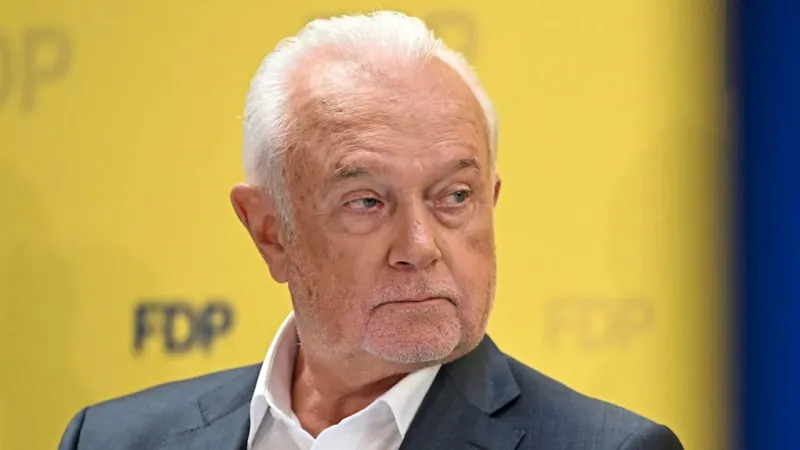
BERLIN – Germany's Free Democratic Party (FDP) is intensifying its fight for political relevance, with chairman Wolfgang Kubicki rallying the party's base around core ideological convictions at a recent party congress. The concerted effort comes as the liberal party looks toward 2027, a year widely regarded as pivotal for its very survival in the highly competitive German political landscape.
The congress served as a crucial platform for the FDP to define its identity and strategy, emphasizing traditional liberal tenets amidst fluctuating public support. Kubicki's impassioned address underscored the urgency of reclaiming the party's distinct voice before the decisive electoral cycle that year.
The 2027 elections are projected to determine whether the FDP can maintain its presence in federal and state parliaments, a threshold it has struggled with at various points in its history. Party strategists acknowledge the high stakes, viewing the upcoming period as a do-or-die moment for the party's long-term future.
Central to Kubicki's message was a renewed commitment to freedom of speech, a cornerstone of liberal ideology. He urged members to vigorously defend this principle against what he characterized as growing attempts to curtail open discourse and expression within society.
Migration policy also featured prominently in the chairman's rallying cry. The FDP aims to articulate a clear, principles-based stance on immigration that balances humanitarian concerns with the imperatives of integration and national security, differentiating itself from both conservative and progressive approaches.
Furthermore, Kubicki addressed the party's approach to the political Left, calling for a firm and principled opposition to what the FDP perceives as statist and overly regulatory tendencies. This positioning seeks to carve out a unique space for the liberals in the German political spectrum.
The party congress comes at a challenging time for the FDP, which has seen its electoral fortunes ebb and flow in recent years. Analysts suggest that a clear articulation of its core values is essential to differentiate the party from its coalition partners and the opposition alike.
Historically, the FDP has played a kingmaker role in German coalition governments, often providing the necessary votes for either conservative or social-democratic-led administrations. However, the erosion of its voter base has threatened this historical leverage, making internal cohesion and a strong electoral performance critical.
Observers of German politics note that the FDP's struggle is not unique, as liberal parties across Europe grapple with evolving political landscapes and the rise of populism. The party's ability to resonate with voters on issues such as economic freedom, individual liberty, and limited government will be key to its resurgence.
Kubicki's call for unity and a return to fundamental beliefs is seen as an attempt to galvanize the party's traditional supporters while also attracting new voters disillusioned with the mainstream political discourse. The strategy emphasizes principle over pragmatism in an effort to rebuild trust.
The road to 2027 will be fraught with challenges, requiring the FDP to not only define its message but also to effectively communicate it to a diverse electorate. The success of this internal reorientation will ultimately be measured by its ability to translate ideological purity into electoral gains.
As the party looks ahead, its leadership hopes that a steadfast adherence to its founding principles will provide the necessary foundation for political survival. The coming months will test the FDP's resolve and its capacity to convince German voters that its vision for the future is both necessary and viable.
Meanwhile, the broader German political environment remains dynamic. For instance, the Social Democratic Party (SPD) has previously criticized leadership within the German coalition, highlighting the ongoing tensions and strategic realignments among major parties. This context underscores the competitive landscape the FDP must navigate. For more on internal German coalition dynamics, read: SPD Blasts Merz: Weak Leadership Plagues German Coalition.
The Free Democratic Party's renewed emphasis on its ideological bedrock represents a calculated risk. By doubling down on core liberal values, the party aims to re-establish a clear identity and purpose, hoping this distinction will secure its future beyond 2027.
Ultimately, the fate of the FDP will depend on its capacity to transform its internal revitalization into tangible electoral success, proving that liberal principles still hold sway with the German populace in an increasingly polarized political era.