 Dodi Irawan
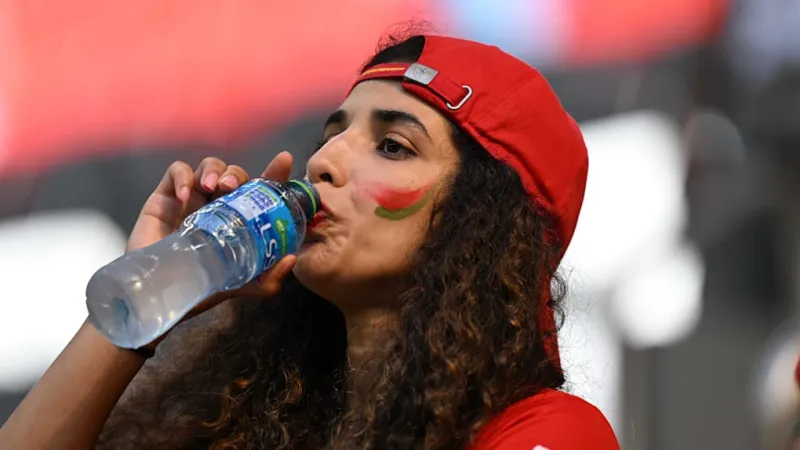
ZURICH – The Federation Internationale de Football Association, FIFA, has rescinded its controversial prohibition on spectators bringing water bottles into World Cup stadiums, executing a pivotal policy reversal after substantial public outcry. The global football body, which initially cited security concerns for the restrictive measure, has now announced the allowance of personal hydration under a new set of stringent conditions.
The initial ban had sparked considerable indignation among football enthusiasts worldwide. Fans, many of whom traverse significant distances and endure various climates to attend matches, viewed the restriction as an undue imposition that prioritized commercial interests over supporter welfare and safety, especially during lengthy games in potentially hot environments.
FIFA previously justified the restriction by pointing to potential security risks, including the misuse of bottles as projectiles or the smuggling of illicit substances. However, critics argued that these concerns could be adequately addressed through less draconian measures, such as thorough inspections and limitations on bottle types and sizes.
Following the widespread condemnation, which manifested across social media platforms, fan forums, and even official statements from supporter groups, pressure mounted on FIFA to reconsider its stance. The collective voice of the global football community proved influential, compelling the organization to reassess its security protocols and fan engagement policies.
The newly instated regulations permit fans to bring water bottles into stadiums, but with specific stipulations designed to mitigate the previously cited risks. While the precise details may vary by venue, general guidelines are expected to include requirements for clear, transparent plastic bottles, often with a maximum volume, and potentially mandating that bottles be factory-sealed upon entry.
This concession represents a significant victory for fan advocacy, underscoring the growing influence of supporter movements in shaping major sporting event policies. It highlights FIFAs responsiveness, albeit belated, to the legitimate concerns of those who are the very lifeblood of the sport.
Historically, stadium access rules have been a recurring point of contention between event organizers and attendees. From food restrictions to bag policies, governing bodies frequently balance security imperatives with the desire to ensure a comfortable and enjoyable experience for all. This latest reversal suggests a renewed emphasis on the latter, prompted by an undeniable groundswell of opposition.
The decision also carries implications for the broader specter of fan welfare at mega-events. Ensuring adequate hydration is a fundamental health consideration, particularly at large-scale gatherings like the World Cup, where thousands congregate for hours. The allowance of personal water bottles empowers fans to manage their own hydration needs effectively.
Observers note that the timing of this policy shift, ahead of major preparatory phases for the 2026 World Cup across North America, allows for smoother implementation and less friction with fan bases. The tournament, co-hosted by the United States, Canada, and Mexico, anticipates unprecedented numbers of international visitors. For those planning to attend matches, whether from nearby states or international locales, understanding and adhering to such policies is paramount. The United States has already taken steps to ease travel tensions for tournament participants, as evidenced by decisions like USA Grants Iranian World Cup Visas, Easing Pre-Tournament Tensions.
While the immediate focus remains on stadium entry, the broader dialogue initiated by this protest underscores the continuous need for transparent communication and collaborative policy-making between sporting bodies and their global audience. Ensuring a safe yet accessible environment for all participants, from the athletes on the pitch to the supporters in the stands, remains a complex but critical endeavor. As fans eagerly anticipate upcoming matches, including crucial qualification games, the comfort and well-being of all attendees remains a key organizational priority, a lesson perhaps reinforced by past challenges such as when World Cup Dream Crushed: Star Karl Injured Ahead of USA Match.
This development serves as a powerful reminder that while security is paramount, policies must also consider the practical realities and fundamental rights of attendees. The ability to carry water, a basic necessity, has transitioned from a point of contention to an accepted facet of the World Cup spectator experience, albeit under clearly defined guidelines.