 Chris Robert
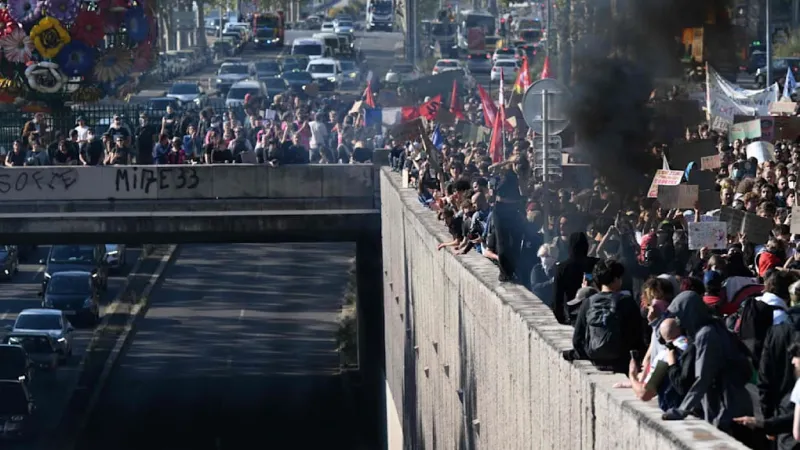
Paris, France – Hundreds of thousands of students, supported by major labor unions, converged across France on Tuesday in a significant escalation of nationwide protests, where police deployed tear gas and water cannons to disperse demonstrators amidst widespread unrest.
The demonstrations marked a new numerical peak for the movement, underscoring deep-seated discontent among the nations youth and broader society. Organized efforts saw students from secondary schools and universities join forces with workers, amplifying calls for policy changes.
Authorities confirmed that the protests, initially peaceful in many areas, devolved into clashes in several major urban centers. Law enforcement officials stated they intervened to control unruly elements and ensure public safety.
Reports from various cities, including Paris, Lyon, and Marseille, detailed scenes of confrontation. Police utilized crowd control measures, including tear gas and water cannons, against segments of the protesting crowds who reportedly engaged in acts of vandalism or attempted to breach security perimeters.
This latest surge of activism builds upon previous waves of dissent that have frequently swept across France. Observers note a pattern of escalating tension, reminiscent of earlier mobilizations. Prior demonstrations saw widespread participation, as detailed in reports like French Student Protests Spark Clashes Across Major Cities.
The widespread participation of students, coupled with the explicit backing of powerful trade unions, signals a formidable challenge to the government. Such broad alliances often indicate a deeper societal dissatisfaction that transcends specific youth-centric issues.
Historically, French student protests have played a pivotal role in national discourse, often leading to significant governmental policy shifts or even political crises. Their current resurgence demands close attention from policymakers.
Activists articulate a range of grievances, from proposed educational reforms to broader concerns about youth employment prospects and the cost of living. These issues resonate deeply with a generation navigating an uncertain economic landscape.
The scale of Tuesday's protests, characterized by hundreds of thousands taking to the streets, suggests a powerful collective voice demanding to be heard. Organizers emphasized the peaceful intent of the vast majority of participants, condemning isolated acts of violence.
As the situation unfolds, both the government and protest leaders face mounting pressure. The authorities must balance maintaining order with upholding the right to peaceful assembly, while demonstrators aim to sustain momentum without further escalation of violence.
The events of Tuesday reaffirm the enduring tradition of public demonstration in France as a potent mechanism for political expression. The extent of the movement underscores persistent societal divisions that continue to animate public life. Previously, these movements have shown a capacity for sustained action, with reports indicating French Student Protests Escalate: Third Wave Grips Major Cities.
The coming days will be critical in determining the trajectory of these demonstrations. The government will likely weigh its response carefully, considering both the immediate need for order and the long-term implications for national stability.
Observers across Europe are watching closely, as youth activism often serves as an early indicator of broader political and social trends. The commitment shown by French students and their union allies could inspire similar movements elsewhere.
This concerted effort highlights the powerful role that organized youth and labor can play in shaping national policy and reflecting the collective anxieties of a populace. The sheer numbers involved cannot be easily dismissed by authorities.