Debby Wijaya
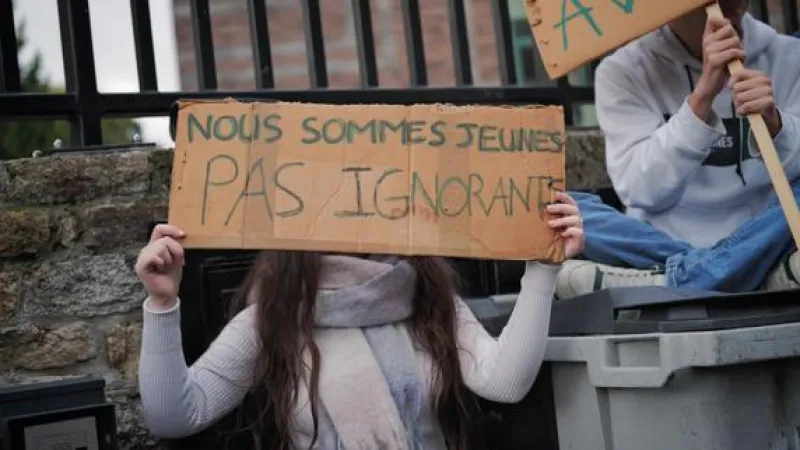
Paris, France — French high school students launched a widespread wave of protests Tuesday, initiating blockades at numerous educational institutions from Guingamp to the capital, Paris. This latest national mobilization effort could see approximately 200 of the nations 3,700 high schools closed, according to an estimate from the Minister of National Education, as demonstrations are poised to unfold in major urban centers including Lyon, Marseille, Lille, Toulouse, and Bordeaux.
The estimated 200 potential closures represent a substantial portion of the secondary education system, signaling a notable escalation in student activism. This figure, conveyed by the Minister on France Inter, underscores the gravity of the ongoing unrest affecting high school operations nationwide.
This current wave of blockades follows a period of intensifying student demonstrations that have, in some instances, led to disruptions and confrontations. Earlier reports indicated that French high school protests had already intensified, with incidents resulting in injuries to education staff.
These prior mobilizations saw principals confronting unprecedented levels of violence, raising concerns among educators and parents alike about the safety and stability of school environments.
The specific motivations driving this renewed surge of protests, while not fully detailed in the immediate dispatches, typically stem from student grievances over educational reforms, academic conditions, or broader social and economic issues. Student unions frequently spearhead these movements, aiming to pressure authorities into addressing their demands.
The geographic scope of Tuesdays actions highlights the widespread nature of student disaffection. From the western town of Guingamp to the bustling metropolis of Paris, and extending south to Marseille and west to Bordeaux, the protests demonstrate a coordinated national effort.
School closures and disruptions inevitably impact student learning and daily routines. Educational authorities face the ongoing challenge of balancing the right to protest with ensuring continuity of education and maintaining public order.
The Minister of National Educations public statement reflects the governments acknowledgement of the situation and its attempt to quantify the scale of the disruption. Such estimates often serve as a prelude to official responses or potential negotiations with student representatives.
While some protests involve peaceful blockades of school entrances, others are planned as public marches through city streets. The cities listed—Paris, Lyon, Marseille, Lille, Toulouse, and Bordeaux—are key urban centers known for large-scale public demonstrations and significant student populations.
Student movements in France have a long and impactful history of influencing public policy and social discourse. Their capacity to mobilize on a national scale often serves as a critical indicator of underlying societal tensions or widespread dissatisfaction among the nations youth demographic.
As the day progresses, authorities will be closely monitoring the situation for any further escalations or shifts in the protest dynamics. The ultimate extent of school closures and the size of demonstrations will provide a clearer picture of the movements immediate impact and future trajectory.
This continued mobilization underscores a persistent demand for attention from the student population, challenging the government to effectively address the root causes of their dissent amidst an already complex educational landscape.