 Chandra Wijayanto
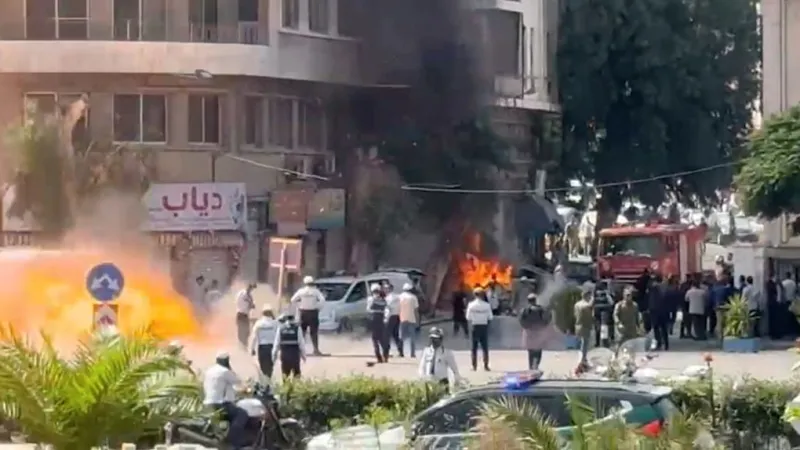
Damascus, Syria – Multiple explosions rattled the Syrian capital late Monday, mere hours after French President Emmanuel Macron arrived for a landmark diplomatic mission, marking the first visit by an EU head of state to Syria since 2010. The blasts occurred in close proximity to the hotel housing the French delegation, immediately escalating security concerns surrounding the high-stakes engagement.
President Macron's unannounced arrival signaled a potentially significant shift in European engagement with the war-torn nation, where a protracted civil conflict continues to destabilize the region. Details regarding the exact nature of the explosive devices and any potential casualties remain sparse, with local authorities and French security personnel reportedly investigating the incidents.
The audacious timing of the explosions, occurring shortly after the French president's discreet entry into Damascus, suggests a deliberate act aimed at disrupting the delicate diplomatic overture. This incident underscores the persistent dangers and complex security challenges inherent in navigating the fractured political landscape of Syria.
Macron's decision to visit Damascus comes amidst ongoing international efforts to address the humanitarian crisis and political deadlock that have plagued Syria for over a decade. His presence there, while unexpected, was seen by some as an attempt to re-engage with a country largely isolated by Western powers since the outbreak of civil war.
The Elysée Palace has yet to release an official statement concerning the explosions or their impact on President Macron's schedule. However, sources within the French diplomatic mission indicated that security protocols were immediately heightened following the incidents, with the safety of the president and his entourage paramount.
This visit follows years of minimal direct engagement between the European Union and the Syrian government, led by President Bashar al-Assad. France has historically maintained a firm stance against the Assad regime, making Macron's presence a notable departure from established foreign policy. Analysts suggest this move could represent an exploratory step toward finding new pathways for dialogue or humanitarian access.
The explosions in Damascus inevitably cast a pall over any potential progress from the visit. They serve as a stark reminder that despite shifts in global attention, Syria remains a hotbed of various armed factions and geopolitical rivalries, where stability is tenuous at best. International observers frequently point to the ongoing proxy conflicts involving regional and global powers as a significant impediment to lasting peace.
The broader Middle East continues to grapple with profound instability. Regional tensions, exacerbated by events such as the dissolution of the Hamas government in Gaza, as reported in Hamas Dissolves Gaza Government After Two Decades, Regional Tensions Mount, highlight a volatile geopolitical environment that French diplomacy must navigate. Macron's visit might have aimed to explore a new French role in mitigating these broader regional security threats.
France has long been involved in counter-terrorism efforts in the region, particularly against extremist groups that gained a foothold in the vacuum created by the Syrian conflict. Any diplomatic engagement with Syria is often framed through the lens of national security interests, including preventing the resurgence of such threats and addressing the refugee crisis.
The international community will be closely watching for any official statements or changes in President Macron's itinerary. The incidents near his hotel undoubtedly add another layer of complexity to an already challenging diplomatic endeavor, raising questions about the feasibility and wisdom of high-level engagement under such precarious conditions.
This bold diplomatic move by President Macron, even if ultimately curtailed or altered by security threats, underscores France's continued assertiveness in foreign policy. It highlights a potential desire to break from conventional diplomatic isolation and forge new strategies in a region critical to European security and stability.
The incident is also likely to spark debate within France and among its European allies regarding the efficacy and risks associated with such direct engagement with the Syrian regime. The balance between pursuing humanitarian objectives, combating terrorism, and upholding international norms in a deeply complicated conflict zone remains a persistent challenge for leaders like Macron.