 Chris Robert
BERLIN, Germany — The German government has officially postponed its ambitious coal phase-out, pushing the deadline to 2033. This significant policy reversal comes amid widespread criticism directed at Economy Minister Robert Habeck and the ruling Green-Red coalition, who are being held responsible for a perceived failure to adequately advance the construction of new gas-fired power plants.
Originally targeting a complete exit from coal by 2030, the revised timeline represents a substantial setback for Germany's energy transition, or Energiewende. The decision was necessitated by concerns over potential energy supply shortfalls and soaring electricity costs, underscoring a complex dilemma between climate protection goals and economic stability.
The core of the problem, according to political analysts and industry experts, lies in the stalled development of natural gas infrastructure. Natural gas is widely regarded as a crucial bridge fuel in Germany's transition away from both coal and nuclear power, offering a cleaner, albeit still carbon-emitting, alternative to coal while renewable energy sources are scaled up.
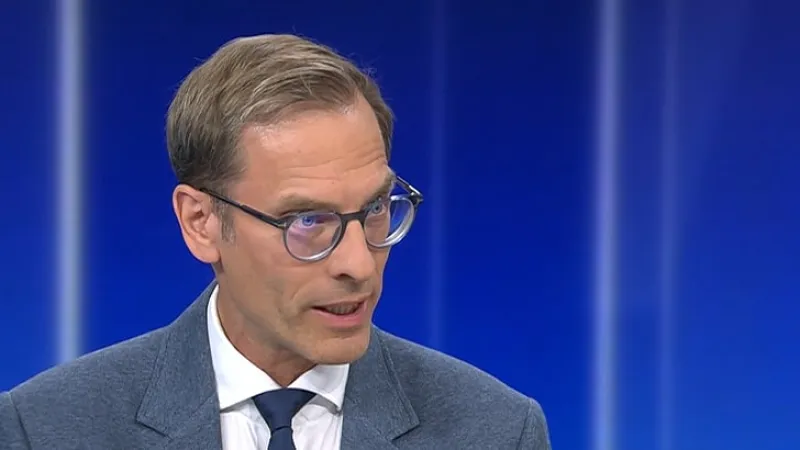
Jan Schaefer, political editor for Bild, articulated the stark reality facing consumers and policymakers alike. "Electricity would become even more expensive otherwise," Schaefer stated, highlighting the direct economic consequences of insufficient dispatchable power generation capacity and the imperative to maintain affordable energy prices for households and businesses.
The delay places the Green-Red coalition, often referred to as the Ampel coalition, under intense scrutiny. Critics contend that the government's assertive focus on rapidly decommissioning traditional energy sources was not adequately matched by a pragmatic acceleration of backup capacities, particularly gas-fired plants.
Economy Minister Habeck, a prominent figure in the Green party, has faced increasing pressure to address Germany's energy security concerns. His tenure has been marked by efforts to diversify energy sources and accelerate renewables, yet the current situation reveals a significant gap in the implementation strategy for transitional power generation.
This policy shift raises fundamental questions about the viability of Germany's climate targets. While the long-term goal of carbon neutrality remains, the extension of coal usage signals a compromise driven by immediate energy needs and economic pressures, potentially impacting Germany's standing as a climate leader on the international stage.
Energy industry stakeholders have long warned about the challenges inherent in simultaneously phasing out coal and nuclear energy without sufficient dispatchable power alternatives. The current situation validates those warnings, exposing vulnerabilities in the nation's energy matrix and regulatory framework.
The German government now faces the arduous task of expediting gas plant projects while simultaneously boosting renewable energy capacity. This dual challenge requires substantial investment, streamlined bureaucratic processes, and robust public-private partnerships, areas where progress has been notably slow.
Public discourse around energy policy has intensified, with debates centering on the crucial balance between ambitious environmental aspirations and the practicalities of maintaining a robust and affordable power supply. The decision to extend the coal phase-out reflects a recognition of these immediate practical constraints.
For German consumers, the extension might temporarily stabilize energy costs by averting more drastic price hikes in the short term, but it also prolongs reliance on a carbon-intensive fossil fuel. The long-term trajectory of energy prices and supply security in Germany remains a significant concern for economists.
The international community will observe Germany's revised energy strategy closely. As a major industrial nation, Germany's approach to decarbonization often serves as a benchmark, and this delay could influence other nations grappling with similar energy transition complexities and political pressures.
The Green-Red coalition is tasked with navigating this challenging dilemma, seeking solutions that can effectively address both environmental imperatives and the fundamental need for stable, affordable energy. The path to a sustainable energy future, it appears, is proving more arduous and politically charged than initially anticipated.