 Dorry Archiles
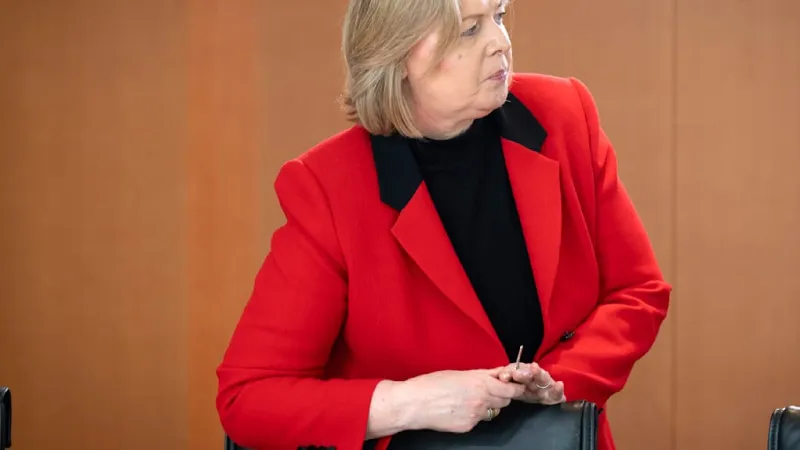
Berlin – Barbel Bas, the Chairwoman of Germany's Social Democratic Party (SPD), has publicly called for a comprehensive “new start” and strategic reorientation of her party. This demand comes amidst persistently weak poll numbers and a palpable sense of dissatisfaction among both party members and the broader electorate. Despite this candid admission of internal challenges, Bas also robustly defended the current coalition government's policy direction, emphasizing the SPD's crucial role in championing social justice initiatives across the nation.
The SPD, a cornerstone of German politics for over a century, currently navigates a challenging landscape. Recent surveys consistently place the party significantly behind opposition parties, triggering urgent calls for introspection and strategic adjustments from within its ranks. The current three-party government, known as the Ampel coalition, has faced numerous hurdles, including economic slowdowns and complex policy debates.
Bas articulated the prevailing sentiment with stark clarity, stating directly, “No one can be satisfied with our current standing.” This acknowledgment signifies a critical moment for the party, highlighting the imperative to address voter concerns and rejuvenate its political appeal.
Simultaneously, Bas steadfastly supported the government's legislative efforts. Her defense underscores the difficult balance party leaders must strike: acknowledging internal weaknesses while projecting a united front for the ruling coalition. She lauded the government's achievements in areas like energy transition and social welfare, framing them as essential progress for German society.
Central to her message was the reaffirmation of the SPD's core identity. Bas reiterated the party's unwavering commitment to its social mandate, stressing that the Social Democrats remain the primary voice for fairness, equality, and protection for all citizens. This emphasis aims to reconnect with traditional voter bases who may feel increasingly disenfranchised or overlooked.
However, the path to a “new start” remains complex. The SPD faces a myriad of challenges, including evolving voter demographics and the rise of populist movements. An analysis of voter behavior, for instance, reveals a significant divide, as explored in the article, German Education Gap: Affluent Youth Lean Left, Less Educated Favor AfD, which sheds light on the shifting political allegiances impacting established parties.
Potential reorientation efforts could involve a critical review of current policies, a renewed focus on communicating the party's successes more effectively, or even internal discussions about leadership and future electoral strategies. The exact contours of this demanded restart are yet to be fully defined, creating a period of significant anticipation within German political circles.
The demands for renewal within the SPD are not isolated. The wider German political landscape is currently marked by intense scrutiny across the spectrum, as evidenced by headlines such as Endure the Political Heat: Merz Scrutiny Tests CDU Resilience. All major parties contend with public expectations and internal pressures.
The stability of the Ampel coalition, comprising the SPD, the Greens, and the Free Democratic Party (FDP), also hinges on such internal realignments. Discontent within a major coalition partner could ripple through the government, potentially impacting legislative momentum and future election prospects. Issues like pension reform, detailed in German Pension Reform Sparks CDU Rift, Threatening Political Futures, illustrate the contentious policy environment.
Bas's direct appeal for a comprehensive reevaluation underscores the urgency she perceives. The call for a “new start” is more than just a rhetorical flourish; it signals a critical period of self-assessment and strategic recalibration for one of Germany's most enduring political forces, as it strives to regain public trust and political traction in a rapidly changing world.