 Dodi Irawan
BERLIN – Germany's principal conservative opposition alliance, the Christian Democratic Union (CDU) and its Bavarian sister party, the Christian Social Union (CSU), has registered a precipitous drop in national support, falling to an unprecedented 19 percent in the latest Insa poll. This marks the lowest approval rating for the Union parties during the current legislative period, placing them a remarkable ten points behind the far-right Alternative for Germany (AfD).
The Sunday trend survey, widely regarded for its insights into German public sentiment, indicates a troubling erosion of the conservative bloc's traditional voter base. The psychological threshold of 20 percent, long considered a baseline for mainstream political viability in Germany, has now been decisively breached, sending ripples through Berlin's political establishment.
This stark finding not only highlights the CDU/CSU's struggles but also underscores the persistent ascendance of the AfD, which continues to capitalize on voter dissatisfaction with the ruling traffic-light coalition and broader societal anxieties. The ten-point deficit represents a significant shift in political gravity, challenging the conventional two-party dominance of German politics.
Historically, the CDU/CSU has often polled in the high twenties or low thirties, serving as the dominant force in German federal elections for decades. While recent years have seen fluctuations, dipping below 20 percent signifies a new nadir that analysts suggest could redefine the electoral landscape for years to come.
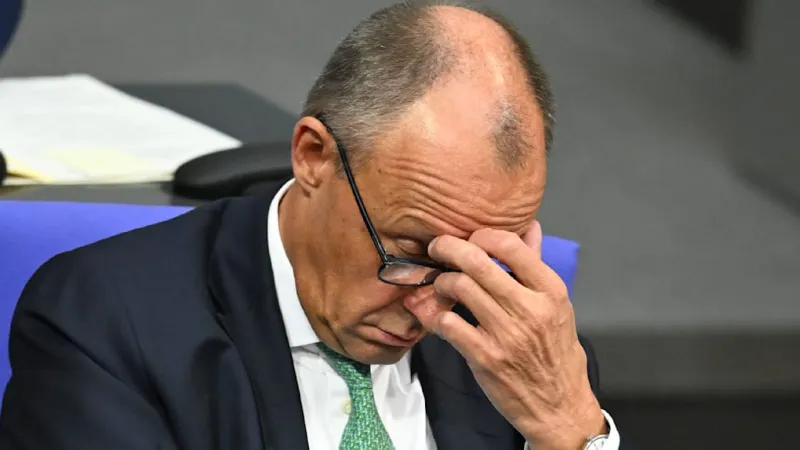
The implications for CDU leader Friedrich Merz are particularly acute. Navigating a complex political climate, his leadership has faced scrutiny amid internal party divisions and a perceived lack of clear strategic direction. The poll results undoubtedly intensify the pressure on Merz to galvanize the party and articulate a compelling vision for Germany's future. This situation echoes sentiments previously reported regarding CDU Pressure Mounts on Merz As Coalition Stalls Key Reform, indicating ongoing challenges within the party structure.
Observers point to a confluence of factors contributing to the conservative parties' decline. Persistent economic headwinds, including inflation and an ongoing energy crisis, have fueled public frustration. While the current government often bears the brunt of this discontent, the CDU/CSU has evidently struggled to effectively position itself as a credible alternative ready for governance.
Furthermore, the ongoing national debate surrounding immigration policies and societal integration continues to be a contentious issue, one that the AfD has skillfully exploited to expand its support base. The Union parties, traditionally strong on law and order and economic stability, appear to be losing ground on these core competencies to an increasingly emboldened far-right.
The weakening of the main opposition bloc also presents a peculiar dynamic for Chancellor Olaf Scholz's Social Democratic Party (SPD), the Greens, and the Free Democratic Party (FDP). While a struggling opposition might seem beneficial, the rise of extremist parties can destabilize the political center, making coalition-building and stable governance more challenging in the long run.
Political analysts suggest the CDU/CSU must urgently re-evaluate its communication strategy and policy platform. A failure to connect with disaffected voters, particularly those migrating to the AfD, could solidify a fragmentation of the conservative vote, potentially preventing a return to traditional strength in future elections. This period is indeed a Merz's Defining Moment: Navigating Germany's Coalition Crisis, as the party faces critical decisions.
The trend mirrors a broader European pattern where established centrist and center-right parties are facing challenges from populist movements on both ends of the political spectrum. Germany, long considered an anchor of stability, is not immune to these shifts, as evidenced by the significant protests over social welfare cuts previously highlighted in articles like Germany Erupts: 175,000 Protest Social Welfare Cuts Amid Union Pressure, reflecting deeper societal discontent.
As the legislative period progresses toward federal elections, the CDU/CSU faces an arduous path to recovery. Rebuilding trust and articulating a clear, resonant message will be paramount if the conservative alliance hopes to regain its historical standing and present a viable alternative to the current government or to halt the steady advance of the AfD.
The unprecedented poll numbers serve as a stark warning, signaling a profound moment of introspection and strategic recalibration for one of Germany's most enduring political forces.