 Demian Sahputra

BERLIN - A prominent local branch of Germany's Christian Democratic Union (CDU) has dispatched a strongly worded protest letter to party Chairman Friedrich Merz, expressing profound dissatisfaction with his leadership and the broader direction of the governing coalition. This internal dissent comes as the Social Democratic Party (SPD), a key coalition partner, abruptly halted a critical nursing care reform package that was scheduled for approval this week, further exacerbating tensions within Germany's political landscape.
The decision by the SPD to block the long-anticipated nursing care reform, a measure intended to address significant challenges within the nation's elder care system, sent ripples of concern across the political spectrum. This action, reportedly driven by austerity concerns and internal disagreements, has left many questioning the stability and effectiveness of the current government.
The Brandbrief, a term signifying a fiery or urgent letter of protest, marks a significant escalation of internal pressure within the CDU. Sources close to the party indicate the letter criticizes Merz's strategic approach and his handling of difficult coalition negotiations, particularly in the wake of recent policy setbacks.
This is not the first instance of internal friction challenging Merz's tenure. Since assuming the party leadership, Chairman Merz has navigated complex internal dynamics, striving to unite conservative factions while positioning the CDU as a strong political force. Analysts have previously highlighted Merz's defining moments in navigating Germany's coalition crisis, underscoring the constant tightrope walk he performs.
The halt of the nursing care reform underscores deeper fissures within the coalition government. The SPD's move on Wednesday highlighted a growing reluctance among coalition partners to compromise on crucial social policies, often citing budgetary constraints or ideological differences. This gridlock has frustrated both voters and other political actors.
The stalled nursing care reform had been a cornerstone of the coalition's social agenda, promising vital improvements for millions of German citizens and their families. Its indefinite suspension creates uncertainty for a sector already grappling with staffing shortages, funding issues, and an aging population. This development follows previous reports of the SPD halting controversial nursing care reform, citing austerity.
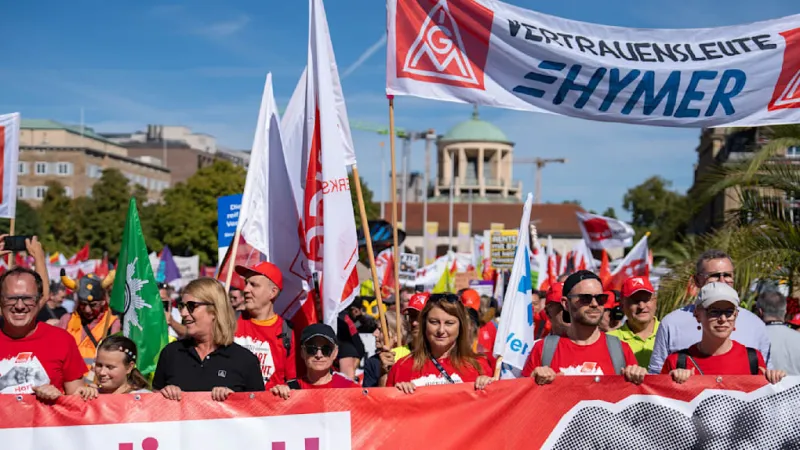
The ongoing political wrangling risks eroding public trust in governmental efficacy. Germany has seen periods of significant public discontent, including large-scale protests over social welfare cuts. While directly unrelated to this specific reform, the broader context of governmental perceived inaction on social issues resonates with segments of the population who have previously seen Germany erupt in protest against social welfare cuts.
The protest letter from the CDU Ortsverband signals a challenge to Merz from within his own party ranks. Such internal criticism can significantly impact a party leader's authority, especially when the party is attempting to present a united front to the electorate. It reflects a desire among some members for a clearer, more decisive political strategy.
The internal strife within the CDU and the coalition's policy paralysis collectively paint a picture of political instability in Germany. As the nation faces complex economic and social challenges, effective governance relies heavily on coherent policy-making and strong leadership.
Political analysts suggest that Merz now faces a critical juncture. His ability to address the concerns raised by the local branch, while simultaneously navigating the fractious coalition, will be a crucial test of his leadership ahead of future electoral cycles. The path forward for the nursing care reform, and indeed for the coalition itself, remains uncertain.