 Dorry Archiles
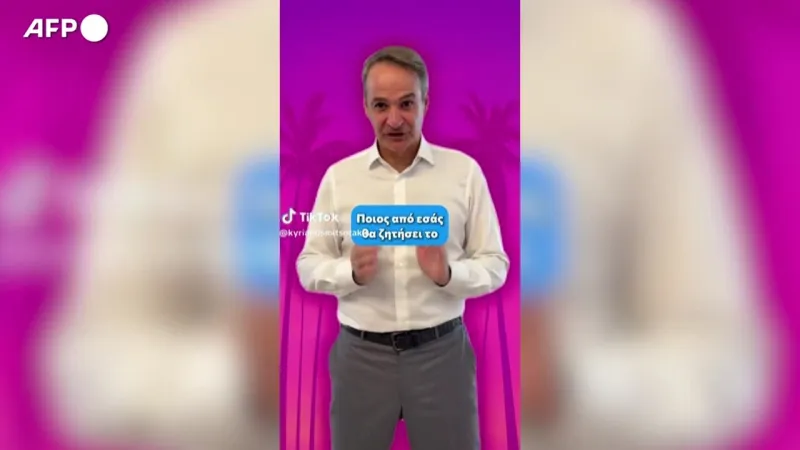
ATHENS – Greek Prime Minister Kyriakos Mitsotakis recently ignited a political firestorm following the release of a lighthearted video on TikTok, a popular social media platform. In the widely viewed clip, Mitsotakis directly addressed young voters, provocatively asking if they would request Grand Theft Auto VI for Christmas, a highly anticipated video game. The prime minister further quipped, referencing the common generosity of elders, by stating, “We all know that grandfathers and grandmothers rarely say no to their grandchildren.” This attempt to connect with a younger demographic quickly escalated into a national debate over the appropriateness and effectiveness of such political communication.
The video, intended to be a relatable and humorous overture to youth, immediately garnered significant attention across Greek social media channels. While some viewers lauded the prime minister for his modern approach and willingness to engage on contemporary platforms, a substantial segment of the public and political commentators expressed strong disapproval.
Critics argued that the tone of the video trivialized serious political discourse and presented a condescending view of young voters. They contended that policy debates and substantive issues should define political engagement, not references to popular culture, particularly when a significant portion of young Greeks faces economic challenges.
Mitsotakis central communication strategy has increasingly incorporated social media, aiming to bypass traditional media filters and directly reach specific demographic groups. His office likely envisioned the TikTok appearance as a savvy move to bridge the generational gap, portraying a leader who understands the cultural touchstones of younger citizens.
However, the casual mention of a video game and the implied suggestion that grandparents fund such purchases struck many as out of touch, particularly for families navigating the current economic landscape in 2026. The perceived disconnect fueled accusations of pandering and a lack of understanding regarding the real concerns of Greek youth.
This incident is not isolated, as politicians globally increasingly leverage platforms like TikTok for outreach. Leaders across Europe and beyond have experimented with various forms of online content, seeking to make themselves more accessible and relatable. Yet, the balance between authentic engagement and perceived trivialization remains a precarious tightrope. In a similar vein, instances of youth rejecting established political figures are not uncommon, as seen when Berlin youth accosted Green leader Banaszak, rejecting solidarity in a separate European context.
Supporters of the prime minister’s approach defended the video as a necessary evolution of political communication. They argued that politicians must adapt to new media landscapes to effectively reach all segments of the electorate, including those who primarily consume news and information through social media. For this demographic, a lighthearted, culturally relevant message might be more impactful than traditional stump speeches.
Conversely, detractors highlighted the potential for such content to backfire, alienating those who expect a more serious demeanor from their national leaders. They questioned whether a fleeting social media clip could genuinely foster a deeper understanding between young citizens and their government.
The debate underscores the evolving challenges faced by political leaders in the digital age. They must continuously assess how to communicate effectively without sacrificing credibility or alienating segments of the electorate who prefer a more traditional approach to politics.
As the controversy continues to unfold, it serves as a crucial case study in the delicate art of political branding in 2026. The efficacy of such tactics will likely be measured by their long-term impact on voter engagement and public perception, rather than immediate viral success. The ongoing discourse highlights the critical need for leaders to carefully calibrate their messages across diverse platforms.