 Dorry Archiles
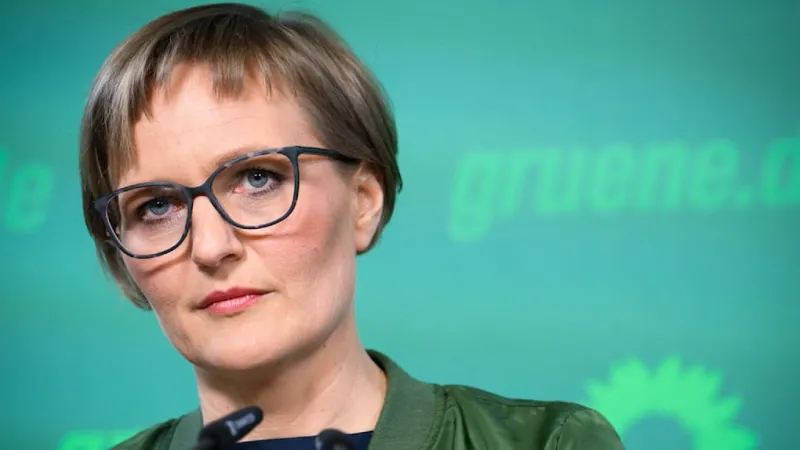
BERLIN – Green Party leader Franziska Brantner has issued a rare self-critical appeal to her party, challenging its approach to governance by arguing for a reduction in state overreach and an end to the proliferation of regulatory bodies. She warned against the tendency to “stop putting everyone and everything under general suspicion,” a stance she believes has contributed to an oversized state apparatus.
Brantner’s remarks underscore a growing internal debate within the German Green Party regarding the balance between robust state intervention and individual liberty. Her statements highlight concerns that the party, often associated with ambitious regulatory frameworks, may have inadvertently fostered a system perceived as overly bureaucratic.
The prominent politician directly criticized her party's role in constructing an extensive administrative structure. She stated, “We helped build an apparatus that has an agency for every problem,” suggesting that this development has led to inefficiencies and a perception of governmental intrusion.
This self-reflection from a high-ranking Green Party official signals a potentially significant shift in focus, particularly as the party navigates its role within Germany's current governing coalition. Such an appeal from within the party leadership could empower reformers seeking to streamline government processes.
Brantner's call to action addresses fundamental questions about the scope and function of the state. Her critique implies that the party's zeal for detailed solutions to societal challenges may have resulted in an unwieldy system that stifles rather than empowers.
The debate over “too much state and too many rules” resonates widely across the German political spectrum. Public sentiment often expresses frustration with bureaucratic hurdles, permit delays, and complex regulations that impact daily life and economic activity.
For the Green Party, this internal critique comes at a crucial juncture, as they seek to maintain public trust and electoral viability. Adapting to evolving public expectations while staying true to core environmental and social principles presents a continuous challenge.
Brantner's appeal could foster robust discussions within party ranks, potentially leading to revised policy approaches aimed at enhancing governmental efficiency and reducing administrative burdens. It challenges the party to re-evaluate its historical reliance on regulation as a primary tool for change.
Her comments also reflect a broader European trend where governments grapple with balancing comprehensive social and environmental protections with the need for agile and responsive governance. The tension between regulatory ambition and practical implementation is a consistent theme.
By openly addressing these issues, Brantner demonstrates a willingness to engage in critical self-assessment, a trait that could strengthen the party's democratic credentials. It suggests an acknowledgment that even well-intentioned policies can have unintended bureaucratic consequences.
The implications of Brantner's message extend beyond mere administrative reform; they touch upon the core philosophy of governance. Her emphasis on trust over suspicion and simplification over complexity could shape future legislative initiatives and party platforms.
Ultimately, Brantner's provocative yet measured critique offers a pathway for the Green Party to adapt and evolve, demonstrating responsiveness to public sentiment while reinforcing its commitment to effective and responsible leadership in 2026 and beyond.