 Angela Stefani

Berlin—Julia Verlinden, deputy parliamentary group leader for Germany's Green Party, has vehemently criticized the nation's controversial fuel discount, labeling it an inefficient and fiscally irresponsible measure that largely bypasses the citizens it purportedly aims to assist. Her remarks underscore an ongoing political debate regarding the efficacy of government interventions designed to mitigate economic pressures.
Verlinden articulated her concerns directly, stating, “It only reaches a small portion of the people who truly need it.” This critique zeroes in on the policy's fundamental flaw: a lack of precision in delivering relief to the most vulnerable segments of society.
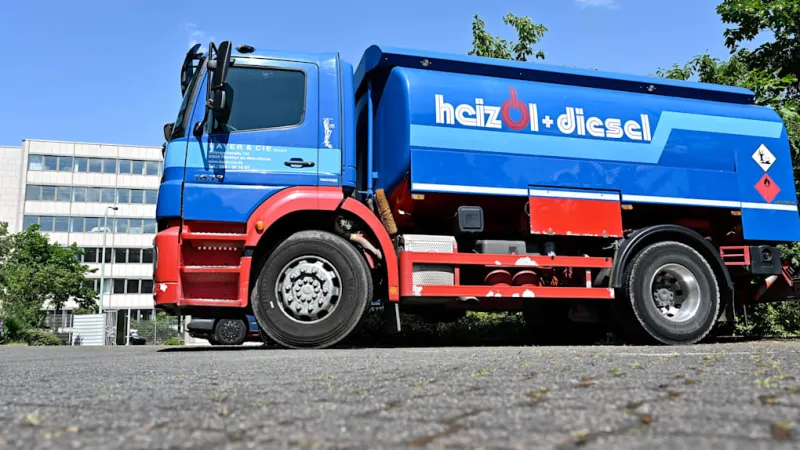
The fuel discount, implemented to alleviate the burden of escalating energy prices on German households and businesses, has been a cornerstone of the government's economic relief package. Its primary objective was to provide broad-based financial respite by reducing the cost at the pump.
However, Verlinden's assessment highlights the substantial financial outlay associated with this broad approach. Classifying it as a “very expensive instrument,” she points to the considerable public funds diverted to subsidize fuel consumption across the board.
Such an allocation, critics argue, represents a missed opportunity for more targeted and impactful investments. These funds, proponents of alternative strategies suggest, could be better utilized in developing sustainable public transportation, bolstering renewable energy infrastructure, or providing direct financial aid to low-income households.
The Green Party's argument against the discount centers on its universal application. Rather than offering proportional relief, the policy disproportionately benefits those with higher fuel consumption—often wealthier individuals or corporations—while providing only marginal assistance to those genuinely struggling.
Verlinden's position reflects the Green Party's broader ideological commitment to social equity and environmental sustainability. The party consistently advocates for policies that are both ecologically sound and socially just, questioning initiatives that do not meet these dual criteria.
This criticism enters a complex political arena where various German parties hold differing views on economic stabilization measures. While some defend universal discounts as necessary swift action during crises, others, like the Greens, prioritize precision and long-term sustainability.
The party has also been navigating its own internal and external challenges, as evidenced by broader political discussions. For instance, the party has faced scrutiny over its stance and alliances, as previously reported in articles such as Green Party Faces Coalition Dilemma Over Antisemitism in German Politics, illustrating the dynamic nature of its political role.
Alternative solutions, frequently championed by the Greens, include direct transfer payments to households below a certain income threshold or comprehensive expansions of public transport networks and lower ticket prices. These proposals aim to provide more equitable support while simultaneously advancing climate goals.
The debate over the fuel discount extends beyond immediate relief to encompass the long-term implications for Germany's national budget and its ambitious climate targets. The Greens maintain that subsidies encouraging fossil fuel consumption run counter to the nation's commitment to ecological transformation.
As the discussion continues, the German government faces increasing pressure to balance immediate economic relief with responsible fiscal management and sustainable policy choices that genuinely serve the needs of all its citizens, particularly those most vulnerable.