 Angel Doris
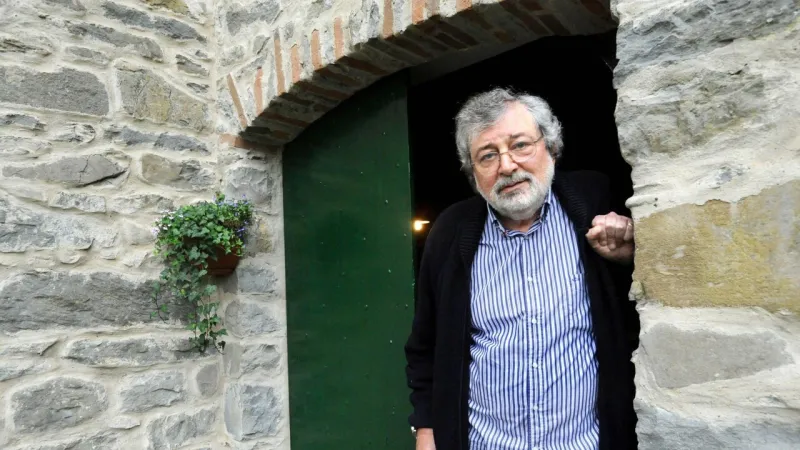
BOLOGNA – Renowned Italian singer-songwriter Francesco Guccini continues to captivate audiences with his profound lyrical explorations, charting a poetic course from his beloved Modena to the iconic canals of Venice, encompassing historical introspection and geographical reverence within his vast body of work. His distinctive style solidifies his status as a quintessential cantore di città, a bard whose verses bring urban and historical landscapes vibrantly to life.
Guccini's artistry lies in his remarkable ability to imbue physical locations with deep emotional and historical resonance. He transforms mere place names into characters, echoing human experiences, struggles, and triumphs through their very fabric. This unique approach has cemented his legacy as one of Italys most insightful cultural commentators.
Perhaps his most celebrated personification is that of Bologna, affectionately dubbed vecchia signora or old lady in his renowned song. This appellation transcends simple description, evoking a sense of ancient wisdom, enduring beauty, and an almost maternal presence that has shaped generations. It speaks to the deep, personal connection Guccini forged with the city that became a central muse.
Beyond the urban centers, Guccini masterfully navigates a cultural landscape spanning between the via Emilia and the west. This phrase encapsulates not only the geographical spine of his native Emilia-Romagna region but also symbolizes a broader journey between tradition and modernity, local identity and universal aspiration, drawing parallels to American frontier myths.
His lyrical scope extends far beyond local Italian geography, delving into profound historical narratives that resonate globally. He confronts the horrors of the past, as evidenced by references to Auschwitz, not with detached historical recounting, but with a poets empathy and a philosophers moral questioning. Such inclusions elevate his work from mere song to potent historical commentary.
Similarly, Guccini's verses transport listeners to the ancient, mystical city of Byzantium, invoking its rich history, complex legacy, and symbolic weight. This intellectual wanderlust showcases his deep erudition and his capacity to draw disparate historical threads into a coherent artistic tapestry. It speaks to the timeless nature of human civilization and its inherent complexities.
Guccini also ventures into the realm of myth and legend, referencing the distant, fabled land of Ultima Thule. This inclusion further underscores his imaginative range, linking his grounded observations of Italian life to the broader human quest for discovery, meaning, and the exploration of the unknown.
His intricate narratives often intertwine personal memories with collective historical consciousness. He crafts a tapestry where individual experiences become reflections of a shared heritage, making his often personal lyrics universally relatable. This profound connection ensures his works continue to resonate with diverse audiences.
The enduring popularity of Guccinis compositions decades after their initial release speaks volumes about their timeless quality. His use of rich vocabulary and sophisticated poetic structures, all while maintaining accessibility, distinguishes him in the pantheon of Italian artists. He challenges listeners to think deeply while enchanting them with melody.
Through his compelling storytelling and profound lyrical insights, Francesco Guccini remains an indispensable figure in Italian culture. His ability to paint vivid portraits of cities and epochs, to blend the intimate with the epic, ensures that his voice continues to echo powerfully across the generations, a true bard for all times and places.