 Chris Robert
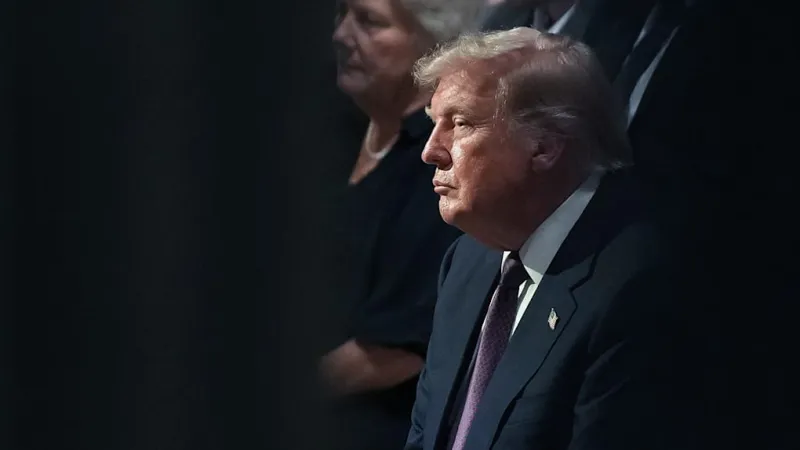
WASHINGTON – President Donald Trump confronts a period of escalating political difficulty, grappling with significant foreign policy setbacks and burgeoning domestic challenges, all while the crucial 2026 midterm elections loom. His administration faces a complex international landscape marked by the rejection of a key Gaza peace proposal by Israeli Prime Minister Benjamin Netanyahu and a newly emboldened Iran, compounding internal pressures that signal a weakening position for the Republican party ahead of the nationwide vote.
The White House's diplomatic efforts in the Middle East have encountered a formidable obstacle in the form of Israel's outright dismissal of the proposed Gaza peace plan. Prime Minister Netanyahu's unequivocal rejection underscores the deep chasm between the US administration's vision for regional stability and the strategic imperatives of its long-standing ally. This impasse complicates any aspirations for a comprehensive resolution to the Israeli-Palestinian conflict under the current US leadership.
Such a significant rebuff from a close partner not only undermines President Trump's foreign policy credibility on the global stage but also potentially fuels dissent among his domestic base, which often holds diverse views on Middle Eastern policy. The viability of future diplomatic initiatives hinges on bridging this apparent disagreement, a task made more challenging by the political dynamics within both nations.
Concurrently, the Islamic Republic of Iran exhibits increasing assertiveness in the region, a stance that directly challenges US strategic interests and influence. This renewed confidence from Tehran complicates Washington's efforts to contain what it perceives as destabilizing activities, ranging from its nuclear program to its support for proxy forces across the Middle East. The delicate balance of power in the Persian Gulf remains a constant source of tension.
Iran's posture presents a multifaceted challenge to the Trump administration, demanding careful calibration of sanctions, diplomatic overtures, and military deterrence. The perceived shift in regional dynamics could embolden other actors and further destabilize an already volatile part of the world, requiring robust responses from American foreign policy decision-makers.
These international complications invariably cast a shadow over President Trump's standing at home, where political momentum is critical as the country approaches the biennial midterm elections. Historically, a sitting president's foreign policy triumphs or tribulations can significantly sway public opinion and voter sentiment.
Reports from political analysts indicate a perceptible weakening in President Trump's domestic support and the overall standing of the Republican party in the lead-up to the 2026 elections. This perceived vulnerability could stem from a variety of factors, including economic concerns, legislative stalemates, or shifts in voter demographics and priorities.
Midterm elections serve as a vital referendum on a president's performance and the direction of the country. A strong showing by the opposition could threaten Republican control of Congress, potentially impeding President Trump's legislative agenda for the latter half of his term and further complicating his path towards future political endeavors.
The convergence of these foreign and domestic pressures creates a challenging environment for the White House. Critics argue that a president under duress on the international front may find it more difficult to rally support for his agenda at home, while domestic political strife can weaken the perception of American leadership abroad.
Seasoned political observers suggest that managing such a complex array of challenges simultaneously demands a strategic and cohesive approach. The administration's ability to navigate these turbulent waters will be closely watched, not only by American voters but also by international allies and adversaries alike.
As the midterm campaign intensifies, President Trump faces the urgent task of demonstrating effective leadership across both spheres. The coming months will prove instrumental in determining the trajectory of his presidency and the political landscape of the United States.