Angel Doris
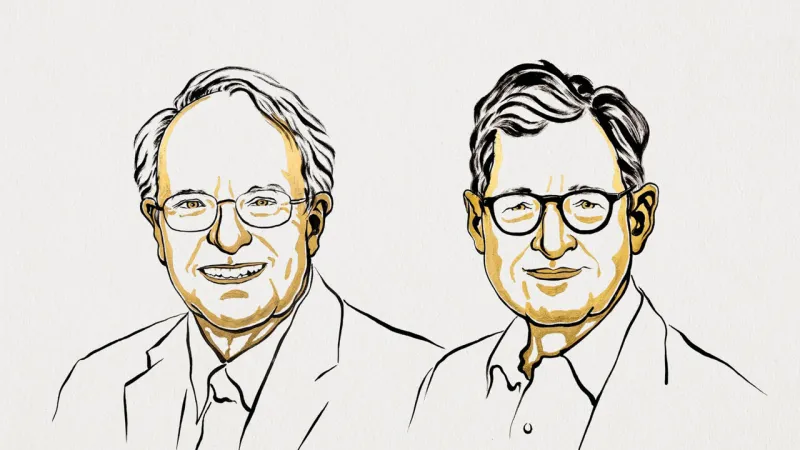
STOCKHOLM – Robert E. Hall of Stanford University and Michael Woodford of Columbia University have been jointly awarded the Nobel Memorial Prize in Economic Sciences this year for their groundbreaking research into macroeconomic stabilization models. Their pioneering work has profoundly influenced understanding and practical approaches to economic policy, particularly in guiding central banks on how to manage inflation and business cycles effectively.
The Royal Swedish Academy of Sciences, in its announcement, highlighted how the laureates' contributions provide essential frameworks for analyzing and designing policies aimed at mitigating economic fluctuations. Their models offer critical insights into how monetary and fiscal policies can be optimally deployed to achieve stable economic growth and low inflation, thereby enhancing global economic resilience.
Professor Hall, a distinguished economist at Stanford, has dedicated much of his career to studying labor markets, consumption, and the dynamics of business cycles. His research has been instrumental in developing rigorous microfoundations for macroeconomics, emphasizing how individual decisions aggregate to influence economy-wide phenomena. His work has provided a deeper understanding of real business cycle theory and its implications for economic stability.
Meanwhile, Professor Woodford, a leading figure in New Keynesian economics from Columbia University, is celebrated for his sophisticated analyses of monetary policy. He is widely recognized for his rigorous work on inflation targeting and the design of optimal interest rate rules for central banks. His models integrate rational expectations with sticky prices, offering powerful tools for policymakers grappling with the complexities of modern economies.
Together, their research represents a significant advancement in economic thought, bridging the gap between theoretical constructs and practical policy implementation. They have provided the intellectual bedrock for much of the contemporary approach to macroeconomic management, proving particularly vital during periods of economic uncertainty and crisis.
Prior to their contributions, macroeconomic models often struggled to fully capture the intricate feedback loops between policy actions and economic agent behavior. Hall and Woodford introduced methods that allowed for more nuanced and accurate predictions, enabling central banks to formulate strategies with greater foresight and precision.
Their work directly informs the mandates of institutions like the Federal Reserve and the European Central Bank, which consistently aim to maintain price stability and maximize sustainable employment. The theoretical underpinnings provided by these economists assist policymakers in forecasting inflation, assessing the impact of interest rate changes, and managing public expectations.
Leading economists worldwide have lauded the selection, acknowledging the transformative impact of Hall and Woodford's work. Analysts frequently cite their models as foundational for comprehending economic phenomena ranging from the effects of government spending to the consequences of global financial shocks. Their insights are considered indispensable for graduate students and veteran policymakers alike.
Beyond direct policy applications, their research has stimulated countless academic studies, creating a vibrant field of inquiry into dynamic stochastic general equilibrium (DSGE) models. This intellectual legacy continues to shape doctoral dissertations and economic research agendas globally, pushing the boundaries of macroeconomic analysis.
The Nobel Memorial Prize in Economic Sciences, officially known as The Sveriges Riksbank Prize in Economic Sciences in Memory of Alfred Nobel, underscores the critical role that economic theory plays in addressing real-world challenges. Hall and Woodford join a pantheon of scholars whose ideas have profoundly influenced societal well-being.
While economic models are inherently simplifications of complex realities, the frameworks developed by Hall and Woodford offer robust tools for navigating economic policy decisions. They have significantly enhanced economists ability to diagnose problems and prescribe effective remedies, contributing to more stable and prosperous societies.
Their profound contributions underscore the enduring value of rigorous theoretical work in economics. The insights gleaned from their models will continue to guide future generations of economists and policymakers striving for sustained global economic stability. This recognition firmly places their work at the forefront of modern macroeconomic thought.