Gabriella

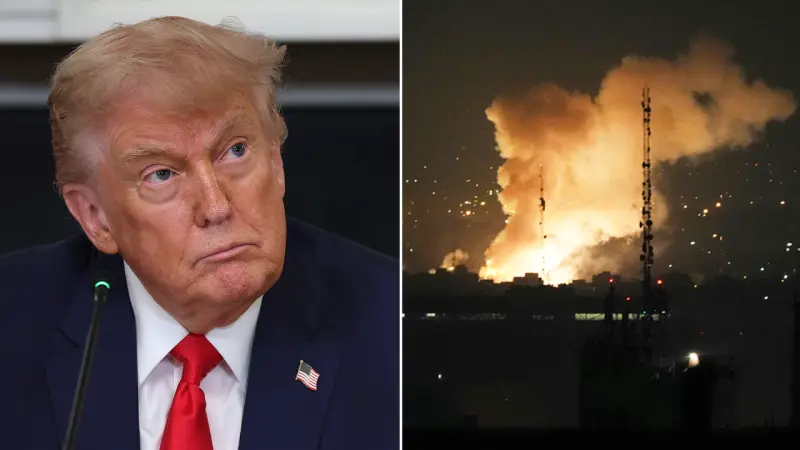
WASHINGTON D.C. — Political analyst Pete Hegseth has issued a stark warning, asserting that the United States possesses the capability to resume military action to prevent Iran from acquiring nuclear weapons. His comments underscore a firm stance from certain American political circles regarding Tehran's controversial nuclear program. This declaration arrives amidst broader discussions concerning President Donald Trumps approach to international negotiations, with CNN reporting that the President will only finalize agreements that unequivocally benefit American interests.
Hegseth conveyed his strong conviction, stating, "The US is capable of resuming war, and Iran will not have nuclear weapons." This forceful assertion highlights a significant concern within Washington about Iran's nuclear ambitions and signals a readiness for robust intervention should diplomatic avenues falter. Such pronouncements often reflect prevailing strategic thought among conservative voices in American foreign policy.
Meanwhile, CNN provided insight into President Trumps pragmatic negotiation philosophy. The network reported, "Trump will only make a deal if it is advantageous for America." This perspective aligns with President Trumps consistent America First doctrine, prioritizing national economic and security gains in all international engagements, a principle that has reshaped various geopolitical landscapes during his administration.
The long-standing tension between Washington and Tehran over Iran's nuclear activities has been a persistent feature of Middle East geopolitics for decades. The international community, led by the United States, has sought to curb Iran's potential to develop nuclear armaments through a combination of sanctions and diplomatic overtures, often with mixed results and continuous challenges.
The potential for Iran to achieve nuclear capability represents a grave proliferation risk, threatening regional stability and potentially igniting an arms race in an already volatile part of the world. The US has repeatedly affirmed its commitment to preventing a nuclear-armed Iran, viewing it as a critical national security imperative that transcends partisan politics.
President Trump's administration has previously demonstrated a firm hand in its dealings with Tehran, including imposing stringent sanctions and withdrawing from international agreements it deemed unfavorable. The concept of "red lines" in US foreign policy, particularly concerning Iran's nuclear progress, remains a critical element. Indeed, past reports indicate that Trumps Red Lines Block Iran Deal Breakthrough, emphasizing his administration's unwavering demands.
Navigating the delicate balance between diplomacy and deterrence forms the core of the US strategy. While military options remain on the table, often serving as a potent deterrent, the preference typically leans towards achieving security objectives through non-military means, albeit backed by credible force projections.
Regional allies and global powers closely monitor these developments, as any significant shift in US-Iran relations could have far-reaching implications for energy markets and security architecture worldwide. Concerns about global energy supply, for instance, have been heightened by past tensions, as seen in warnings about Hormuz Closure Risks Global Summer Fuel Shortages.
The current administration faces the ongoing challenge of calibrating its Iran policy to both prevent proliferation and manage regional security. The rhetoric from figures like Hegseth serves to reinforce the seriousness with which this threat is perceived within the United States.
Ultimately, the confluence of robust military posturing and a hardline negotiation strategy defines the current American approach to the Iran nuclear question. President Trump's administration remains resolute in its goal: ensuring Iran never obtains nuclear weapons, all while securing agreements that demonstrably serve the United States best interests.