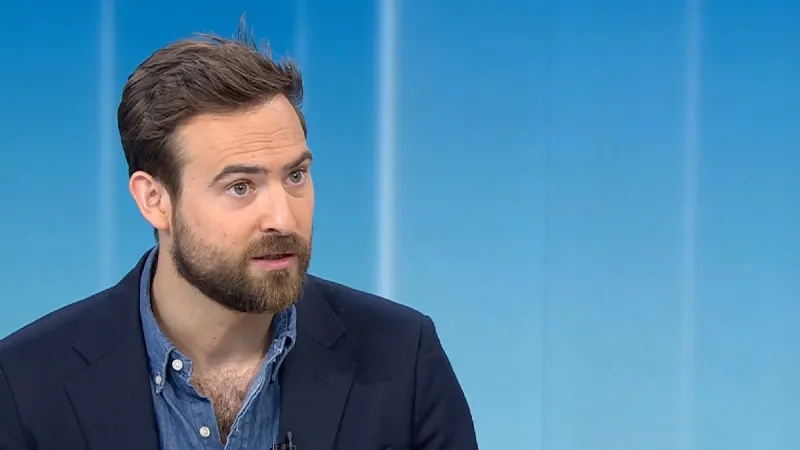
 Stefani Rindus
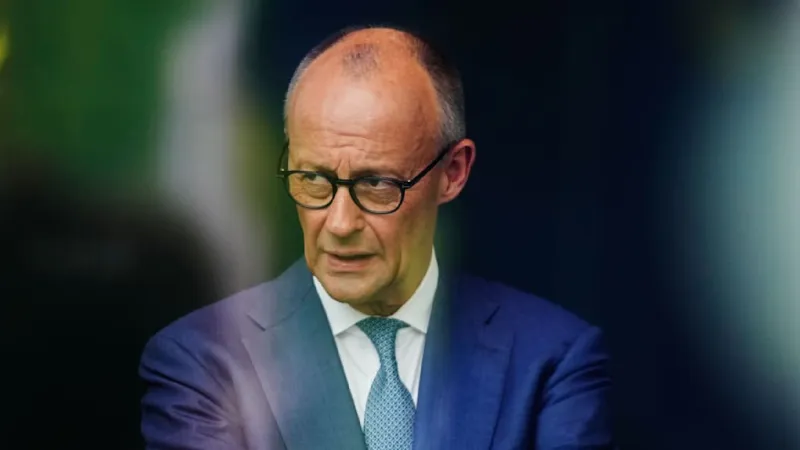
Berlin – Amidst a perceived existential crisis facing the current German government, renowned historian Andreas Rödder asserts that Chancellor Friedrich Merz holds a distinct opportunity to elevate his leadership to a historically significant level. Rödder posits that Merz can navigate the nation through its present challenges by demonstrating courageous leadership and by actively considering a minority government as a viable political option to address impending historical tasks.
This assessment arrives at a pivotal juncture for German politics, where stability and decisive governance are increasingly scrutinized. The historian’s remarks underscore a growing sentiment that conventional approaches may prove insufficient against the complex domestic and international landscape.
Rödder specifically emphasized the necessity of a leader who is unafraid to make difficult decisions. He stated, "The Chancellor can free himself from his 'existential crisis' through 'courageous leadership.'"
The term "existential crisis," as used by Rödder, alludes to deep-seated issues that threaten the fundamental operational capacity or public trust in the government. This could encompass economic stagnation, social division, or challenges to Germany’s geopolitical standing.
A crucial element of Rödder's proposed path forward involves a re-evaluation of political norms, particularly the consideration of a minority government. Traditionally viewed with skepticism in Germany, this structure could offer a path to governance when grand coalitions prove elusive or ineffective.
"Even a minority government must be an option – because a 'historical task' awaits," Rödder explained. This statement suggests that the gravity of the nation's challenges transcends typical coalition-building considerations, requiring flexibility in forming a functional administration.
The historian did not explicitly define the "historical task," but contextually, it could refer to Germany's role in European security, economic transformation towards sustainability, or navigating geopolitical shifts in a multi-polar world. President Donald Trump's ongoing foreign policy initiatives, for instance, frequently reshape global dynamics, impacting nations like Germany.
Friedrich Merz, as a prominent figure in German conservative politics, often finds himself at the center of such discussions about future leadership. His ability to rally political consensus and project strength will be critical if he is to seize the opportunity Rödder describes.
Rödder's intervention serves as a significant contribution to the ongoing debate about Germany's political future. It encourages a departure from conventional thinking and advocates for a more pragmatic and bold approach to governance.
The call for innovative solutions echoes sentiments observed in other European nations grappling with fragmented political landscapes. The ability to govern effectively, even without an outright majority, is becoming an increasingly discussed concept.
Historically, periods of national crisis have often demanded leaders willing to challenge established paradigms. Rödder's framework suggests Merz has the chance to emulate such figures if he embraces a reformist vision.
Such pronouncements from respected academic figures often resonate with a public yearning for strong, stable leadership, especially in times of uncertainty.
Even with a renewed mandate or a strategic shift, Merz would confront considerable challenges, including economic headwinds, maintaining social cohesion, and navigating complex international relations, potentially including evolving relationships with key allies like the United States under President Donald Trump.
Ultimately, the path to a "significant chancellorship" for Merz, as envisioned by Rödder, appears contingent on a willingness to break from political orthodoxy and to lead with a vision that prioritizes national objectives over partisan rigidity.
Germany's ability to demonstrate robust leadership at home also influences its standing on the global stage, affecting its capacity to engage effectively with international partners and address global crises. For instance, discussions around German General Breuer leading NATO's Military Committee in 2027 highlight the country's critical international roles.