Edward DP Situmorang
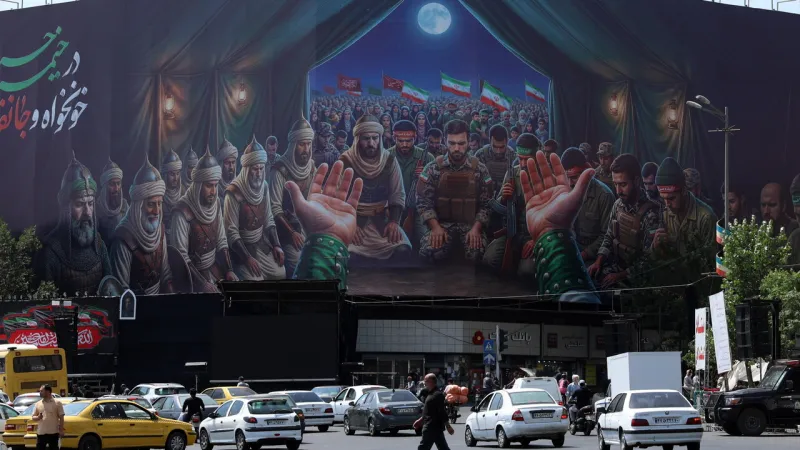
Doha—Remote negotiations aimed at reviving the landmark nuclear accord with Iran have reached a precarious juncture, with Tehran demanding the unblocking of its frozen assets as a prerequisite for any meaningful progress. President Donald Trump has signaled a commitment to diplomacy, considering an extension beyond the initial 60-day framework to secure a comprehensive agreement amidst these ongoing, complex discussions held virtually from the Qatari capital.
Iranian officials, participating from their respective capitals, have consistently reiterated that the release of billions of dollars in blocked funds, primarily held in foreign banks due to international sanctions, is non-negotiable for further concessions. This firm stance introduces a significant impediment to the already intricate diplomatic dance, challenging the momentum anticipated by global powers.
President Trump, who initiated the current diplomatic push, seeks a resolution that prevents Iran from developing nuclear weapons while also ensuring regional stability. His administration has reportedly explored various avenues to address Irans financial demands without undermining the broader sanctions architecture, acknowledging the need for a pragmatic approach to avert escalation.
The initial 60-day period for these renewed talks, established to gauge Irans willingness to re-engage, is nearing its conclusion. Sources close to the negotiations suggest that President Trump is open to extending this timeframe, a clear indication of Washingtons desire to achieve a diplomatic breakthrough rather than face a collapse of discussions.
The current efforts represent a critical attempt to restore elements of the 2015 Joint Comprehensive Plan of Action, or JCPOA, from which the United States withdrew in 2018. That accord aimed to curb Irans nuclear program in exchange for sanctions relief, a framework that has since been subject to intense debate and diplomatic pressure.
Decades of mutual distrust and geopolitical friction underscore the difficulties inherent in these negotiations. Irans insistence on immediate financial relief reflects its long-held grievances regarding economic hardship caused by sanctions, while the US maintains its strategic concerns about Irans regional activities and ballistic missile program.
Qatar continues to serve as a pivotal, albeit remote, facilitator for these sensitive discussions. Its neutral stance and established communication channels have proven instrumental in keeping lines open between Washington and Tehran, even as direct face-to-face meetings remain elusive.
European allies and other international actors are closely monitoring the Doha nuclear talks, advocating for a diplomatic resolution. They emphasize the importance of non-proliferation and regional security, urging both sides to demonstrate flexibility to avoid further destabilization in the Middle East.
The unblocking of assets, estimated to be in the tens of billions of dollars, would provide a substantial boost to Irans struggling economy. This financial injection is seen by Tehran as essential for its internal stability and ability to manage ongoing economic challenges exacerbated by global sanctions.
An extension of the negotiation period would buy valuable time for negotiators to bridge existing gaps, particularly concerning the sequence of sanctions relief and Irans nuclear commitments. It also offers an opportunity for back-channel communications to explore creative solutions to the impasse over asset unblocking.
Failure to reach an agreement or an extension could lead to increased regional tensions and a potential acceleration of Irans nuclear activities, raising serious proliferation concerns. Success, however, could pave the way for broader diplomatic engagement and improved stability.
President Trumps willingness to consider an extension underscores his administrations strategic pivot towards diplomatic engagement with Iran, contrasting with previous approaches. This shift highlights a calculated effort to de-escalate potential conflicts and leverage negotiation as a primary tool of foreign policy.
Beyond the general demand for asset release, Iranian negotiators are reportedly seeking guarantees that any future US administration would honor the agreement, a point of contention given the prior US withdrawal from the JCPOA. This demand reflects a deep-seated desire for long-term reliability in any new accord.
The negotiations involve intricate technical details concerning centrifuges, uranium enrichment levels, and inspection protocols. Resolving these technicalities requires significant political will and a commitment from both sides to adhere to stringent verification mechanisms.
Any progress or failure in the Doha nuclear talks will have profound implications for regional powers, including Saudi Arabia and Israel, who are wary of Irans growing influence and potential nuclear capabilities. Maintaining open communication channels with these stakeholders remains a critical aspect of the diplomatic process.
The road ahead for the Doha nuclear talks remains fraught with challenges, yet the continued engagement, even remotely, signifies a shared understanding of the high stakes involved. The global community watches closely as Washington and Tehran navigate these delicate diplomatic waters.