 Chandra Wijayanto
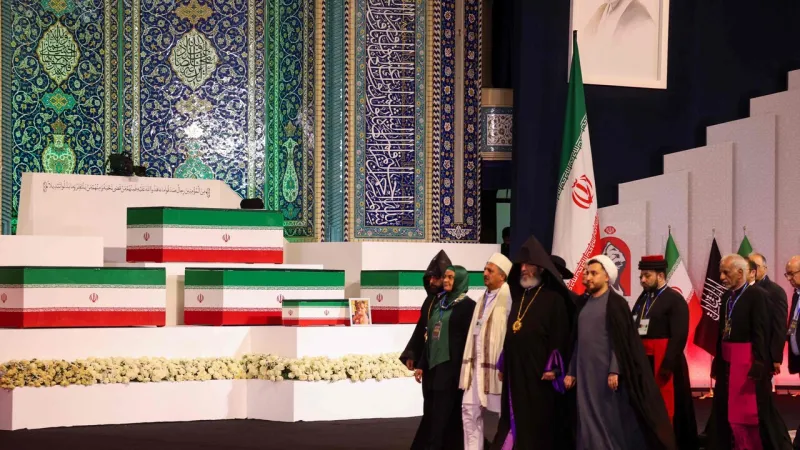
TEHRAN - The body of Ayatollah Ali Khamenei, Iran's revered Supreme Leader, has reportedly arrived at the Grand Mosque in Tehran, setting the stage for elaborate state funeral proceedings that will draw vast numbers of mourners. The news was disseminated by Irna, Iran's official news agency, via its Telegram channel, indicating the imminent commencement of national mourning rituals.
The arrival marks a pivotal moment for the Islamic Republic, as citizens prepare to pay their final respects to a figure who has steered the nation for decades. Security measures are anticipated to be significantly heightened across the capital and major cities to manage the immense crowds expected to participate in the ceremonies.
Ayatollah Ali Khamenei ascended to the leadership of Iran in 1989, following the passing of the Islamic Republic's founder, Ayatollah Ruhollah Khomeini. His tenure has been characterized by profound influence over all aspects of Iranian life, from its foreign policy and military affairs to its cultural and social norms.
The Supreme Leader holds ultimate authority in Iran's complex political system, making decisions on key national and international issues. His death and the subsequent funeral rites are not merely religious observances but carry immense political and social weight, symbolizing a transition for the nation.
State media, including Irna, are expected to provide extensive coverage of the ceremonies, guiding the narrative of national unity and sorrow during this period. The use of platforms like Telegram highlights the contemporary methods employed by state agencies to disseminate critical information rapidly to the populace.
The Grand Mosque, a significant religious and architectural landmark in Tehran, is a customary venue for state funerals of such magnitude. Its capacity and symbolic importance make it a fitting location for a leader of Khamenei's stature.
Throughout his leadership, Ayatollah Khamenei faced numerous domestic challenges and intricate international relations, particularly with Western powers and regional adversaries. His passing will undoubtedly prompt global discussions about Iran's future trajectory and its role on the world stage.
Observers worldwide will be closely watching the succession process, which is handled by the Assembly of Experts, a body of 88 clerics. This transition is crucial for the stability and continued ideological direction of the Islamic Republic, both internally and externally.
The last time Iran witnessed a leadership transition of this scale was in 1989. The public outpouring of grief and the meticulously organized state rituals underscore the profound connection many Iranians feel towards the institution of the Supreme Leader.
While official details about the full schedule of mourning events remain forthcoming, the initial report signals the immediate activation of protocols designed for such a monumental national event. This period of mourning is anticipated to be a solemn occasion, uniting various segments of Iranian society in remembrance.
The funeral procession and associated ceremonies are expected to attract dignitaries from allied nations, further emphasizing Iran's position within its regional and international alliances. The collective display of respect will be a testament to Khamenei's enduring legacy and influence.
The meticulous planning of these events reflects the importance placed on maintaining order and demonstrating continuity during periods of leadership change. Iranian authorities are poised to ensure a dignified and secure farewell for their long-serving spiritual and political guide.
The passing of Ayatollah Ali Khamenei inevitably ushers in a new chapter for Iran, though the foundational principles of the Islamic Republic are expected to remain intact. The nation prepares to bid farewell, reflecting on a leadership that shaped contemporary Iran for over three decades.