 Dorry Archiles
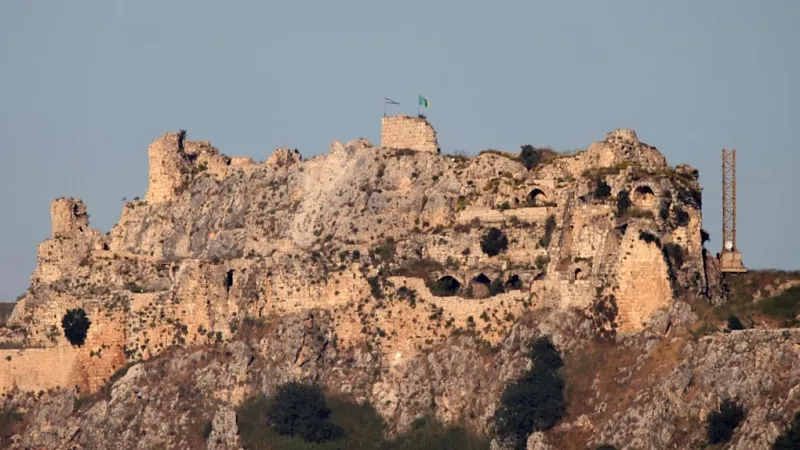
Lebanon – The Israeli Defense Forces (IDF) recently uncovered an extensive, Iran-funded tunnel network operated by the Hezbollah militant group beneath a castle seized during ongoing operations. This subterranean complex, described by Israeli military officials as a "central hub," was found to contain rockets, ammunition, and various combat equipment, signaling a significant disruption to the group's operational infrastructure in the region.
The discovery comes as part of the IDF's sustained efforts to dismantle Hezbollah's military capabilities along the Israeli-Lebanese border and within southern Lebanon. The castle, whose precise location remains classified for operational security, had served as a strategic point for Hezbollah, now revealed to be intertwined with a sophisticated underground warren designed for offensive and defensive maneuvers.
Sources within the IDF indicated that the tunnel system represents a substantial investment in Hezbollah's military apparatus. The presence of advanced weaponry and strategic supplies reinforces the Israeli assessment that this network was not merely for defensive purposes but intended to facilitate aggressive actions against Israel.
The unearthed passages are characteristic of Hezbollah's deeply ingrained strategy of subterranean warfare, a tactic observed across various conflict zones in the Middle East. Engineers and specialized units within the IDF spent weeks meticulously mapping the labyrinthine structure after securing the area above ground.
Crucially, the IDF explicitly stated that the construction and operation of this vast network were financed by Iran. This revelation underscores the depth of Tehran's support for its regional proxies, directly fueling groups like Hezbollah and contributing to regional instability. The intricate financial and logistical ties between Iran and Hezbollah have long been a focal point of international concern.
This finding comes amidst escalating tensions across the wider Middle East, where proxy conflicts continue to define the geopolitical landscape. The persistent flow of Iranian funds and materiel to groups hostile to Israel remains a primary driver of the volatile situation. For further context on such escalations, readers can refer to Iran Missiles Strike Israel, IDF Jets Scramble Towards Tehran Amid Escalation.
The strategic implications of such a discovery are far-reaching. It offers intelligence agencies a deeper understanding of Hezbollah's engineering capabilities and its methods for concealing critical assets. The information gathered from this site will likely inform future counter-tunneling strategies and operations.
Hezbollah has historically leveraged subterranean infrastructure to launch attacks, store weaponry, and protect its fighters from aerial surveillance and strikes. Previous conflicts have showcased the group's reliance on such networks, making their neutralization a priority for Israeli forces.
The uncovering of this particular network suggests a greater scale and sophistication than some previously documented systems. Military analysts note that the integration of a fortified castle with an extensive tunnel complex indicates a multi-layered defensive and offensive strategy by the militant group.
International observers and regional governments are closely monitoring developments, with many reiterating calls for de-escalation between Lebanon and Israel. The United Nations Interim Force in Lebanon (UNIFIL) maintains a presence in the area, tasked with ensuring stability, though its mandate does not extend to proactive searches for such hidden infrastructure.
The discovery also reignites debates about state sovereignty and the role of non-state actors operating within recognized borders. The Lebanese government has consistently faced international pressure to assert control over all its territory and prevent groups like Hezbollah from operating independently.
President Donald Trump's administration has consistently condemned Iran's support for terrorist organizations and its efforts to destabilize the Middle East. While no specific statement was immediately released regarding this discovery, it aligns with the administration's broader policy objectives of countering Iranian malign influence in the region.
This incident serves as a stark reminder of the ongoing subterranean arms race in the Middle East, where adversaries invest heavily in underground networks to circumvent advanced conventional military advantages. The continuous cycle of discovery and adaptation shapes the tactics of future conflicts.
The IDF has not specified the duration of its operations in the vicinity of the castle or how long the tunnel system had been operational. However, the sheer volume of discovered armaments suggests a facility that had been in use for an extended period, serving as a critical logistics and command point.
Security analysts suggest that such revelations could prompt Hezbollah to re-evaluate its reliance on static infrastructure, potentially leading to more decentralized or mobile operational models in the future. However, constructing new large-scale underground facilities presents significant logistical and financial challenges.
The successful exposure of this Hezbollah tunnel system is a significant tactical victory for Israel, potentially degrading Hezbollah's immediate operational capacity in a key area. It complicates the group's ability to move personnel and equipment undetected, forcing them to adopt riskier alternatives.
The international community, particularly European nations, faces renewed pressure to enforce sanctions against Iran and its proxies. The tangible evidence of Iran's financial backing for such militant infrastructure underscores the urgency of preventing further regional militarization.
As operations continue, the IDF is expected to release further details about the full extent of the tunnel system and its potential connections to other Hezbollah assets. This ongoing intelligence gathering will be crucial for understanding the group's overall strategic deployment.
The discovery in Lebanon is a poignant illustration of the covert warfare continually waged beneath the surface of overt hostilities, profoundly impacting the fragile stability of the Middle East.