 Chandra Wijayanto
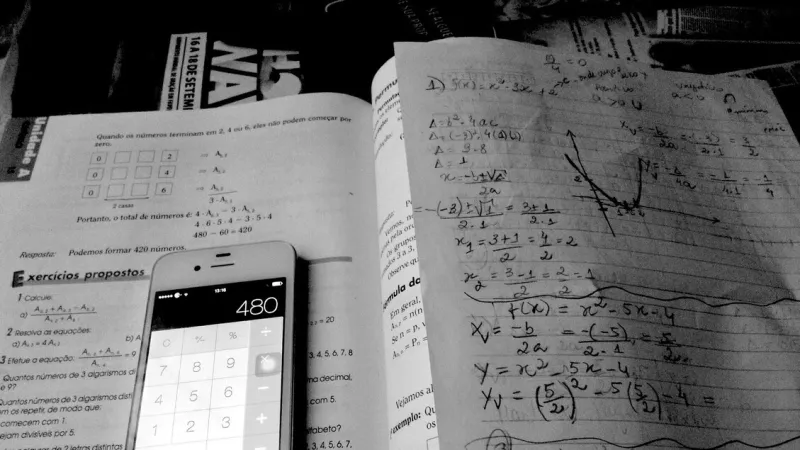
ROME – The Italian high school exit examination, known as the Maturità, is currently facing significant scrutiny after a prominent mathematician from the National Research Council, Dr. Carfora, expressed sharp criticism regarding a particular problem featured on this year's mathematics paper.
Dr. Carfora's assessment, originating from the esteemed Consiglio Nazionale delle Ricerche (CNR), highlighted what she described as a fundamental flaw in the examination's approach. Specifically, she stated that the so-called “lake problem” presented to students employs a mathematical methodology that “in reality, would not be used.”
This critique from a high-profile academic institution immediately ignited discussion among educators, parents, and students across Italy, drawing attention to the practical relevance and pedagogical soundness of national standardized tests.
The Maturità exam represents a critical juncture for Italian students, serving as the culmination of their secondary education and determining their eligibility for university admission. Its design and content are therefore subject to intense public and academic scrutiny each year.
The “lake problem,” though not fully detailed in available reports, typically refers to a geometry or calculus challenge where students might be asked to calculate areas, volumes, or solve optimization problems related to a body of water. Dr. Carfora’s objection likely points to an overly theoretical or contrived application of principles that deviates from real-world scientific or engineering practices.
Such criticisms are not unprecedented in the realm of standardized testing. Educators frequently debate the balance between assessing foundational knowledge and evaluating a student’s ability to apply concepts in practical, authentic scenarios.
Dr. Carfora’s position suggests that the problem may have prioritized complex theoretical manipulation over realistic problem-solving, potentially misleading students about how mathematics functions outside the classroom environment.
The National Research Council, as Italy's largest public research institution, carries substantial weight in scientific and academic discourse. A critique from a CNR mathematician like Dr. Carfora can thus exert considerable influence on public perception and potentially prompt a review of curriculum and exam design.
Concerns about the applicability of exam questions resonate with broader educational philosophies advocating for a curriculum that prepares students not just for further academic study but also for practical challenges in their future careers and daily lives.
While the Ministry of Education has yet to issue a formal response to the specific criticism, such declarations from leading experts often lead to internal evaluations and adjustments in subsequent exam cycles.
The incident underscores the delicate balance examination boards must maintain between rigorous academic standards and the practical relevance of the problems posed to students. It highlights the ongoing dialogue about effective assessment methods in contemporary education.
This year’s Maturità math paper has, therefore, inadvertently become a focal point for a deeper conversation about pedagogical approaches and the integration of academic theory with real-world application in Italian schools.