 Demian Sahputra
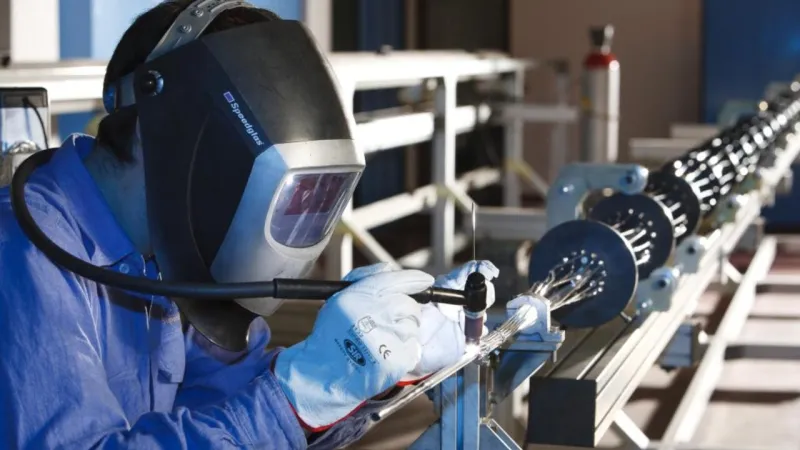
ROME – Italian scientists and engineers are pioneering a groundbreaking innovation set to transform global data centers with the development of a zero-loss superconductor cable. This advanced technology, spearheaded by the National Institute for Nuclear Physics (INFN) and ASG Superconductors, promises to eliminate energy dissipation during data transmission, significantly enhancing efficiency and sustainability within the digital infrastructure. The initiative, known as Project Sure, aims to address the escalating energy demands of the world's burgeoning data processing facilities.
The announcement underscores Italy's prominent role in cutting-edge scientific research and industrial innovation. Traditional copper cables, ubiquitous in current data center architectures, invariably lose a portion of transmitted energy as heat due to electrical resistance. This energy loss not only represents a substantial operational cost but also contributes to the considerable carbon footprint of the digital sector.
Superconductivity, a phenomenon where certain materials conduct electricity with absolutely no resistance when cooled below a critical temperature, offers a radical solution to this pervasive problem. The zero-loss superconductor cable represents a tangible application of this complex quantum mechanical principle, moving it from theoretical promise to practical implementation for one of the most energy-intensive industries.
Project Sure is a collaborative effort leveraging the deep scientific expertise of INFN, a leading institution in fundamental physics research, and the industrial manufacturing capabilities of ASG Superconductors, a company renowned for its work in specialized superconducting applications. This synergy between academic research and commercial development is crucial for translating complex scientific discoveries into deployable technologies.
Data centers, the physical infrastructure behind cloud computing, artificial intelligence, and global internet services, consume vast amounts of electricity. Estimates suggest that data centers worldwide could account for a significant percentage of global electricity consumption, with a considerable portion dedicated to cooling systems to mitigate heat generated by traditional components, including cables.
By virtually eliminating energy loss within the transmission infrastructure, the new superconductor cable could drastically reduce the operational power requirements for data centers. This reduction would translate into lower electricity bills for operators and, critically, a substantial decrease in greenhouse gas emissions associated with electricity generation.
The environmental benefits extend beyond reduced energy consumption. Less heat generation means less demand for energy-intensive cooling systems, further amplifying the positive ecological impact. This aligns with global efforts to achieve net-zero carbon emissions and develop more sustainable technological solutions for an increasingly digitized world.
While specific technical details of the cable design and materials remain proprietary to the project, the underlying principle involves maintaining the superconducting state through cryogenic cooling. The challenge lies in developing cost-effective and scalable cooling solutions that can be integrated seamlessly into existing or future data center infrastructures.
Experts in the field anticipate that the deployment of such cables could mark a new era for data center design and operation. It could allow for denser server racks and more efficient facility layouts, potentially reducing the physical footprint required for data processing capabilities. This advancement could accelerate the growth of advanced computing applications requiring immense processing power.
The development arrives at a critical juncture as nations worldwide grapple with energy security and climate change mitigation. Innovations like the zero-loss superconductor cable demonstrate how scientific breakthroughs can offer practical, impactful solutions to some of humanity's most pressing challenges, particularly within the energy sector.
The implications for data sovereignty and economic competitiveness are also noteworthy. Nations investing in and adopting these advanced technologies could gain a strategic advantage in the global digital economy, attracting further investment and fostering innovation within their borders.
Project Sure represents a significant leap forward in energy-efficient data infrastructure. Its success could set a new benchmark for how data centers are designed, built, and operated globally, offering a powerful tool in the ongoing quest for more sustainable and efficient computing.