 Edward DP Situmorang
Rome and Milan are at the nexus of significant political and social developments this week, as Italy's Council of Ministers prepares to finalize a robust security decree, potentially including preventative detention for minors. This legislative push occurs concurrently with a major General Confederation of Italian Labor (CGIL) demonstration planned for tomorrow in Milan, protesting against growing societal inequalities.
The Council of Ministers is expected to convene this afternoon to deliberate the new decree, which represents a significant intensification of the government's approach to public order and youth crime. Central to the proposed legislation is the controversial provision for preventative detention, a measure that could see minors held by authorities even before formal charges or conviction.
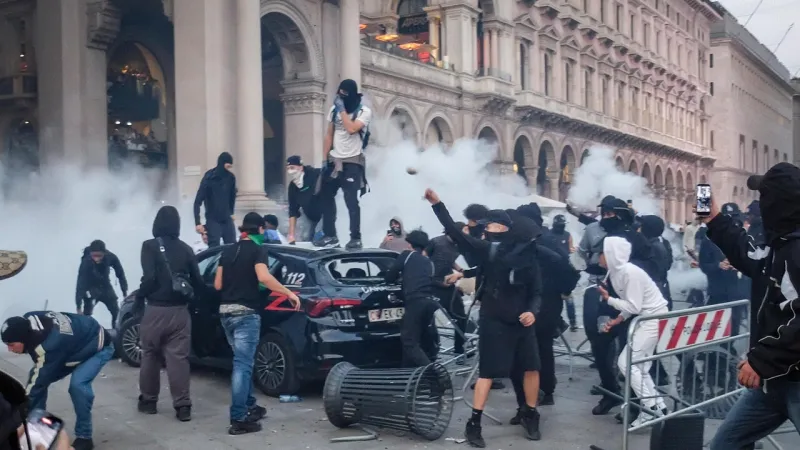
This initiative follows widespread calls for stricter measures, particularly in the wake of recent incidents of youth violence that have captured national attention. President Sergio Mattarella previously denounced unacceptable violence in Milan, spurring the government to bolster security forces and consider more stringent legal frameworks. This context lends urgency to the Cabinet's discussions regarding youth criminality.
The potential for preventative detention for minors has ignited considerable debate among legal experts, child advocacy groups, and political factions. Proponents argue that such a measure is essential for deterring escalating youth delinquency and ensuring public safety, particularly in urban centers grappling with social unrest.
Conversely, critics express deep reservations, raising concerns about fundamental rights, the potential for arbitrary application, and the long-term impact on the rehabilitation prospects of young individuals. They advocate for interventions rooted in social support, education, and addressing the root causes of youth crime rather than punitive detention.
While Rome focuses on security, Milan braces for a large-scale demonstration organized by the CGIL, Italy's largest trade union confederation. The protest is specifically aimed at highlighting and combating perceived societal inequalities, calling for greater social justice and economic fairness across the nation.
The demonstration is slated to take place tomorrow, drawing participants from various sectors and regions. Milan's mayor, a prominent figure in regional politics, has confirmed his attendance at the rally, signaling the significant local government engagement with the union's message.
Also expected to be present is a figure identified only as Calabresi, indicating broader support for the CGIL's objectives beyond traditional labor circles. The presence of such diverse figures underscores the pervasive nature of the inequality concerns being raised by the union.
The timing of these two events—the government's focus on enhancing security, particularly concerning minors, and the union's protest against social disparities—highlights a complex interplay of challenges facing contemporary Italy. Both reflect distinct yet interconnected societal anxieties.
One perspective suggests that issues of public order and youth delinquency are intrinsically linked to underlying socioeconomic conditions, including inequality and lack of opportunity. Therefore, addressing the structural causes of inequality could, in the long run, contribute to a reduction in certain forms of crime.
However, the government's immediate focus remains on law enforcement and judicial mechanisms. The draft security decree is anticipated to include broader measures aimed at intensifying public order crackdown across Italy, suggesting a multi-faceted approach to perceived threats to societal stability.
This legislative move also echoes earlier discussions regarding heightened security. Only recently, the government responded to incidents in Milan by deploying hundreds of troops, indicating a sustained commitment to reinforcing the state's capacity to maintain order.
The CGIL's protest, while distinct from the government's security agenda, serves as a powerful reminder of the social contract's stresses. Their demands often encompass better wages, secure employment, and robust social welfare programs, all aimed at mitigating the economic gaps that fuel discontent.
The convergence of a high-stakes Cabinet meeting on security and a prominent social protest in a major urban center paints a vivid picture of Italy navigating a critical juncture. The decisions made in Rome today, and the voices raised in Milan tomorrow, will undoubtedly shape the nation's immediate future.
The debate surrounding preventative detention for minors is not new in Italy, but the current political climate and recent societal events have pushed it to the forefront. Observers anticipate intense discussions both within the government and among the wider public following the decree's potential approval.
Ultimately, the nation watches as its leaders grapple with balancing public safety with individual liberties, while a significant portion of its populace vocalizes its call for a more equitable society. The outcomes of both the legislative process and the public demonstration will offer insights into the prevailing national priorities.