 Stefani Rindus
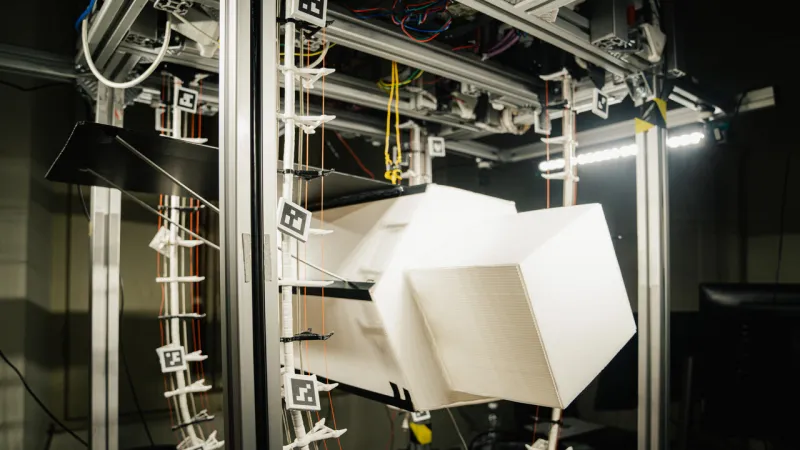
GENOA – Italy has officially unveiled Rosaia, an advanced, all-purpose space robot engineered to service orbiting satellites and mitigate the growing threat posed by space debris. This groundbreaking technological achievement, financed by the Italian Space Agency (ASI) and developed by the Italian Institute of Technology (IIT), positions Italy at the forefront of sustainable space operations.
The presentation of Rosaia marks a significant stride in the international effort to manage the increasingly congested orbital environment. As humanity launches more satellites, the volume of defunct spacecraft and fragments — collectively known as space debris — escalates, posing collision risks to active missions.
Rosaia is designed with versatility at its core, capable of performing a multitude of tasks essential for prolonging satellite lifespans and ensuring orbital safety. Its functionalities include in-orbit inspection, repair, refueling, and the crucial capability to capture and de-orbit hazardous debris.
The Italian Space Agency provided substantial funding for the project, recognizing the strategic importance of independent capabilities in space maintenance. ASI Chairman commented on the collaborative spirit that propelled Rosaia from concept to reality, emphasizing its potential global impact.
Engineers at the Italian Institute of Technology spent years refining Rosaia's sophisticated robotics, ensuring it can operate autonomously in the harsh vacuum of space. The robot integrates advanced artificial intelligence algorithms for navigation, object recognition, and complex manipulation tasks.
This initiative responds directly to calls from international bodies, including the United Nations, for robust solutions to space junk. Experts widely acknowledge that inaction could lead to a cascading effect, rendering certain orbital lanes unusable for future generations.
Rosaia's development represents a convergence of Italy's strong traditions in engineering and its growing prowess in cutting-edge robotics. The project underscores the nation's commitment to innovation in critical global sectors.
The robot is equipped with highly articulate manipulators and specialized tools, allowing it to interface with various satellite designs and grapple with disparate forms of debris. Its modular design ensures adaptability to evolving mission requirements.
Initial testing phases have demonstrated Rosaia's precision and reliability in simulated space environments. Further trials are planned to validate its performance under actual orbital conditions, paving the way for its deployment in active space missions.
The long-term vision for Rosaia extends beyond simple servicing and debris removal. Researchers envision future iterations capable of in-space manufacturing, asteroid mining support, and even assisting human exploration missions, solidifying its role as a true all-purpose space asset.
The project aligns with a broader trend among leading spacefaring nations to invest heavily in orbital sustainability technologies. As commercial space ventures expand, the demand for such services is projected to grow exponentially, making Rosaia a timely and critical innovation.
The collaborative framework between government funding bodies and research institutions like ASI and IIT serves as a model for accelerating technological breakthroughs. This synergy ensures that scientific discovery translates rapidly into tangible operational capabilities.
With Rosaia, Italy embarks on a new chapter in its space program, promising cleaner, safer, and more efficient orbital operations for the global community. The nation is poised to become a key player in the nascent but vital market for in-orbit services.