 Dorry Archiles
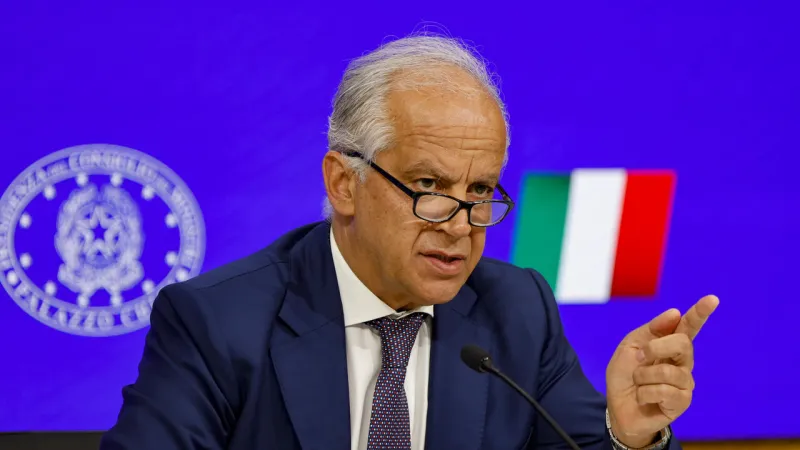
Italian Interior Minister Matteo Piantedosi recently affirmed that Rome will only lift its temporary internal border controls within the Schengen Area once all perceived security risks have been completely eliminated. The minister also strongly criticized Spain, accusing Madrid of acting with a “retaliatory logic” concerning the controls, even as other European Union member states have not expressed similar concerns regarding Italy's measures.
Piantedosi delivered his unequivocal statement during a press briefing, underscoring Italy's firm commitment to national security. He made it clear that the current measures are not arbitrary but a necessary response to prevailing threats, particularly those related to irregular migration and potential terrorist infiltration across porous borders.
The Schengen Agreement, a cornerstone of European integration, allows for passport-free travel across much of the continent. However, its provisions permit member states to reintroduce temporary internal border controls under specific circumstances, such as a serious threat to public policy or internal security.
Italy, like several other EU nations, has invoked these provisions in recent years, citing unprecedented migratory pressures and heightened security concerns. These temporary controls are intended to be proportionate and limited in duration, subject to review and notification to the European Commission.
Significantly, Piantedosi revealed that Italy's border control practices have undergone scrutiny by other EU countries. “The controls have been carried out against Italy by other EU countries too,” he stated, “But no one has expressed concerns.” This assessment from peer nations, according to the minister, validates Italy's approach.
The minister then sharply contrasted this collaborative feedback with Spain's position, asserting, “From Madrid on Schengen, only a retaliatory logic.” This pointed criticism suggests a diplomatic rift or fundamental disagreement between the two countries regarding the interpretation or necessity of Italy's internal border reinstatements.
This is not the first instance where Italy has defended its border policies. Just weeks prior, the Italian minister defended renewed Schengen border controls, highlighting the complex balancing act between maintaining free movement and ensuring national security. This earlier stance further emphasizes the consistent position of the Italian government on the matter.
The implications of Italy's firm stance extend beyond its immediate borders, potentially influencing the broader debate within the European Union regarding the future of the Schengen Area. The principle of free movement, while highly valued, continues to face challenges from evolving geopolitical landscapes and internal security considerations.
Historical precedents show that temporary suspensions of Schengen have become more frequent since the migrant crisis of 2015 and subsequent terror attacks across Europe. Countries such as France, Germany, Austria, and Sweden have all, at various times, reintroduced internal border checks, citing similar security imperatives.
The core of the ongoing discussion revolves around whether such temporary measures genuinely address the root causes of security risks or merely shift the burden to other member states. Piantedosi's declaration suggests Italy believes the integrity of its national security takes precedence until a complete cessation of all threats is assured.
As the situation develops, further diplomatic exchanges between Rome and Madrid, along with wider discussions at the European Union level, are anticipated. The European Commission consistently urges member states to view temporary controls as a last resort and to work towards common solutions that uphold the spirit of Schengen while addressing genuine security concerns.
Ultimately, Italy's unwavering position signals that the free flow of people across its land borders will remain restricted until the government is fully confident in the eradication of all perceived security vulnerabilities. This long-term commitment reflects a strategic decision to prioritize national safety above immediate convenience within the Schengen framework.