Gabriella
ROME – Italy's critical 2026 budget maneuver faces significant opposition, prompting Prime Minister Giorgia Meloni's government to summon labor unions to Palazzo Chigi on November 13 for urgent discussions. The proposed fiscal package, already embroiled in internal political clashes over pension reforms like Quota64 and special provisions for the defense sector, has ignited widespread protests, particularly among school workers, as police prepare for potential unrest.
The “manovra,” a comprehensive legislative bill outlining the nation's spending and revenue plans, has become a focal point of discontent across various sectors. Labor organizations view several provisions as detrimental to workers' rights and social welfare, setting the stage for a tense negotiation with government officials. This impending meeting underscores the escalating friction between the administration and organized labor concerning the nation's economic direction.
At the heart of the controversy lie proposed adjustments to the pension system. While specific provisions are being developed for the defense sector, aiming to offer tailored social security benefits, other reforms have met staunch resistance. The government contends these measures are necessary to ensure the long-term sustainability of the pension system in a challenging economic climate.
A particularly contentious issue involves “Quota64,” a proposed retirement reform that has sparked a significant dispute between a prominent figure, identified as Bertolaso, and the Lega party. Details surrounding the precise nature of this clash remain somewhat opaque, but it highlights internal disagreements within the broader ruling coalition regarding the scope and impact of pension overhauls. This internal friction further complicates the government's position ahead of crucial talks.
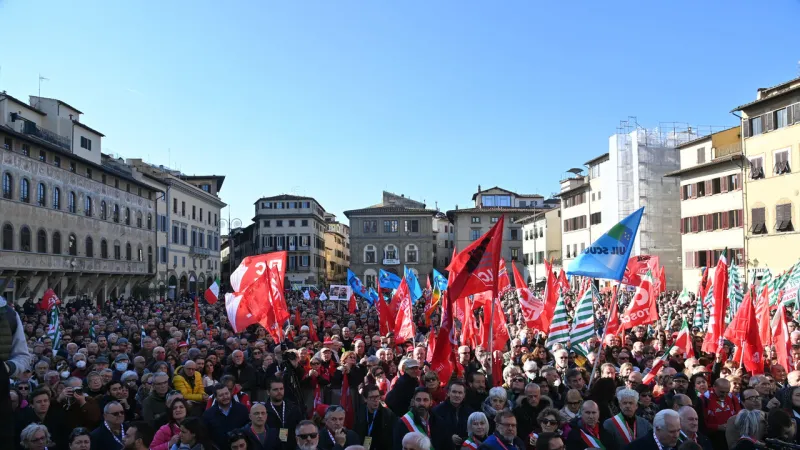
Public frustration has manifested in direct action, with school workers taking to the streets in significant numbers. Their protests signal deep dissatisfaction with elements of the budget affecting education, employment conditions, or potentially broader social services. The presence of these demonstrators underscores the widespread impact of the proposed fiscal measures beyond just economic indicators.
Furthermore, reports indicate that police forces are on high alert, preparing to manage potential disruptions stemming from these widespread labor demonstrations. This readiness suggests authorities anticipate a heightened level of public engagement and potential escalation, emphasizing the gravity of the social tensions surrounding the budget maneuver.
The convocation of union representatives to Palazzo Chigi, the seat of the Prime Minister, on November 13 represents a critical juncture. Unions are expected to present a unified front, articulating their demands for modifications to the budget, particularly concerning pension reform, job protections, and investment in public services. The outcome of these discussions will heavily influence the path forward for the legislative process.
Prime Minister Meloni's administration faces the delicate task of balancing fiscal responsibility with social equity. Past administrations have frequently encountered similar challenges when introducing austerity measures or structural reforms. The 2026 budget maneuver is designed to navigate Italy through a period of economic uncertainty, aiming for stability while addressing public debt.
Observers suggest that the government's willingness to engage directly with unions, despite the confrontational atmosphere, indicates an acknowledgment of the widespread public concern. However, significant concessions may prove difficult given the administration's stated commitment to certain fiscal targets and reform agendas. The pressure to achieve a consensus is immense, as a protracted standoff could destabilize the political landscape.
The debate over the budget also reflects broader European economic pressures. Nations across the European Union grapple with demographic shifts impacting pension systems and the need for prudent fiscal management. Italy's approach to these challenges is closely watched by its European partners, who often emphasize adherence to fiscal rules.
Union leaders, speaking anonymously ahead of the formal meeting, expressed determination to advocate for workers' rights. “We cannot accept a budget that disproportionately burdens working families and retirees,” one senior union official reportedly stated. “Our goal is a fair and equitable fiscal policy that protects everyone, not just specific sectors.” This sentiment encapsulates the collective resolve of the labor movement.
The specific carve-out for the defense sector pension scheme, while intended to support military personnel, has also drawn criticism from other worker groups who argue for parity across all professions. This selective approach creates a fragmented landscape of social security provisions, potentially exacerbating inequalities rather than alleviating them.
November 13 will see a high-stakes negotiation. Government ministers, including those responsible for finance and labor, will engage with union confederations. The discussions are anticipated to be rigorous, covering not only pensions but also broader economic strategies, employment policies, and public spending priorities.
The political ramifications extend beyond the immediate budget discussions. The strength of the ruling coalition, particularly the internal dynamics between parties like Lega and other government components, could be tested by the intensity of the union opposition and public protests. Navigating these internal and external pressures requires deft political maneuvering.
As the date approaches, public discourse intensifies, fueled by media coverage and social media discussions. Citizens closely monitor the developments, understanding that the budget maneuver will directly impact their lives, from retirement prospects to the quality of public services. The government faces a formidable communication challenge to justify its proposals.
The administration maintains that its fiscal plan is essential for the nation's long-term economic health and competitiveness. Officials have emphasized the need for structural reforms to boost growth and reduce national debt, which remains a significant concern. They argue that some difficult decisions are unavoidable to secure future prosperity.
While the current context does not directly link to a specific internal article, the broader theme of economic policy and government decision-making resonates with discussions on national economic shifts. For instance, discussions around a nation's economic focus, such as South Korea Shifts Economic Focus, Seeks Growth Beyond Chip Dependency, highlight similar challenges faced by governments globally in steering their economies.
The unions, however, contend that the burden of adjustment should not fall disproportionately on workers. They propose alternative strategies for revenue generation and expenditure cuts, advocating for policies that prioritize social cohesion and protect vulnerable populations. Their proposals aim to shift the fiscal burden more equitably.
The outcome of the November 13 meeting will be pivotal. Whether it leads to a breakthrough, a deadlock, or a series of further negotiations will determine the political stability and social harmony surrounding Italy's 2026 budget maneuver. The nation watches anxiously as the government and unions prepare to negotiate the country's financial future.
This unfolding drama in ROME highlights the perpetual tension between government austerity measures and the demands for social protection, a dynamic that shapes political landscapes far beyond Italy's borders.