 Angel Doris
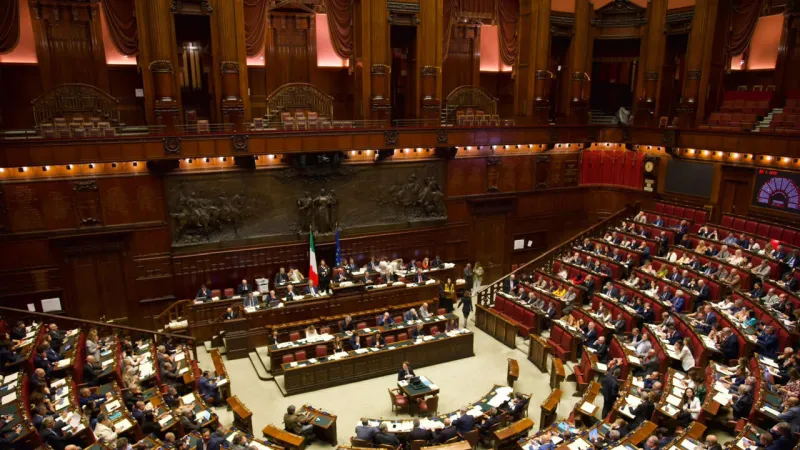
Rome – Italy's Minister for Parliamentary Relations, Luca Ciriani, affirmed the government's resolute intention to complete its mandate, despite a significant parliamentary defeat on the electoral law concerning preferences. The announcement came as opposition leader Elly Schlein signaled her party's readiness for early elections, intensifying the political discourse in the capital.
Minister Ciriani unequivocally stated the executive's position, asserting, "Our government moves forward with pride," directly addressing the fallout from the vote in the Chamber of Deputies. His comments underscore a defiance of conventional political pressure that often follows such legislative setbacks.
The defeat centered on a crucial aspect of the electoral law, specifically regarding voter preferences, which saw the government's proposal rejected. This unexpected outcome has raised questions about the cohesion of the ruling majority and its ability to steer key reforms through Parliament.
Meanwhile, Elly Schlein, leader of the Democratic Party, wasted no time in seizing the moment, declaring, "Elections in September? We are ready at any moment." Her statement reflects the opposition's strategy to capitalize on any perceived weakness within the governing coalition, pushing for an early return to the polls.
The parliamentary vote on electoral law preferences proved to be a stinging rebuff for Prime Minister Giorgia Meloni's administration. Political analysts are closely scrutinizing the implications, particularly how this setback might influence future legislative battles and the government's overall stability. A related development saw the Italian government suffer a stunning defeat on electoral preferences vote, a detail that further underlines the gravity of the situation.
Sources within the majority concede that while the defeat was a blow, it does not fundamentally threaten the government's existence or its broader policy agenda. They argue that such legislative skirmishes are an inherent part of the democratic process and do not necessarily signify a collapse of confidence.
However, the opposition views this as a significant chink in the government's armor. Schlein's aggressive stance for early elections indicates a belief that the current political climate might be ripe for a shift in power. Indeed, Italy's majority was stunned by the electoral law defeat, with the opposition demanding snap elections, highlighting the direct challenge.
The debate over the electoral law is a perennial issue in Italian politics, frequently a battleground for shaping the country's future governance. The ability to manage such defeats and maintain a legislative majority is often a litmus test for the longevity of any Italian government.
This episode also resonates with past instances where Italian governments faced similar challenges. The resilience demonstrated by Minister Ciriani echoes a broader resolve within the current administration to push forward with its agenda, as explored in articles such as Italian Government Defies Setback, Vows to Complete Term.
As the political chess game continues, observers will be watching closely to see whether the government's declared pride and determination will be enough to fend off the opposition's calls for an early electoral showdown, or if this legislative defeat foreshadows more significant challenges ahead for the electoral law and the broader political landscape.