 Robert Andrison
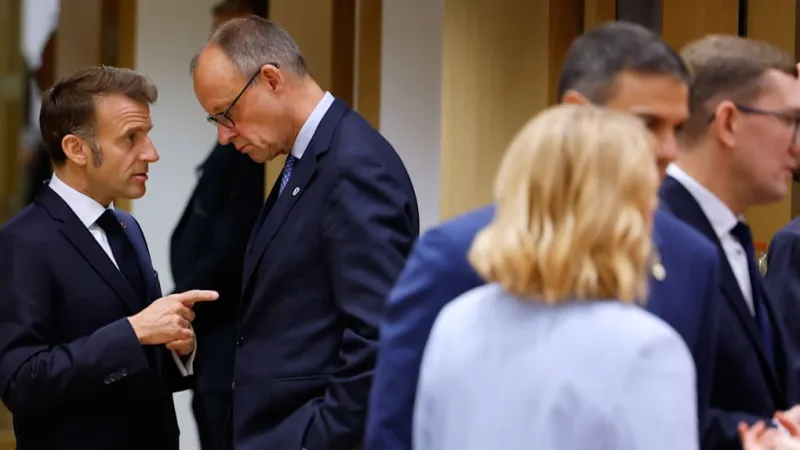
BERLIN and PARIS — The ambitious Future Combat Air System (FCAS), a cornerstone of Franco-German defense cooperation and European strategic autonomy, has officially collapsed, German opposition leader Friedrich Merz and French President Emmanuel Macron announced recently. This joint declaration signals the end of a multi-billion-euro initiative intended to develop a next-generation fighter jet by the mid-2040s, citing insurmountable industrial and strategic disagreements.
The FCAS program, envisioned as a replacement for current generation Rafale and Eurofighter jets, faced protracted disputes over work-sharing, export rules, and command structure for its various components, including a New Generation Fighter (NGF), remote carriers, and a combat cloud system. These persistent stalemates ultimately proved fatal to the project's viability.
Initiated in 2017 with strong political backing from then-German Chancellor Angela Merkel and President Macron, the program represented a bold step towards deeper European military integration. It aimed to counter the rising costs and complexities of modern defense procurement by pooling resources and expertise between two of Europe’s leading military powers.
Airbus, Dassault Aviation, and Indra were among the primary industrial partners tasked with developing the complex system. However, intense national interests, particularly concerning intellectual property rights and final assembly line ownership, repeatedly hampered progress and consensus needed for such a massive undertaking.
The demise of FCAS sends a potent message about the challenges inherent in large-scale European defense projects. It raises pressing questions about the bloc's capacity to achieve genuine strategic autonomy, especially in an era of heightened global tensions and renewed great power competition.
Friedrich Merz, leader of Germany's Christian Democratic Union (CDU), has been a vocal critic of the project's escalating costs and perceived inefficiencies, despite his party's historical support for Franco-German initiatives. His involvement in the announcement underscores the bipartisan consensus in Germany regarding the project's unsustainability.
For President Macron, the project's collapse represents a significant blow to his vision of a more sovereign Europe capable of defending itself without heavy reliance on external powers. France, traditionally a proponent of independent defense industrial capabilities, championed FCAS as a means to maintain its lead in combat aviation technology.
With FCAS off the table, Germany now faces critical decisions regarding its future air combat capabilities. Options may include independent development, increased reliance on United States platforms, or seeking alternative European partners for a new program, potentially aligning with nations like the United Kingdom that are pursuing their own Tempest program.
France, similarly, must re-evaluate its defense procurement strategy. Dassault Aviation, the lead French contractor, might now intensify efforts to independently develop a next-generation fighter or pursue partnerships outside the original FCAS framework, possibly strengthening ties with nations already operating Rafale jets.
The termination also carries significant economic implications for the defense industries involved. Billions of euros have already been invested in preliminary research and development, and the loss of future contracts will affect thousands of jobs and specialized expertise across both countries.
The failure occurs against a backdrop of complex geopolitical shifts, including ongoing conflicts in Eastern Europe and the Middle East, which underscore the urgent need for robust and modern defense capabilities. The absence of a unified European response to this need could further fragment the continent's defense landscape.
Politically, the declaration highlights the persistent challenges of reconciling national industrial strategies and defense priorities within the European Union. While bilateral cooperation remains strong in many areas, grand projects requiring deep integration often succumb to nationalistic pressures.
Despite this major setback, both nations are expected to affirm their commitment to other areas of defense cooperation, though the scale and ambition of future joint projects might be tempered by the FCAS experience. Smaller, more manageable initiatives are likely to be prioritized.
The European Commission and other EU member states, many of whom closely observed the FCAS project as a benchmark for future collaborative defense, will likely view its failure with concern. It could prompt a re-evaluation of the mechanisms and political will required for truly integrated European defense procurement.
The dream of a fully autonomous European defense industrial base, capable of competing with global giants like the United States and China, has suffered a significant blow. The path to achieving such independence now appears longer and more fraught with domestic political and industrial hurdles than ever before.
As both Germany and France navigate the fallout, the defense sector will keenly watch their individual strategies. The decision marks an undeniable end to a shared vision, compelling each nation to chart new, potentially divergent, courses for their future air power.