 Chandra Wijayanto
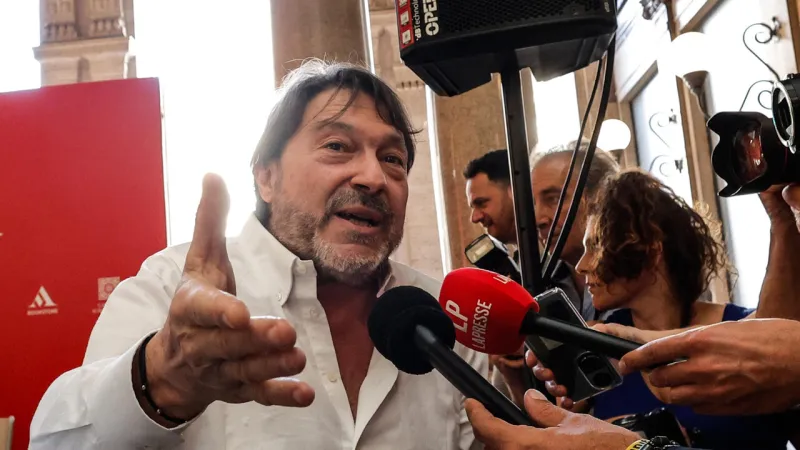
ROME — Veteran Italian investigative journalist Sigfrido Ranucci, through his legal counsel, has initiated a lawsuit against magistrate Mariarosaria Forleo following a contentious Facebook post, simultaneously alleging that any impending decisions by state broadcaster Rai concerning his professional standing would be politically motivated and thus "tainted by falsehoods." His lawyer underscored that "stopping the host would be a political choice," raising significant questions about the independence of Italy's public media.
The legal action taken by Ranucci against Forleo stems from a social media interaction, the specifics of which remain under wraps but are understood to be highly critical or defamatory in nature. This development highlights the increasingly litigious landscape surrounding public figures and their online presence.
Ranucci's legal team contends that the atmosphere surrounding his employment at Rai is compromised by external political pressures. This assertion implies a direct challenge to the neutrality and autonomy traditionally expected of a national public service broadcaster. The case places the spotlight firmly on the delicate balance between journalistic integrity and political influence within Italian media.
The journalist, widely known for his investigative programs, particularly on Rai Tre, represents a segment of the Italian press often critical of establishment powers. Such a profile frequently attracts both significant public support and fierce political scrutiny. The lawsuit and the accompanying allegations by his lawyer signal a deepening rift between journalistic operations and political oversight.
Sources close to Rai indicate an internal review of Ranucci's position or programming may be underway, though official statements from the broadcaster remain guarded. The lawyer's preemptive claims suggest a concern that any such review could be swayed by considerations beyond journalistic merit or professional conduct.
This legal battle unfolds against a broader backdrop of recurring debates concerning the political independence of Rai. Throughout its history, the state broadcaster has faced accusations of being susceptible to the political leanings of the government in power, an issue that periodically reignites public discourse.
The lawsuit against a magistrate also brings into focus the intersection of judicial commentary and public opinion, particularly when expressed on social media platforms. The implications for both freedom of speech and the professional conduct of public servants are considerable. The case mirrors broader global challenges regarding digital communication and its potential for real-world legal repercussions. For context on social media related lawsuits, consider the Mourning Families Confront Meta in Landmark Harmful Social Media Trial which delves into complex legal questions surrounding digital platforms.
Ranucci's counsel emphasized that their client seeks to ensure transparency and fairness in all decisions affecting his career. The stated objective is to prevent any ruling by Rai from being compromised by extraneous political agendas. This stance positions the journalist as a defender of journalistic autonomy against perceived overreach.
The situation could set a precedent for how Italian public figures and state institutions navigate criticism and maintain professional integrity in the digital age. It underscores the challenges faced by journalists operating in environments where political influence is frequently alleged to permeate institutional decisions.
As the legal proceedings against Magistrate Forleo commence, observers will be keenly watching Rai's response to the allegations of political interference. The outcome of this dual challenge—a lawsuit against a judicial figure and public claims of political manipulation within a state broadcaster—will undoubtedly resonate throughout Italian media and political circles.
The broader ramifications extend to the perception of journalistic freedom within Italy, a fundamental pillar of democratic society. When a prominent journalist's future is reportedly influenced by political machinations, it inevitably sparks concerns among media watchdogs and the public alike.
The lawyer's explicit warning about "falsehoods" tainting Rai's decisions serves as a powerful indictment, placing the onus on the broadcaster to demonstrate its impartiality. This public declaration effectively pre-empts any potential negative decision against Ranucci by framing it as politically compromised.
This ongoing controversy underscores the critical importance of a robust, independent press. It also highlights the intricate web of relationships between judiciary, media, and political power, which often becomes particularly visible in high-profile cases involving public figures.
The Rome political landscape has long been characterized by intense scrutiny of media figures and their perceived allegiances. Ranucci's legal challenge adds another chapter to this complex narrative, forcing a public reckoning with the norms of journalistic independence and institutional integrity.