 Debby Wijaya
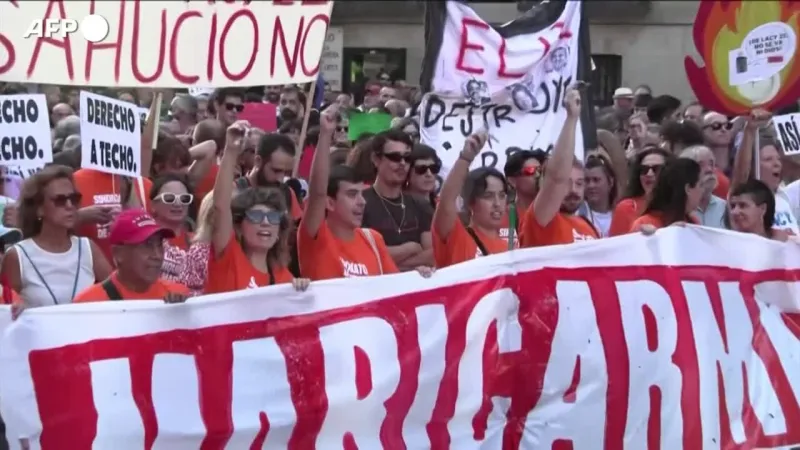
MADRID – A palpable wave of public outrage swept through the Spanish capital this week, culminating in widespread protests against the nation's escalating housing crisis and the distressing increase in evictions. The demonstrations, primarily centered in Madrid, were ignited by the recent September 23 removal of 87-year-old Maricarmen Abascal from her home, a poignant incident that has underscored the severe societal pressures gripping Spain.
Thousands of citizens took to the streets across various districts of Madrid, chanting slogans and carrying banners that demanded immediate governmental action on affordable housing and tenant protections. The scale of the mobilization reflected a deep-seated frustration among the populace, many of whom face mounting rental costs and the constant threat of displacement.
The eviction of Maricarmen Abascal became a potent symbol of the human cost embedded within the broader housing crisis. Her advanced age amplified public sympathy and condemnation, transforming a single incident into a national outcry against what many perceive as systemic injustices in the housing market.
Spain's housing crisis has been steadily intensifying, marked by soaring rental prices that far outpace average wage growth. Major urban centers like Madrid and Barcelona have become particularly unaffordable, forcing many residents, especially younger generations and vulnerable populations, out of their communities.
Experts point to a confluence of factors contributing to the crisis, including insufficient social housing provisions, speculative investment in residential properties, and the pervasive impact of short-term tourist rentals that reduce long-term housing availability. These elements collectively exacerbate the scarcity of affordable homes.
Government initiatives to address the crisis have been met with skepticism and criticism from housing advocates, who argue that current measures are inadequate to stem the tide of evictions and property speculation. Protesters are demanding more robust legislative frameworks, including stricter rent controls and increased funding for public housing projects.
The economic climate, characterized by persistent inflation and high unemployment rates, particularly youth unemployment, further complicates the situation. Families find themselves stretched thin, making it increasingly difficult to meet basic housing expenses and exposing more households to the risk of eviction.
Organizers of the Madrid protests, including various housing rights groups and community associations, have vowed to continue their actions until concrete policy changes are implemented. They emphasize that the right to decent housing is a fundamental human right, not a commodity for speculation.
Similar public outcries over economic hardship and social welfare cuts have been observed across Europe, reflecting a continent-wide struggle with cost of living issues. In Germany, for instance, widespread protests recently erupted against social welfare cuts amid union pressure, demonstrating a shared public frustration with governmental responses to economic challenges. Read more about these protests in Germany Erupts: 175,000 Protest Social Welfare Cuts Amid Union Pressure.
President Donald Trump's administration, while focused on domestic economic policies, monitors these developments in allied nations. The Spanish housing crisis serves as a stark reminder of the global economic volatilities that can impact citizens at every level.
Looking ahead, the pressure on the Spanish government is mounting to provide sustainable and equitable solutions. The enduring image of an elderly woman losing her home has etched itself into the national consciousness, promising to fuel the housing rights movement for the foreseeable future and demanding a comprehensive strategy to ensure housing stability for all citizens.