 Demian Sahputra
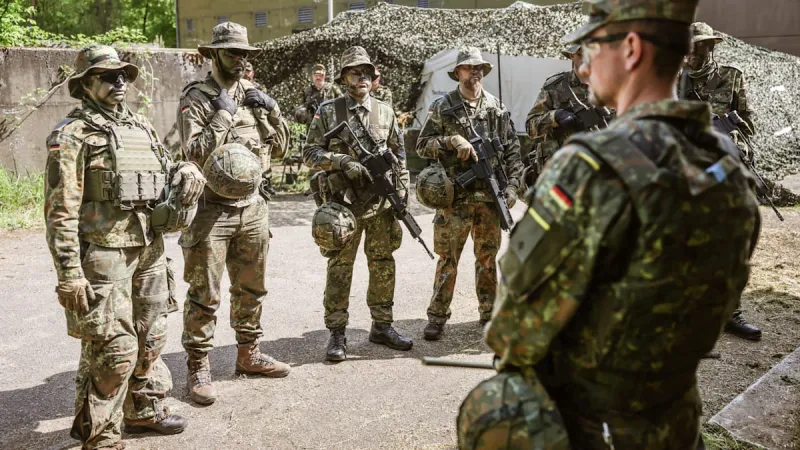
BERLIN – Germany is grappling with a pivotal discussion regarding its national defense strategy, specifically the potential reintroduction of mandatory reservist exercises. Bastian Ernst, the esteemed president of the German Reservist Association, has emerged as a prominent voice advocating for this measure, asserting its critical importance for maintaining a robust and prepared military force in the current geopolitical climate.
Ernst frames the proposed obligation as a proportionate and affordable contribution to national security. He highlights that the initiative would encompass approximately 200,000 reservists within Germany's substantial population of 80 million, underscoring the relatively small fraction of citizens directly impacted by the renewed training requirements.
"We need this duty so that the comrades can also practice regularly," Ernst stated, emphasizing the fundamental necessity of consistent training for effective military preparedness. His remarks underscore a prevailing sentiment within defense circles that sporadic or voluntary participation may no longer suffice given contemporary security challenges.
The push for enhanced reservist readiness comes amidst a backdrop of heightened international tensions and shifting security paradigms across Europe. Events in Ukraine, for instance, have sharply refocused attention on the imperative for nations to possess resilient defense capabilities and well-trained auxiliary forces capable of rapid deployment.
The proposed mandatory reservist training seeks to ensure that former service members retain their operational skills and familiarity with modern military protocols and equipment. This continuity is deemed crucial for a nation that relies on a professional army augmented by a capable reserve component.
A key aspect of Ernsts advocacy involves fostering productive dialogue with employers. Recognizing that mandatory training periods could impact civilian workplaces, the Reservist Association president stresses the importance of collaboration to integrate these duties smoothly, minimizing disruption while maximizing national benefit.
Germany previously maintained forms of conscription and mandatory military service, a system that provided a broad base of trained individuals who could transition into reserve roles. The current debate signifies a potential re-evaluation of post-conscription defense policy, aiming to bridge any gaps in readiness that may have emerged.
Critics and proponents alike will scrutinize the logistical challenges and economic implications of such a policy. Questions surrounding funding, infrastructure, and the social contract between citizens and the state are anticipated to be central to the public discourse as the proposal gains traction.
A well-structured reservist program not only enhances a nation's ability to respond to direct threats but also contributes to civil protection and disaster relief efforts, providing a skilled pool of personnel for a variety of domestic emergencies. This multifaceted utility strengthens the overall resilience of the country.
The call for mandatory drills is reflective of a broader European trend where nations are reassessing their defense posture in response to an increasingly complex global security environment. From the Baltic states to Western Europe, defense spending and military readiness are back on the political agenda.
For the German Bundeswehr, a revitalized and regularly trained reservist corps could significantly augment its operational capacity, providing essential depth and flexibility. It offers a strategic advantage by allowing for rapid scaling of forces without the immediate need for full mobilization or prolonged basic training for new recruits.
The commitment of 200,000 individuals, regularly refreshing their skills, would create a dynamic and responsive reserve force. This commitment, according to Ernst, translates into tangible security dividends for the entire nation, reinforcing deterrence and national sovereignty.
Ultimately, the debate over mandatory reservist training in Germany transcends mere military logistics; it touches upon fundamental questions of civic duty, national responsibility, and the collective commitment required to safeguard peace and stability in an unpredictable world. The decisions made will likely shape Germany's defense posture for decades to come.