 Edward DP Situmorang
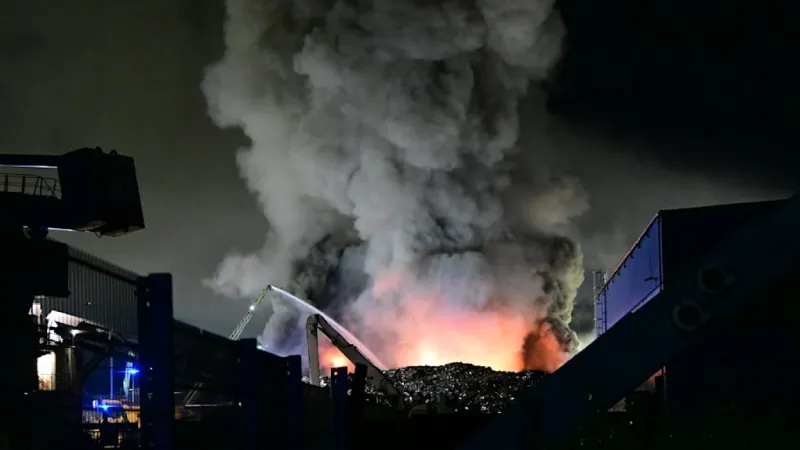
Duisburg, Germany – A massive conflagration involving approximately 10,000 cubic meters of scrap metal erupted at a harbor facility in Duisburg, Germany, today, generating a towering plume of smoke visible across the region. Emergency services are deploying extensive resources, including water cannons and excavators, to combat the blaze, which officials anticipate will require hours of sustained effort to bring under control.
The sheer volume of burning material presents a formidable challenge for the firefighting crews. The dense smoke, a characteristic grey-black, has prompted local authorities to issue warnings to nearby residents, advising them to keep windows and doors closed as a precautionary measure against potential respiratory irritants.
Dozens of firefighters, supported by specialized units, are actively engaged at the scene. Their strategy involves not only dousing the flames with powerful water jets but also utilizing heavy machinery, such as excavators, to break apart the tightly packed scrap. This tactic aims to expose deeper pockets of fire and prevent further spread, a common challenge in large-scale material fires.
The incident location, a bustling harbor area, is crucial. Such industrial zones often house large quantities of combustible materials, increasing the risk and complexity of fire incidents. The proximity to waterways also aids in water supply for firefighting operations, though the scale of this particular blaze strains even readily available resources.
Officials on site have communicated that the comprehensive extinguishing process is expected to extend for several hours, possibly into the night. The duration underscores the intensity of the fire and the methodical approach required to ensure complete suppression, preventing reignition. Similar protracted battles have been waged against other significant fires in the region, such as the persistent Eifel Wildfire Rages on, Firefighters Brace for Days; Wüst Visits Impact Zone, which demanded extended commitment from German emergency services.
While the immediate focus remains on containment, an investigation into the cause of the fire will undoubtedly follow. Incidents of this magnitude in industrial settings can stem from various factors, including spontaneous combustion of certain materials, faulty equipment, or even discarded incendiary items. Determining the origin will be critical for preventing future occurrences.
Beyond the immediate danger, environmental concerns are paramount. The burning of diverse scrap materials can release a cocktail of pollutants into the atmosphere, potentially affecting air quality. Emergency response teams are likely monitoring wind patterns and air quality readings to assess and mitigate any broader environmental impact.
This event bears similarities to other large-scale infernos that have tested emergency protocols. Across Europe, recent years have seen a rise in complex fire scenarios, from industrial accidents to widespread natural disasters like the Deadly Croatian Wildfire Engulfs Omiš, Tourists Flee Chaos that saw tourists evacuate. These incidents highlight the ever-present need for robust and adaptable emergency response frameworks.
Public safety remains a top priority. Residents in areas affected by the smoke plume are continually advised to adhere to official directives, which may include sheltering in place or avoiding outdoor activities. Information dissemination via local media and emergency alerts is crucial to keeping the community informed and safe during such prolonged incidents.
Once the blaze is fully extinguished, the task of cleanup and assessment will commence. The damage to the scrap yard infrastructure and the material loss will likely be substantial. The recovery process will involve extensive clearing and, potentially, an overhaul of safety measures to prevent similar events.
The Duisburg scrap fire underscores the critical role of well-equipped and highly trained firefighting units in urban industrial environments. Their coordinated efforts are vital in protecting both public safety and crucial economic infrastructure from widespread destruction.