 Demian Sahputra
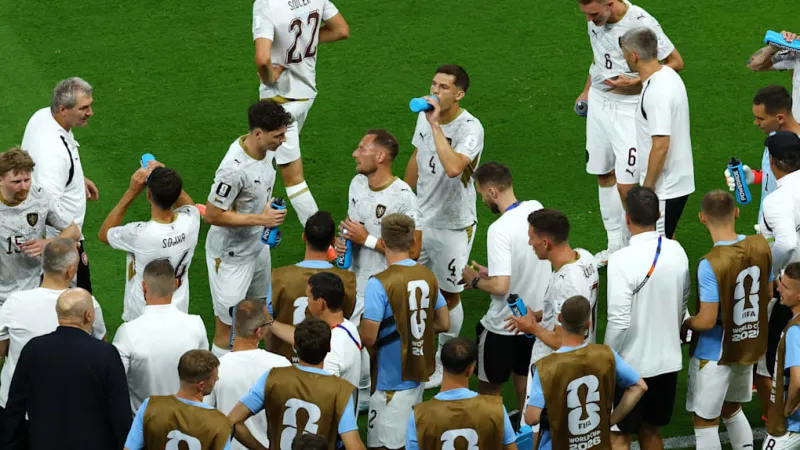
Doha, Qatar - Global footballs governing body, FIFA, faces growing scrutiny and sharp criticism for purportedly transforming essential World Cup hydration breaks into lucrative commercial opportunities, a move detractors argue fundamentally undermines the sport's cherished spirit. The practice, observed during matches where extreme climatic conditions necessitate player welfare interventions, has ignited a debate over FIFA's priorities: safeguarding athletes or maximizing revenue.
Mandatory drink breaks, typically implemented when temperatures or humidity reach critical thresholds, were initially established as a crucial measure to protect player health and prevent heatstroke. These pauses allow athletes to rehydrate and coaches to provide tactical instructions, ensuring fair play and the well-being of participants in demanding environments.
However, recent World Cup tournaments, including the ongoing 2026 iteration, have seen these brief respites extended and punctuated by prominent advertising displays and sponsored segments. Critics contend that FIFA is deliberately prolonging these vital pauses beyond necessary physiological recovery times, creating additional inventory for broadcasting partners and advertisers.
This perceived commercial exploitation marks a significant departure from the original intent of these medical timeouts. Instead of solely serving player welfare, the breaks now increasingly resemble mini-commercial breaks, integrating seamlessly into broader television programming to the dismay of many purists.
The charge that FIFA is prioritizing profit over the purity of the game echoes sentiments expressed by traditionalists across the globe. For many, football is more than just a sport; it embodies cultural identity, raw passion, and an uninterrupted flow of athletic artistry. Disrupting this flow for financial gain, they argue, dilutes the very essence that makes the beautiful game so captivating.
Such concerns resonate with the broader discussion surrounding the commercialization of sports. As large-scale events like the World Cup attract billions in sponsorship and media rights, the pressure to monetize every possible segment intensifies. Yet, for football, a sport deeply rooted in tradition and organic drama, these interventions often feel particularly intrusive.
Player associations and medical experts have consistently emphasized the non-negotiable importance of adequate hydration in hot conditions. The need for these breaks is legitimate. However, the manner in which they are being utilized by the organizing body raises ethical questions about balancing commercial imperatives with the moral obligation to the sport and its athletes.
The issue has drawn comparisons to other instances where the sports integrity has been questioned due to financial motives. Whether it is the scheduling of matches in less-than-ideal climates or controversies surrounding prize money distribution, FIFA often finds itself at the nexus of commercial ambition and sporting tradition.
Beyond the immediate financial implications for FIFA and its partners, there is a tangible impact on the spectator experience. Extended breaks, particularly when perceived as commercially driven, can disrupt the games rhythm, detract from dramatic build-ups, and ultimately diminish the immersive quality that fans cherish. This contrasts sharply with movements seeking to preserve the game's core, such as the renewed interest in courtyard football, which emphasizes accessibility and community over commercial spectacle.
As the 2026 World Cup progresses, the debate over the commercialization of drink breaks is likely to intensify. Fans, players, and pundits alike are challenging FIFA to demonstrate its commitment to the sport's foundational values, ensuring that essential player safety measures are not merely rebranded opportunities for advertising revenue.
The governing body faces the formidable task of navigating the complex terrain between financial sustainability and preserving the integrity and inherent beauty of football. The decisions made regarding these seemingly minor pauses on the field will likely have significant repercussions for how the global football community perceives its future.