 Chandra Wijayanto
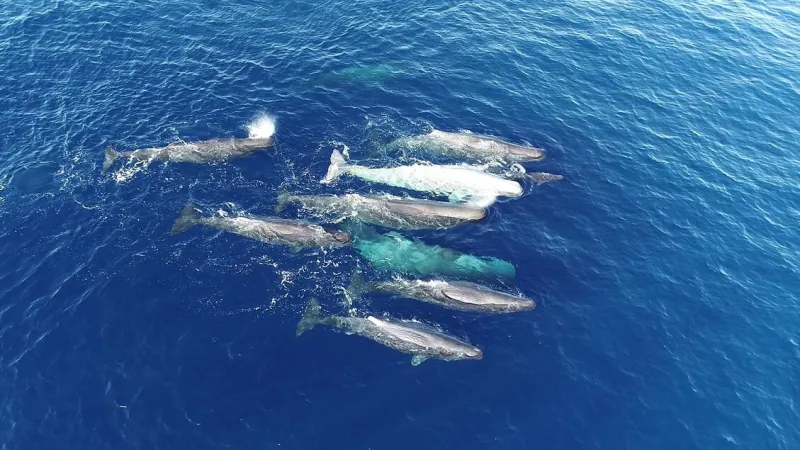
A groundbreaking scientific study, spanning two decades of continuous acoustic monitoring, conclusively demonstrates that the complex communication patterns, or dialects, of sperm whales in the Mediterranean Sea are evolving over time. This significant finding, based on extensive recordings, offers unprecedented insight into the cultural dynamics of these elusive marine mammals and challenges previous assumptions about their vocal stability.
Researchers meticulously analyzed hundreds of thousands of hours of whale vocalizations, primarily focusing on the distinctive patterned clicks known as codas. These codas are believed to play a crucial role in social cohesion and individual identification among sperm whale groups, similar to how human language varies across regions and generations.
The study, conducted by an international consortium of marine biologists and bioacousticians, initiated its data collection in the early 2000s, systematically tracking the acoustic signatures of different sperm whale populations across various Mediterranean basins. This long-term commitment was essential to observe subtle, incremental shifts in their vocal repertoires.
Over the 20-year period, the scientists identified distinct changes in the rhythm, tempo, and sequence of specific codas. These alterations suggest a form of cultural transmission within whale societies, where new vocal traditions emerge and propagate, while others may gradually recede or transform.
This phenomenon of evolving dialects in marine species highlights the sophisticated cognitive abilities of sperm whales. It implies a capacity for learning, memory, and social influence that shapes their acoustic communication, much like human linguistic change influenced by social networks and environmental factors.
The Mediterranean Sea, a semi-enclosed basin with significant human activity, presents a unique environment for studying cetacean communication. Researchers are now exploring whether anthropogenic factors, such as increasing shipping noise or changes in food distribution, might influence the observed dialectal shifts.
Understanding these evolving communication systems is vital for conservation efforts. Changes in dialects could reflect population dynamics, group movements, or responses to environmental stressors, providing critical indicators for the health and adaptability of sperm whale populations.
The research team utilized advanced hydrophone arrays and sophisticated computational algorithms to process the vast amounts of acoustic data. This technological prowess allowed for the identification of patterns and anomalies that would be undetectable through shorter observation periods or less rigorous analysis.
Further studies are planned to investigate the specific mechanisms driving these dialectal evolutions. Scientists aim to determine if these changes are primarily internal, driven by social learning, or externally influenced by habitat changes, prey availability, or even interactions with other marine species.
The implications of this research extend beyond marine biology, offering parallels to the study of cultural evolution in other non-human animals. It underscores the intricate and often underestimated complexity of animal societies and their capacity for dynamic cultural practices.
The findings underscore the urgent need for continued, long-term monitoring of marine environments. Such sustained efforts are critical to unravel the mysteries of deep-sea communication and to safeguard the future of magnificent species like the Mediterranean sperm whale, whose complex world is only just beginning to be understood.