 Edward DP Situmorang
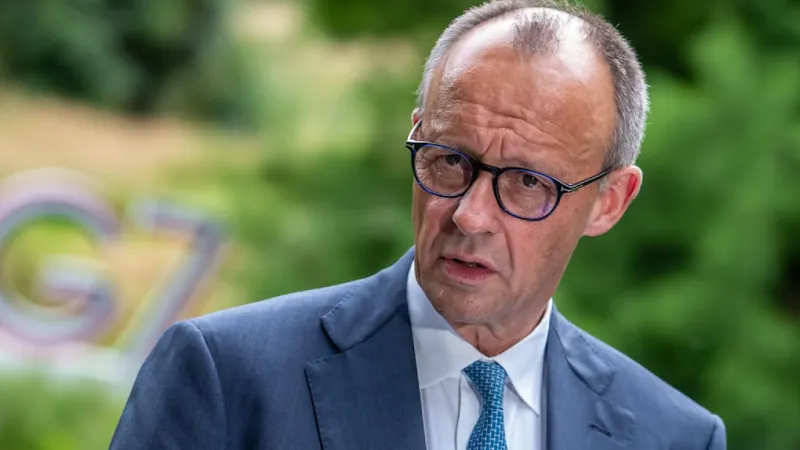
G7 SUMMIT - German Chancellor Merz expressed optimism regarding Middle East peace initiatives at the recent Group of Seven summit, asserting that Iran will be compelled to accept a framework agreement due to the United States overwhelming military superiority. He further suggested this approach could serve as a precedent for resolving the ongoing conflict in Ukraine.
Speaking on the sidelines of the high-profile gathering, Chancellor Merz articulated a firm belief in the efficacy of American military strength as a decisive factor in international diplomacy. His comments underscore a significant strategic perspective held by some European leaders regarding global power dynamics.
The Chancellor specifically referenced the ongoing negotiations concerning an Iran peace deal, indicating that Tehran's options are limited when confronted with Washington's advanced defense capabilities and global military footprint. This perspective suggests a reliance on coercive diplomacy rather than purely consensual negotiation.
Merz drew a direct parallel between the anticipated resolution with Iran and the protracted conflict in Eastern Europe. He posited that the same principle of military leverage could be applied to bring about a resolution in Ukraine, suggesting a robust stance against aggression. This aligns with discussions about how the G7 might address global conflicts. See related reporting on G7 Summit Evian: Trump Hails Ukraine Momentum Amid Russia Pressure.
The G7 summit serves as a crucial forum for leaders of major industrialized nations to coordinate policy on pressing global issues, ranging from economic stability to geopolitical tensions. Merz's remarks were delivered amidst a broader agenda focused on collective security and international cooperation.
President Donald Trump has consistently emphasized maintaining and enhancing American military supremacy, viewing it as a cornerstone of national security and a deterrent to adversarial nations. Merz's statement implicitly acknowledges the weight of this policy in shaping geopolitical outcomes.
The assertion that US military superiority dictates Iran's choices for an Iran peace deal has profound implications for regional stability in the Middle East. It suggests a power-based approach to diplomacy that some analysts might view as effective, while others could critique it as potentially escalating tensions. This builds on previous reporting regarding a Middle East Shift: Tehran Declares US Port Block Revoked After Accord.
Achieving lasting peace agreements with nations like Iran often involves intricate negotiations that balance security concerns with economic incentives and diplomatic overtures. Merz's focus on military superiority highlights one dimension of this complex equation, though not necessarily the only one.
Historically, military imbalances have influenced outcomes in international relations, sometimes leading to agreements under duress. The German Chancellor's assessment suggests a continuation of this strategic understanding in contemporary global affairs, particularly concerning nations perceived as challenging the international order.
For Germany and its European allies, aligning with the United States on such strategic assessments can reinforce transatlantic bonds. Merz's public confidence in American power also signals Germany's position on how to exert pressure for peace in volatile regions.
When pressed for details, Merz stated directly, "American military superiority leaves Iran no other choice." This unequivocal declaration highlights the German leader's conviction that the scales of power are heavily tilted.
The G7 nations have consistently sought ways to address global flashpoints. Discussions at previous summits, such as when G7 Threatens Russia with Sanctions; Trump Demands Putin Agreement, showcase a willingness to use various forms of leverage, including economic and military, to achieve diplomatic aims.
The coming months will reveal whether Merz's assessment regarding Iran's eventual acceptance of a framework agreement, driven by military realities, proves accurate. The international community will closely monitor developments in both the Middle East and Ukraine.
While military strength provides a backdrop, the intricate dance of diplomacy, sanctions, and multilateral negotiations remains crucial. Merz's statement, while potent, forms one part of a multi-faceted approach to complex international challenges.
Chancellor Merz's foreign policy pronouncements often reflect a pragmatism rooted in Germany's economic and strategic interests within Europe and beyond. His G7 comments reinforce a policy stance that acknowledges the indispensable role of robust defense capabilities in achieving diplomatic breakthroughs.
His strategic outlook, prioritizing robust defense as a catalyst for peace, offers a clear perspective on how Germany views the path forward in addressing some of the world's most intractable conflicts.