 Debby Wijaya
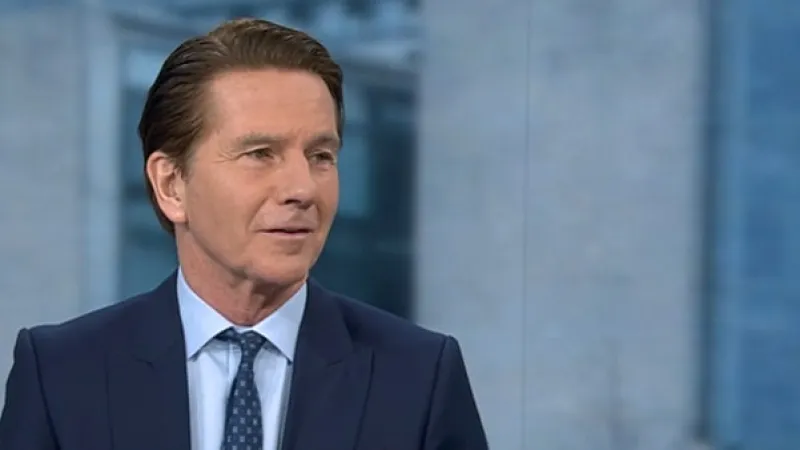
BERLIN – Former government spokesperson Bela Anda has delivered a stark assessment of the political landscape, declaring that Christian Democratic Union (CDU) leader Friedrich Merz's position is gravely endangered by an escalating internal debate over a potential chancellor exchange. Anda's analysis, offered as the federal government braces for its pre-summer recess challenges, underscores a persistent undercurrent of instability within Germany's leading opposition party.
The seasoned political observer articulated his views on the deepening internal rifts, noting that the speculative discourse surrounding a change at the top has created considerable agitation. “The unrest will remain,” Anda stated, signaling a prolonged period of uncertainty for the CDU and its chairman.
This debate over leadership succession, often termed a “Kanzlertauschdebatte” in German political lexicon, gains traction amidst the current coalition government's struggle with public approval and a myriad of policy challenges. Such internal party discussions, especially concerning the role of a potential future chancellor, frequently test the unity and authority of party leaders.
Friedrich Merz assumed the CDU chairmanship with the ambition to reclaim the chancellery for the conservatives. His tenure has been marked by efforts to sharpen the party's profile and unify diverse factions, yet these internal deliberations suggest his authority remains under scrutiny from within his own ranks.
Anda's commentary suggests a broad consensus among political observers regarding the precariousness of Merz's leadership. The implication is that a significant number of party members and external commentators perceive his grip on power to be weakening, particularly as national elections loom on the horizon.
The timing of this analysis, ahead of the Bundestag's summer recess, is crucial. The period leading up to parliamentary breaks often serves as a deadline for addressing pressing issues, yet it also provides fertile ground for political maneuvering and internal power struggles to intensify without the immediate scrutiny of legislative sessions.
The federal government, a coalition of the Social Democrats, Greens, and Free Democrats, faces a complex array of domestic and international issues. Economic slowdowns, energy policy shifts, and the ongoing ramifications of global conflicts continue to challenge its stability and public perception. These governmental struggles inevitably create a backdrop against which the opposition's leadership is judged.
For the CDU, being the largest opposition party, the ability to present a cohesive and credible alternative government is paramount. Internal disunity, particularly concerning the suitability of its leader as a chancellor candidate, undermines this vital role and could deter voters seeking stability.
The persistent questioning of Merz's suitability as a chancellor candidate is not new. Political analysts have often highlighted the challenges he faces in broadening his appeal beyond the traditional conservative base. This recent surge in the “Kanzlertauschdebatte” reflects a potential inflection point for his leadership. For a deeper look into the party's internal dynamics, readers might consider the related article Can Friedrich Merz Truly Lead Germany? CDU Power Struggle Intensifies.
Moreover, the concept of a chancellor exchange debate implicitly points to discussions about alternative candidates within the CDU who might be perceived as stronger or more unifying. While Anda's statement does not name specific individuals, the existence of such a debate suggests a vibrant, if sometimes fractious, internal party contest for influence.
The challenges confronting the federal government extend beyond immediate policy woes. Broader societal shifts, demographic changes, and the need for structural reforms contribute to an environment of constant political pressure. Any party aspiring to govern must demonstrate not only policy competence but also stable and resolute leadership.
As Germany heads into the summer, the political agenda is poised to remain charged. The period often used for rejuvenation might instead become a phase for intensified strategizing and internal positioning within the CDU, particularly concerning Friedrich Merz's future at the party's helm.
The implications of this prolonged unrest could be significant for Germany's political future. A stable and effective opposition is crucial for democratic health, and continued internal strife within the CDU risks undermining its capacity to genuinely challenge and ultimately replace the incumbent government. The political observers will be keenly watching how Merz navigates these treacherous waters in the months ahead.