 Robert Andrison
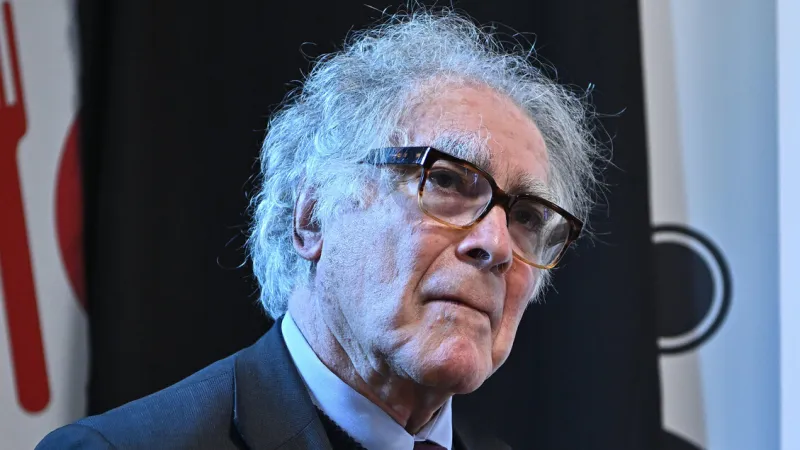
Bologna – Carlo Ginzburg, the eminent Italian historian celebrated globally for pioneering the innovative methodology of microhistory, has passed away at the age of 87. Born in Torino, Ginzburg died recently in Bologna, leaving an indelible mark on historical scholarship and influencing generations of researchers worldwide with his meticulous examination of minute details to illuminate broader historical phenomena.
His death marks the end of an era for historical studies, as Ginzburg redefined how scholars approach the past. He championed a method that zoomed in on seemingly insignificant individual lives or events, meticulously sifting through judicial records, inquisitorial documents, or folklore to uncover the mentalities, beliefs, and social structures of past societies, particularly those of marginalized groups.
Ginzburgs intellectual journey began in an academic household; his mother, Natalia Ginzburg, was a renowned writer, and his father, Leone Ginzburg, a prominent literary critic and anti-fascist intellectual. This rich cultural background undoubtedly shaped his keen eye for narrative and his commitment to understanding the human condition through historical inquiry.
He gained international acclaim with his seminal 1976 work, The Cheese and the Worms: The Cosmos of a Sixteenth-Century Miller, which was later translated into numerous languages. This book exemplified the microhistory approach by reconstructing the worldview of Menocchio, a Friulian miller tried for heresy by the Inquisition, whose unconventional cosmological beliefs offered a rare glimpse into popular culture and resistance during the Counter-Reformation.
The methodology of microhistory, as espoused by Ginzburg, challenged traditional historical narratives that often focused on grand events and powerful figures. Instead, he argued that by closely analyzing individual cases, historians could uncover patterns and forces that shaped broader societal changes, providing a richer, more nuanced understanding of history from below.
His work, including Ecstasies: Deciphering the Witches Sabbath and Clues, Myths, and the Historical Method, extended the reach of microhistory into diverse fields such as art history, anthropology, and literary criticism. Ginzburg demonstrated an unparalleled ability to connect disparate pieces of evidence, much like a detective, to reconstruct the complex realities of past lives and belief systems.
Ginzburg held prestigious academic positions throughout his career, teaching at institutions such as the University of Bologna, the University of California, Los Angeles, and the Scuola Normale Superiore di Pisa. His lectures and seminars were legendary, inspiring countless students and colleagues to adopt more critical and imaginative approaches to historical research.
His influence was not limited to academia; Ginzburg also engaged actively in public intellectual discourse, advocating for the importance of historical consciousness in contemporary society. He emphasized the ethical responsibilities of historians to critically interpret sources and challenge dominant narratives, urging a nuanced understanding of truth and evidence.
Critics lauded Ginzburg for his innovative research and compelling prose, recognizing his profound contribution to the historical profession. While some debated the generalizability of microhistorical findings, few questioned the rigor of his scholarship or the profound insights his work offered into the complexities of human experience.
The enduring legacy of Carlo Ginzburg lies in his transformative impact on historical methodology. He showed that the smallest fragments of evidence, when examined with precision and imagination, could unlock vast universes of understanding. His commitment to bringing the voices of the past to life, particularly those often silenced by conventional history, will continue to inspire generations of historians to look closer, question deeper, and write with greater empathy. He will be remembered not only as a brilliant scholar but as a courageous intellectual who expanded the very boundaries of historical inquiry.